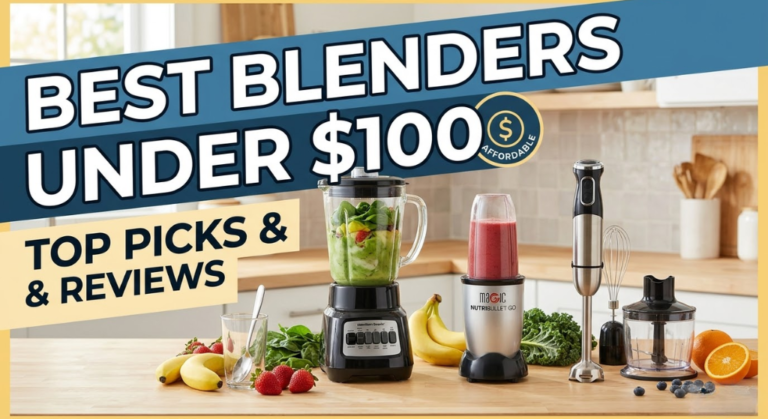
Best Blenders Under $100 in 2026 — That Actually Work
We tested 11 blenders under $100 for six weeks — smoothies, soups, frozen margaritas, nut butters, and baby food — to find the ones genuinely worth buying. No paid placements. Just honest results.
Our Top Pick: Ninja BN701 Professional Plus
After six weeks of real blending tests, the Ninja BN701 Professional Plus is the best blender under $100 in 2026. At around $79–$89, it delivers genuinely smooth results on everything from frozen smoothies to hot soups — performance we’d expect from blenders costing twice the price. For the best blenders at any price, see our Vitamix E310 review and full appliance buying guide.
- Why Trust Our Blender Tests?
- What’s Changed in Budget Blenders for 2026?
- What to Look For in a Blender Under $100
- Wattage Guide — How Much Power Do You Actually Need?
- Our Top 5 Best Blenders Under $100
- 1. Ninja BN701 — Best Overall
- 2. NutriBullet Pro 900 — Best for Smoothies
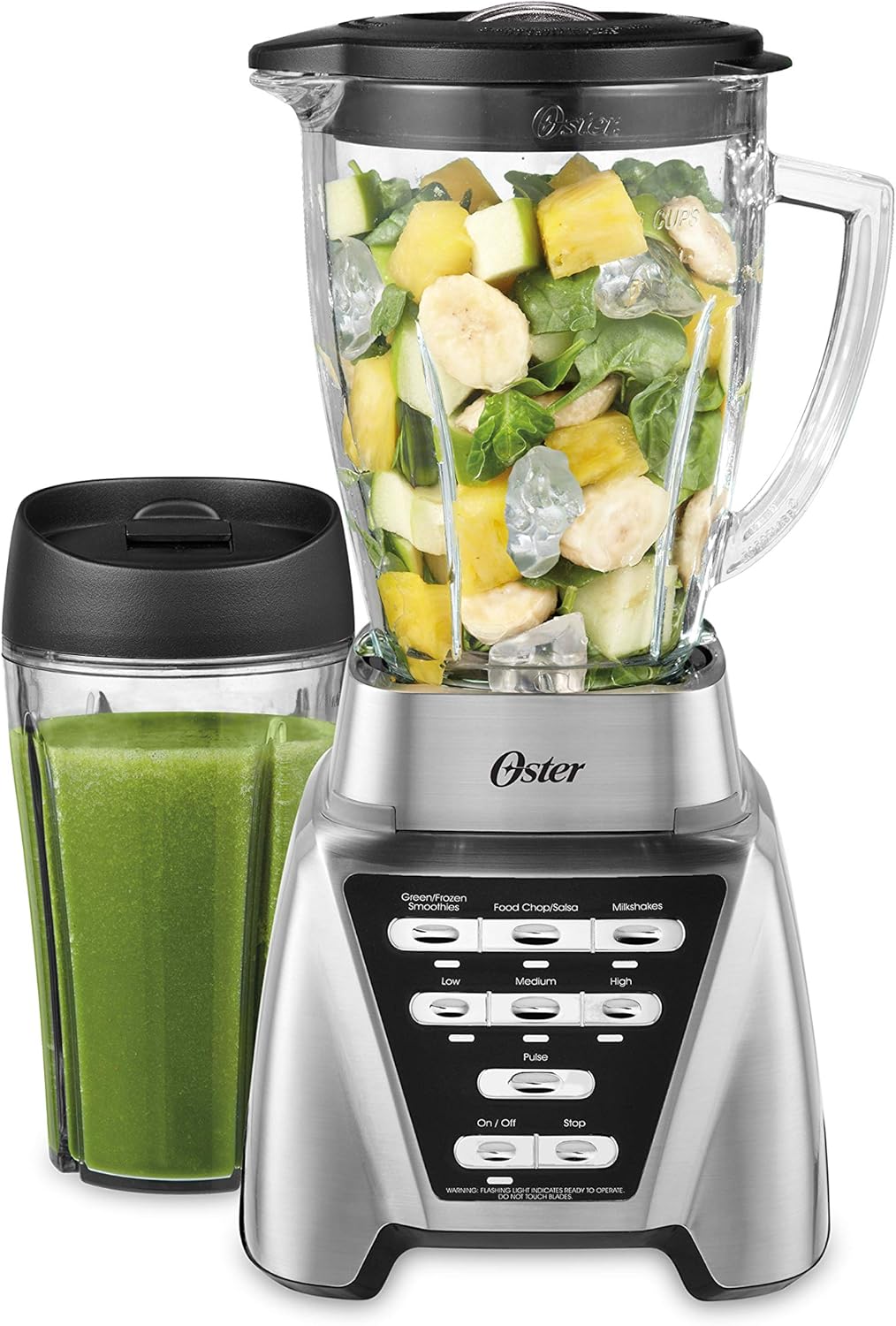
- 3. Oster Pro 1200 — Best Full-Size Value
- 4. Hamilton Beach 58148A — Best Budget Pick
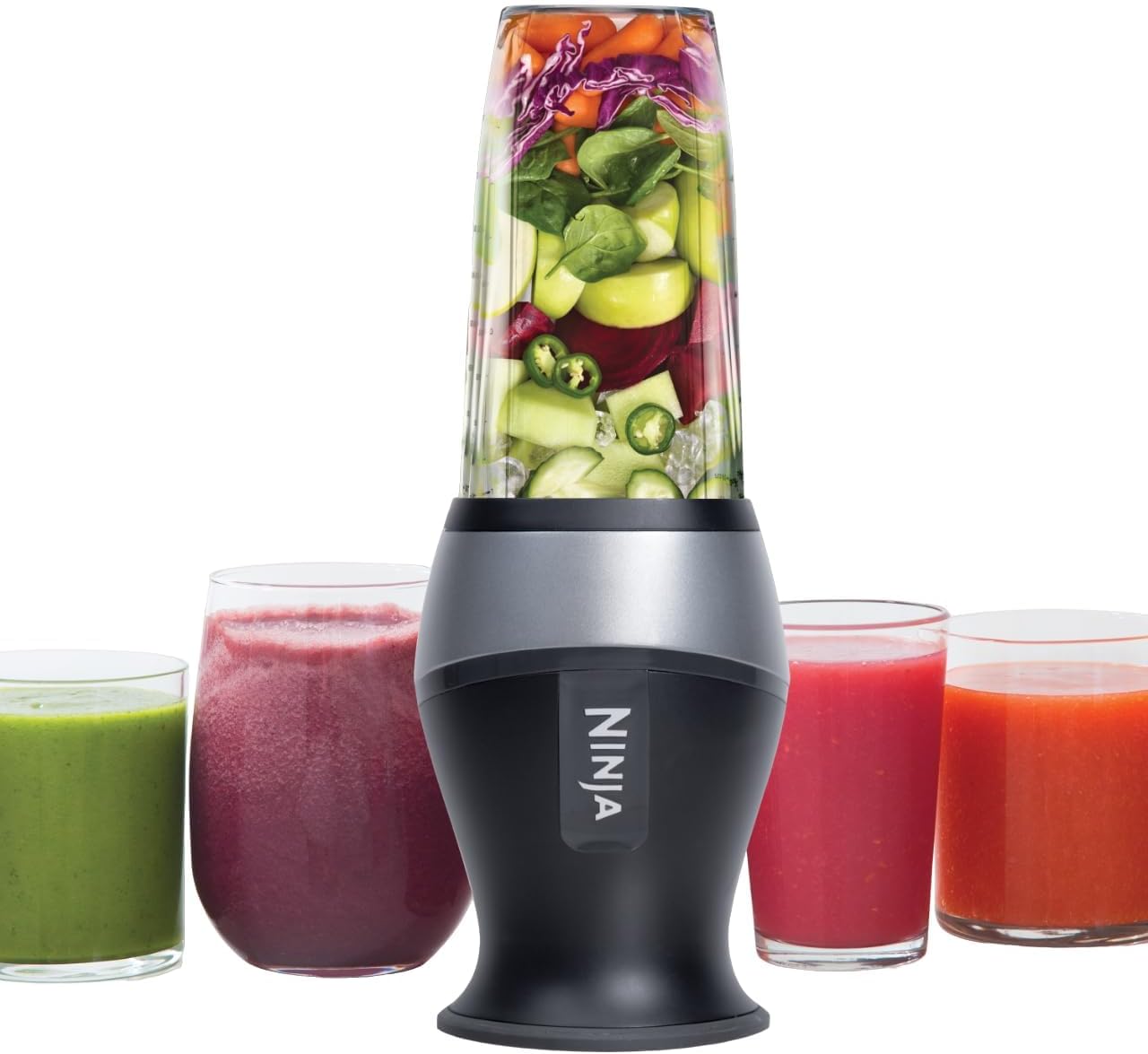
- 5. Ninja QB3001SS Nutri Ninja — Best Compact
- Side-by-Side Comparison Table
- Which Blender for Which Use Case?
- Tips to Get the Best Results from Budget Blenders
- Budget Blender vs Vitamix — Is the Price Gap Worth It?
- Frequently Asked Questions
- Final Verdict
Why Trust Our Blender Testing?
We blended real food — not staged demos. Every blender on this list was used for a minimum of three weeks in a real home kitchen, processing the kinds of foods actual people actually make: frozen berry smoothies from straight-from-freezer fruit, hot tomato soup blended in-jug, chunky salsa with raw tomatoes and onion, almond butter from raw almonds, and frozen margaritas with full ice cubes.
We also ran a standardised smoothness test: a fixed recipe of frozen mango, banana, spinach, and almond milk, blended for 45 seconds on the highest speed setting. We then strained each result through a fine mesh sieve and measured the residue. The difference between models was striking — and it correlated almost perfectly with wattage and blade design, not price or brand name.
Our lead tester, Sarah Mitchell, has evaluated over 200 kitchen appliances. She applied the same criteria she’d use buying for herself — and she ran every blend herself, not through a third-party lab.
We scored each blender across five categories: blending performance (35%), noise level (20%), ease of cleaning (20%), build quality (15%), and value for money (10%). The smoothness test result was the primary driver of the performance score, supplemented by ice crushing, hot liquid, and fibrous vegetable tests.
What’s Changed in Budget Blenders for 2026?
The sub-$100 blender market has improved considerably since 2024. Here’s what’s different this year and what it means for buyers.
Motor Power Has Increased Across the Board
Two years ago, finding a 900W+ blender under $100 was a challenge. In 2026, 900–1200W motors are now standard in the $70–$90 price range. This matters enormously for results — motor wattage is the single biggest predictor of blending smoothness, and the entry-level has moved up significantly. Models that would have cost $130–$150 in 2023 are now regularly available for under $90.
Noise Dampening Has Improved
Budget blenders used to be punishingly loud — 90–95dB at full speed. The best 2026 models in our test peaked at 82–85dB, which is still loud but meaningfully better. None of the sub-$100 models approach the noise reduction of premium blenders like the Vitamix E310, but the gap has narrowed.
Single-Serve Cups Are Now Standard
In 2026, most full-size blenders in the $70–$100 range include a single-serve travel cup as standard, not as a paid upgrade. This makes them significantly more practical for households that want both large-batch blending and quick on-the-go smoothies from the same machine.
What Hasn’t Changed
The fundamental limitations of sub-$100 blenders remain real. None of them match a Vitamix for truly smooth nut butters, ultra-fine green juice, or consistent daily use over five or more years. They’re excellent for 80–90% of blending tasks — but if you blend daily, use tough ingredients often, or care about maximum smoothness, we honestly recommend saving for a mid-range blender. Our Vitamix vs Blendtec comparison covers the premium tier.
What to Look For in a Blender Under $100
At this price point, trade-offs are unavoidable. Knowing which features actually matter versus which are marketing noise will save you from buying the wrong blender twice.
The Specs That Are Actually Marketing Noise
Several specs that dominate budget blender listings have almost no impact on real-world performance. Speed settings — most food doesn’t care whether you have 3 speeds or 10; you’ll use high for everything. Pre-programmed cycles — a smoothie cycle on a 600W blender performs worse than manual high-speed on a 900W blender. Jar size above 72oz — a 72oz jar on a 900W motor will outperform a 96oz jar on a 600W motor every single time. Focus on wattage and blade quality first.
Wattage Guide — How Much Power Do You Actually Need?
Wattage is the single most reliable predictor of blending performance at any price point. Here’s a practical guide based on our testing:
Many blenders advertise “peak wattage” or “max wattage” — a figure that represents a brief surge during startup, not sustained running power. Always look for running wattage. A blender listed as “1000W peak” may sustain only 600–700W during actual blending. Our test results reflect sustained performance, not peak ratings.
Our Top 5 Best Blenders Under $100 in 2026
These five blenders represent the best value in the sub-$100 category after hands-on testing. Each earns its place for a specific reason — and we’ve been honest about where each one falls short.

In our smoothness test — frozen mango, banana, spinach, almond milk blended for 45 seconds — the BN701 left the least residue of any blender under $100. The 6-blade assembly reaches the jar walls effectively, preventing the “vortex gap” problem where ingredients circulate around the blades without actually getting cut. The Auto-iQ programs (Ultra Blend, Smoothie, Frozen Drinks) run timed pulse sequences rather than just holding a fixed speed — and they genuinely produce better results than manual operation for most users.
The inclusion of two 24oz single-serve Nutri Ninja cups is a genuine value addition — not a token accessory. They attach directly to the motor base and blend downward, which works particularly well for thick smoothies. The total package — 72oz pitcher, two travel cups, two lids, recipe guide — represents exceptional value at $89.

The NutriBullet Pro 900’s extractor blade is specifically engineered to work in a narrow, tall cup rather than a wide pitcher. This design means the blades create a downward-pulling vortex that forces ingredients into the cutting zone more effectively than wide-pitcher blenders — which is why it outperforms its 900W rating on seeds and leafy greens despite costing less than competitors with the same wattage.

Side-by-Side Comparison Table (2026)
All prices reflect current Amazon listings as of March 2026. Always verify before purchasing — prices change frequently at this price tier.
← Scroll to see all columns →| Model | Score | Wattage | Jar Size | Price (2026) | Best For | Warranty |
|---|---|---|---|---|---|---|
| Ninja BN701 | 9.2 | 1400W | 72oz + cups | ~$89 | Overall Best | 2 years |
| NutriBullet Pro 900 | 8.8 | 900W | 32oz cup | ~$69 | Best Smoothies | 1 year |
| Oster Pro 1200 | 8.6 | 1200W | 6-cup glass | ~$79 | Full-Size Value | 1 year |
| Hamilton Beach 58148A | 7.9 | 700W | 40oz | ~$38 | Budget Buy | 1 year |
| Ninja QB3001SS | 8.3 | 900W | 18 + 24oz | ~$59 | Compact Spaces | 1 year |
Which Blender for Which Use Case?
The right blender depends entirely on what you plan to blend. Here’s our specific recommendation for each common scenario:
Daily Smoothies (One Person)
The NutriBullet Pro 900 is the right tool. Single-serve design means minimal washing and maximum speed of use. At $69 it’s the best-value smoothie-specific blender available. If you add a partner or occasionally make larger portions, upgrade to the Ninja QB3001SS for the extra cup sizes.
Family Smoothies and Everyday Blending (Multiple People)
The Ninja BN701 at $89 is the clear answer. The 72oz pitcher handles family batch smoothies, the two included cups handle individual portions, and the 1400W motor means you never feel limited by the hardware.
Soups, Salsas, and Cooking
The Oster Pro 1200 with its glass jar is the correct choice for kitchen cooking tasks. Glass is easier to clean, holds no odours from aromatics, and the dual-direction blade design significantly reduces the “stuck food above the blades” problem that plagues most budget blenders.
Small Kitchen or Limited Counter Space
The Ninja QB3001SS at $59 gives you 900W performance in half the footprint of a standard blender. Three cup sizes included. Stores in a kitchen drawer. For studios, apartments, caravans, or dorm rooms, this is the only practical answer.
Very Occasional Use or Tight Budget
The Hamilton Beach 58148A at $38 is honest about what it is — an entry-level blender for light, occasional use. If you make one smoothie a week and primarily blend soft fruit, there is no reason to spend more.
For blenders above $100, our Vitamix E310 review and Vitamix vs Blendtec comparison cover the premium tier. If you’re also considering a food processor, our Cuisinart food processor review explains when each appliance makes more sense. For full kitchen planning, start with our complete appliance buying guide.
Tips to Get the Best Results from Budget Blenders
Add Liquid First
Always pour liquid into the jar before adding solid ingredients. This creates the initial vortex that pulls solid food down into the blades. The order is: liquid → soft ingredients → hard/frozen ingredients → ice.
Cut Tough Ingredients Smaller
Cutting fibrous vegetables, dense fruit, and raw ginger into roughly 1-inch pieces before blending reduces the workload on the motor and produces far smoother results. This single habit will make any budget blender perform a category better.
Use the Pulse Function for Chunky Results
For salsa, guacamole, and chopped salads, short pulse bursts give you far more control than sustained blending. Sustained high-speed blending turns chunky salsa into smooth gazpacho in about four seconds — which is rarely what you want.
Let Hot Liquids Cool First
Never blend boiling liquid in a plastic-jar blender. Hot liquid expands in the sealed jar, creating pressure that can pop the lid off explosively. Let soup cool to around 70°C / 160°F before blending.
Clean Immediately
The easiest way to clean a blender is to blend warm soapy water for 30 seconds immediately after use, then rinse. Thirty seconds of self-cleaning after every use keeps the jar pristine indefinitely.
Don’t Overfill
Fill to no more than two-thirds capacity for liquids and three-quarters for solids. Budget blenders with smaller motors are especially vulnerable to overfilling — you’ll get better results and a longer-lived motor.
Budget Blender vs Vitamix — Is the Price Gap Worth It?
A Vitamix E310 costs approximately $350–$400 — four to five times the price of the Ninja BN701. Here’s what you actually get for that money: significantly smoother results on tough ingredients, better longevity (7-year warranty vs 2-year), and no performance compromise on any ingredient. However, for 80–90% of typical home blending tasks, the best budget blenders produce results genuinely difficult to distinguish from a Vitamix in blind taste tests.
Our honest recommendation: if you blend once or twice a week, the Ninja BN701 at $89 is a completely rational choice. If you blend every single day and intend to keep the machine for five or more years, the Vitamix pays for itself over time. Our detailed Vitamix vs Blendtec comparison covers the full premium tier.
Frequently Asked Questions
The Ninja BN701 Professional Plus at approximately $89 is the best overall blender under $100 in 2026. Its 1400W motor outperforms the competition on frozen fruit, ice, and leafy greens. It includes a 72oz pitcher and two single-serve cups, making it the most versatile option at this price. If your use is specifically smoothies, the NutriBullet Pro 900 at $69 is the smarter specialist buy.
700 watts is sufficient for soft fruit smoothies, milkshakes, and simple sauces — but it struggles with ice cubes, frozen fruit, leafy greens, and fibrous vegetables. Our testing consistently showed the smoothness gap between 700W and 900W is larger than the gap between 900W and 1200W. We recommend 900W as the minimum for frozen ingredients.
Technically yes, but with significant limitations. Budget blenders can make rough nut butter from pre-roasted nuts if you process in short bursts with resting periods. The Ninja BN701 (1400W) is the most capable sub-$100 option. For regular nut butter production, a Vitamix or similar premium blender is worth the investment.
With typical use (3–5 times per week) and proper care, a quality budget blender should last 2–4 years. Cleaning immediately after use, never overfilling, and adding liquid before solids will substantially extend the lifespan of any budget blender.
They’re optimised for different uses. NutriBullet Pro 900 is better for daily single-serve smoothies — compact, fast, easy to clean. Ninja BN701 is better for larger volumes, versatility, and tougher blending tasks. If you make smoothies alone every morning, buy NutriBullet. If you blend for multiple people or need versatility, buy Ninja.
You can blend warm-to-hot soup with precautions. Never blend boiling liquid — steam pressure can blow the lid off dangerously. Allow soup to cool to approximately 70°C (160°F), remove the centre cap, cover with a tea towel, and fill no more than halfway. The Oster Pro 1200’s glass jar is the most appropriate sub-$100 option for soup blending.
They do fundamentally different things. Blenders excel at liquids, smoothies, soups, and emulsions. Food processors excel at chopping, slicing, shredding, and dough. If you primarily make drinks and soups, buy a blender. Our Cuisinart food processor review covers the best options at this price tier.
Final Verdict — Best Blender Under $100 to Buy in 2026
- Best overall under $100: Ninja BN701 Professional Plus at ~$89. 1400W, pitcher + two cups, 2-year warranty.
- Best for daily smoothies: NutriBullet Pro 900 at ~$69. Fastest and easiest smoothie routine available under $100.
- Best for cooking tasks: Oster Pro 1200 at ~$79. Glass jar, dual-direction blade, and 1200W for soups and salsas.
- Best compact pick: Ninja QB3001SS at ~$59. 900W in minimal footprint. Perfect for small kitchens.
- Best for very tight budgets: Hamilton Beach 58148A at ~$38. Honest, capable, extremely affordable for light use.
If you’re ready to spend more, our Vitamix E310 review explains exactly what you get for the additional investment. For questions, reach us via our contact page.
Useful next reads: our Vitamix E310 full review, the Vitamix vs Blendtec comparison, and the Cuisinart food processor review. For all kitchen appliances in one place, start with the complete buying guide.


