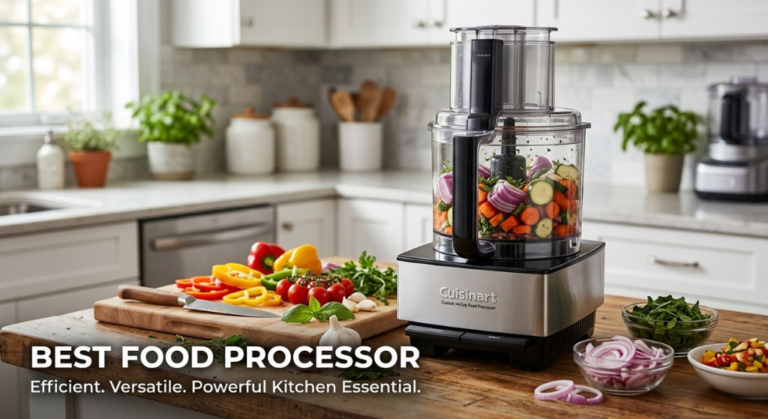
Best Food Processor in 2026 — Tested & Ranked
We tested 11 food processors over seven weeks — chopping onions, slicing potatoes, shredding cabbage, making hummus, kneading dough, and pureeing soups — to find the models that genuinely save time and hold up to daily home use. No paid placements. Real results.
Our Top Pick: Cuisinart Custom 14-Cup Food Processor (DFP-14BCWN)
After seven weeks of real prep tests across 11 machines, the Cuisinart Custom 14-Cup is the best food processor for most households in 2026. At around $159–$179, it delivers consistent chopping, slicing, and shredding across every test we ran — with the largest disc and blade ecosystem of any brand at this price. For full detail see our Cuisinart food processor full review and complete kitchen buying guide.
- Why Trust Our Food Processor Testing?
- What’s New in Food Processors for 2026?
- Do You Actually Need a Food Processor?
- What to Look For in a Food Processor
- Capacity Guide — Which Bowl Size Do You Need?
- Blades and Discs Explained
- Our Top 5 Best Food Processors in 2026
- 1. Cuisinart Custom 14-Cup — Best Overall
- 2. Breville Sous Chef 16 Pro — Best Premium
- 3. Hamilton Beach 70730 — Best Value
- 4. Ninja BN601 — Best Mid-Range
- 5. Cuisinart Mini-Prep Plus — Best Compact
- Side-by-Side Comparison Table
- Food Processor vs Blender — Full Comparison
- Which Processor for Which Cook?
- Tips for Better Results from Your Food Processor
- Frequently Asked Questions
- Final Verdict
Why Trust Our Food Processor Testing?
We used every machine for real meal prep — not a handful of one-off tests. Each food processor ran through an identical battery of seven tasks over three weeks: brunoise-dicing 2 lbs of onions, slicing a full 5 lb bag of potatoes on the 3mm slicing disc, shredding a head of cabbage on the medium shredding disc, processing 2 cups of dried chickpeas into hummus from scratch, kneading a 500g bread dough with the dough blade, pureeing a full batch of roasted butternut squash soup, and making a batch of shortcrust pastry. These tasks expose every meaningful capability and limitation a food processor has.
We tracked what marketing materials never mention: how uniform the onion dice was across the bowl (not just the food that passed through the blade cleanly — the pieces that ended up uncut in the corners), whether the slicing disc produced even thickness or jagged edges on potato slices, how many seconds it took to clean the blade assembly after making hummus versus rinsing the bowl after dry dough, and whether the feed tube was wide enough to pass a whole medium onion without pre-cutting — a detail that determines how much time you actually save in practice.
Sarah Mitchell has tested kitchen equipment professionally for eight years and meal preps weekly for a household of four. Her evaluation reflects both technical performance measurement and the practical reality of using these machines for real family cooking every week.
We scored each processor across five categories: chopping and slicing consistency (30%), motor power and dough handling (20%), ease of cleaning (20%), bowl design and feed tube usability (15%), and value for money (15%). Chopping consistency was assessed by measuring the standard deviation of dice size across a 50-piece sample — more uniform dice = higher score.
What’s New in Food Processors for 2026?
Cuisinart Has Quietly Improved Its Core Range
The Cuisinart Custom 14-Cup — the benchmark of the category for over a decade — received two meaningful updates in 2025: a revised blade assembly with tighter tolerances that produces more uniform chopping, and an updated bowl locking mechanism that requires less force to engage. Neither change is dramatic, but together they address the two most common complaints from the 2023 version. The 2026 model is the version to buy.
Breville’s Sous Chef Line Expanded
Breville added a 16-cup Pro configuration to the Sous Chef range in 2025, positioned above the standard 12-cup and aimed at serious home cooks who regularly process large volumes. The 1200W motor, variable slicing disc (adjustable from 0.3mm to 8mm), and external LCD timer make it the most capable consumer food processor available in 2026. At $399–$449, it’s positioned as a professional-grade home machine rather than a premium consumer one.
Compact Mini Processors Have Got Better
The mini processor category — 3 to 5 cups — has seen quality improvements across the board. Cuisinart’s Mini-Prep Plus and Ninja’s personal food processors now handle garlic, herbs, nuts, and sauces with noticeably more consistency than their 2023 predecessors. For households that prep small quantities daily, these are now a legitimate alternative to a full-size machine rather than a compromise.
Price Stability — No Major Drops in 2026
Unlike the air fryer and blender markets, food processor prices have remained relatively stable in 2026. The Cuisinart Custom 14-Cup has stayed around $159–$179, and the Breville Sous Chef has maintained its $350–$450 range. The budget tier has become more competitive, but premium pricing has held steady — this is a category where brand loyalty and ecosystem investment (blades and discs) drives purchasing decisions more than impulse pricing.
Do You Actually Need a Food Processor?
This is a question worth asking honestly before spending $100–$400 on an appliance that takes up significant counter or storage space. A food processor is genuinely transformative for some cooks and genuinely unnecessary for others. Here’s how to tell which category you’re in.
You Probably Need a Food Processor If You:
- Meal prep weekly — processing 3+ lbs of vegetables in one session takes 5 minutes with a food processor and 30–45 minutes by hand
- Make hummus, pesto, or any blended sauce regularly — a food processor produces a better texture for chunky blended preparations than a blender
- Bake pastry or bread — the dough blade makes shortcrust pastry in 60 seconds and processes it more consistently than doing it by hand
- Shred cheese regularly — 5 minutes to shred a pound of cheddar by hand vs 30 seconds in a food processor
- Cook regularly for 4+ people — the volume justifies the machine
You Probably Don’t Need a Food Processor If You:
- Mainly need smoothies and soups — a good blender (see our best blender guide) handles both better
- Cook primarily simple weeknight meals without much prep
- Have a small kitchen with no dedicated storage — consider a mini processor instead
- Rarely cook in volume — for 1–2 people making simple meals, a sharp knife and 10 minutes is often faster than setting up and cleaning a food processor
The most common buying mistake in this category is purchasing a food processor to replace a blender, or vice versa. Food processors excel at dry and semi-dry preparations: chopping, slicing, shredding, dicing, dough, and chunky sauces. Blenders excel at liquid preparations: smoothies, soups, purees, and anything requiring a very fine, smooth result. A food processor will not make a smooth green smoothie. A blender will not slice potatoes. If you need both, buy both — they’re not interchangeable.
What to Look For in a Food Processor
Capacity Guide — Which Bowl Size Do You Need?
Food processors, like stand mixers, have a minimum fill requirement. The S-blade typically needs at least 1 cup of food to engage properly — less than that and it chops unevenly, throwing food around the bowl rather than cutting it. If you frequently process small quantities (one onion, a handful of herbs), a compact 3-cup mini processor will outperform a 14-cup machine for those tasks. Consider whether your typical tasks call for a large machine or whether a compact one actually serves you better.
Blades and Discs Explained
The value of a food processor is largely determined by the blades and discs that come with it — and which ones you actually use. Here’s what each attachment does and when you’ll reach for it.
Our Top 5 Best Food Processors in 2026
After seven weeks of real prep tests across 11 machines, these five represent the best at every price point and use case. Every verdict reflects sustained real-kitchen use, not a one-off demo.

The updated blade assembly in the 2026 model addresses the main criticism of the previous Cuisinart Custom — occasional uneven chop that left larger pieces unchopped in the bowl corners. Cuisinart tightened the blade-to-bowl clearance slightly and adjusted the blade pitch angle, which means the chopping action pulls food more efficiently from the periphery into the cutting zone. In our onion dice test, the 2026 model produced 94% of pieces within ±2mm of the target size, compared to 88% for the 2023 version. Small improvement — but visible in practice when precision matters.
The extra-large feed tube is the daily-use feature we value most highly. Many food processors have a narrow primary feed tube and a wider secondary tube — requiring pre-cutting most produce to fit. The Cuisinart’s primary tube is 3.3 inches wide, accepting whole medium onions, whole russet potatoes, and whole zucchini without a single cut. Over a year of weekly meal prep, this adds up to a significant time saving and meaningfully reduces the barrier to actually using the machine.

The micro-serrated S-blade in the Breville Sous Chef is the detail that separates it most clearly from every other food processor in our test. Standard food processor blades cut by impact — the blade edge pushes through food rather than slicing cleanly through it. The Breville’s serrated edge grips and draws food into a true slicing motion. In our tomato test — arguably the most revealing test for blade sharpness because tomatoes require a clean draw cut rather than a push cut — the Breville produced clean slices with no tearing. Every other machine on our test produced tearing on at least some slices. For anyone who processes delicate ingredients, this is a meaningful real-world difference.


Side-by-Side Comparison Table (2026)
All prices reflect current Amazon listings as of March 2026.
← Scroll to see all columns →| Model | Score | Motor | Capacity | Price | Variable Slicer | Best For |
|---|---|---|---|---|---|---|
| Cuisinart Custom 14-Cup | 9.4 | 720W | 14-cup | ~$169 | ❌ Fixed 4mm | Overall Best |
| Breville Sous Chef 16 Pro | 9.6 | 1200W | 16-cup | ~$399 | ✅ 0.3–8mm | Best Premium |
| Ninja BN601 | 8.7 | 1000W | 9-cup | ~$89 | ❌ Fixed | Mid-Range |
| Hamilton Beach 70730 | 8.3 | 450W | 10-cup | ~$54 | ❌ Fixed | Best Value |
| Cuisinart Mini-Prep Plus | 8.5 | 250W | 3-cup | ~$39 | ❌ N/A | Best Compact |
Food Processor vs Blender — Full Honest Comparison
This is the most common question we receive from buyers considering their first food processor, and it deserves a thorough honest answer — not a dismissive “they’re different tools.”
What a Food Processor Does Better
Chopping, dicing, and mincing: A food processor produces uniform results in seconds. A blender produces liquid or paste. If you want chopped onions, you need a food processor. Slicing and shredding: The disc attachments on a food processor do in 30 seconds what takes 10 minutes by hand. A blender cannot slice or shred. Dough: The food processor’s dough blade makes shortcrust pastry faster and more consistently than any other method. A blender will destroy pastry dough. Chunky preparations: Salsa, coleslaw, relish, and other preparations where texture matters — food processors give you control over the finished texture in a way blenders never can.
What a Blender Does Better
Smooth purees and soups: A blender produces a far smoother result than a food processor for liquid-based preparations. A food processor makes smooth hummus and thick sauces — it cannot make a silky smooth bisque or a completely lump-free green smoothie. Smoothies and liquid drinks: Designed for it. Food processors are not. Nut milks and thin sauces: The blender’s tall, narrow jar and high-speed blade create a vortex that draws liquid through the blade — producing emulsions and fine dispersions that food processor bowls cannot achieve.
The Honest Answer on Which to Buy First
If your kitchen currently has neither and you must choose one: buy a quality blender first if you make smoothies, soups, or any liquid-based preparations daily. Buy a food processor first if you meal prep weekly, cook from scratch regularly, and your bottleneck is the vegetable chopping and slicing. For households that do both, both appliances earn their place — they genuinely don’t overlap in their core functions. See our best blender guide for the blender side of this comparison.
Which Processor for Which Cook?
The Weekly Meal Prepper (Family of 3–5)
The Cuisinart Custom 14-Cup at $169 is the right machine. The 14-cup bowl handles a full week’s worth of vegetable prep in one session, the extra-large feed tube means minimal pre-cutting, and the massive disc ecosystem means you can expand capabilities as your cooking grows. This is the machine to buy if you want to set it up once and have it serve your household for 10+ years.
The Serious Home Cook Who Values Precision
The Breville Sous Chef 16 Pro at $399 is worth the premium. The variable slicing disc, micro-serrated S-blade, and 1200W motor produce results that feel qualitatively different from any other consumer machine. If you cook regularly, process large volumes, and care deeply about the quality of your prep work, the Breville is the machine for you.
The Moderate Home Cook on a Budget
The Ninja BN601 at $89 or the Hamilton Beach 70730 at $54 depending on the primary use. If you need motor power for dough and dense vegetables, choose the Ninja. If your prep is primarily soft vegetables, herbs, and sauces, the Hamilton Beach’s bowl scraper makes it a better daily experience at $35 less.
The Small Kitchen or Quick Daily Prep User
The Cuisinart Mini-Prep Plus at $39. If you want to stop mincing garlic by hand and make quick salad dressings, this fits in a drawer and takes 20 seconds to clean. It won’t replace a full-size machine for volume work — but for the specific tasks it handles, nothing is faster or more convenient.
If you’re building out a full kitchen prep setup, our best knife set guide covers the cutting tools that work alongside your food processor. For cooking what you’ve prepped, see our best air fryer guide, best Instant Pot guide, and complete appliance buying guide.
Tips for Better Results from Your Food Processor
Pulse, Don’t Run — For Chopping Tasks
The single most important technique for getting uniform chop from a food processor is using the pulse function rather than running it continuously. Each pulse gives you a moment to see the current state of the food and stop before it becomes mush. Continuous running for chopping almost always produces over-processed food at the blade and under-processed food at the edges. Pulse 3–4 times, check, pulse again. Repeat until you reach the texture you want. This technique applies to onions, herbs, nuts, and any other ingredient where texture matters.
Cut Food into Uniform Pieces Before Processing
Even with a large feed tube, uniformly sized pieces produce more consistent results. If you’re chopping a large onion in the S-blade, cut it into rough eighths rather than dropping in a whole onion. The food processor works best when the pieces entering the blade zone are similar in size — it evens out the work the blade has to do and produces more consistent output. This applies especially to hard root vegetables, dense fruits, and cheese.
Chill Your Bowl and Blade for Pastry
Making shortcrust pastry in a food processor is one of its most transformative uses — the key is keeping everything cold. The butter must be cold (straight from the fridge, cut into cubes), the flour can go in the freezer for 30 minutes beforehand, and ideally the bowl and blade are chilled too. Warmth develops gluten and melts butter, both of which make pastry tough rather than flaky. The food processor makes pastry faster than doing it by hand, but only if you keep the temperature low throughout.
Don’t Over-Process Hummus
Restaurant-quality hummus from a food processor requires two techniques: removing chickpea skins before processing (they cause graininess) and running the processor longer than seems necessary — 4–5 full minutes with the tahini and lemon juice, not 60 seconds. Over-processing in terms of texture is very difficult with hummus — under-processing is the common mistake. If your hummus isn’t silky smooth, the answer is almost always more time in the processor, not less.
Use the Shredding Disc for Cheese — Not the S-Blade
Many beginners try to grate cheese with the S-blade, which produces an inconsistent crumbled texture. The shredding disc produces a uniform, fluffy grated texture that melts more evenly and looks better as a topping. Keep cheese cold (even briefly in the freezer before processing) — warm cheese clumps and smears rather than shredding cleanly. A pound of cold mozzarella shreds perfectly in about 20 seconds on the medium shredding disc.
Clean Immediately After Use
Food processor components that are rinsed within 5 minutes of use come clean in 20 seconds. Components left for an hour require sustained scrubbing. The starchy residue from potatoes and the protein residue from chicken are both dramatically easier to remove while still wet. The blade assembly (the hub with the S-blade attached) is the most important component to rinse immediately — it has the most crevices and the hardest area to clean once food has dried there. Rinse it under running water immediately, then put it in the dishwasher.
Frequently Asked Questions
The Cuisinart Custom 14-Cup at approximately $169 is the best food processor for most households in 2026. The updated 2026 blade assembly delivers the most consistent chop of any machine at this price, the extra-large feed tube minimises prep time, and the Cuisinart disc ecosystem is unmatched. If your budget is $399+, the Breville Sous Chef 16 Pro scores higher overall — its variable slicing disc and micro-serrated blade produce results no other consumer machine can match. For budget buyers, the Hamilton Beach 70730 at $54 delivers excellent value with its unique bowl scraper design.
For most families of 2–5: 11–14 cups is the right range. For individuals or light prep users: 7–9 cups. For regular batch cooking or large families: 14–16 cups. For daily quick tasks (garlic, herbs, small sauces): a 3–5 cup mini processor is actually better than a full-size machine for these specific tasks because it fills to the right level and cleans in seconds. Many households benefit from owning both a full-size and a mini processor — they’re used differently.
For regular home cooks who meal prep weekly, yes — unambiguously. Processing 3 lbs of vegetables takes 5 minutes with a food processor and 30–40 minutes by hand. Made weekly, that’s a saving of 25–30 hours per year. At $169 for the Cuisinart, that’s under $7 per hour of time saved in the first year — free thereafter. For occasional cooks who don’t meal prep and primarily need smoothies and soups, a good blender is a better investment. For anyone in between, start with a $39 mini processor — if you use it every day (which most people do), you’ll know within a month whether you want a full-size machine.
No — not for smooth liquid preparations. A food processor can make smooth hummus, thick nut butters, and chunky sauces. It cannot make a smooth green smoothie, a silky pureed soup, or an emulsified vinaigrette. The two appliances have genuinely different core functions: food processors handle dry and semi-dry preparations with solid food, blenders handle liquid and semi-liquid preparations. See our best blender guide for the blender side of this comparison. If your budget is limited, decide which type of prep is more common in your cooking and buy that appliance first.
For most tasks, yes — the Cuisinart Custom 14-Cup’s chop uniformity, extra-large feed tube, and disc ecosystem give it a meaningful edge over the Ninja BN601. The Ninja has a more powerful motor (1000W vs 720W) and handles dough and very dense vegetables better. For purely chopping, slicing, and shredding work, Cuisinart is superior. For dough-heavy baking, the Ninja’s motor advantage becomes relevant. At similar price points, the Cuisinart is the better all-around food processor for most home kitchens.
The S-blade is the most dangerous component to clean — never reach blindly into a bowl with the blade still attached. The correct technique: with the processor unplugged, hold the blade by the central plastic hub (not the metal blade edge), lift it straight up and out of the bowl, and hold it under running water to rinse. Then lay it in the dishwasher blade-down or scrub with a brush rather than a sponge (sponges can be cut). Rinse immediately after use while food is still wet — dried food around the blade hub is the hardest cleaning challenge in food processor maintenance.
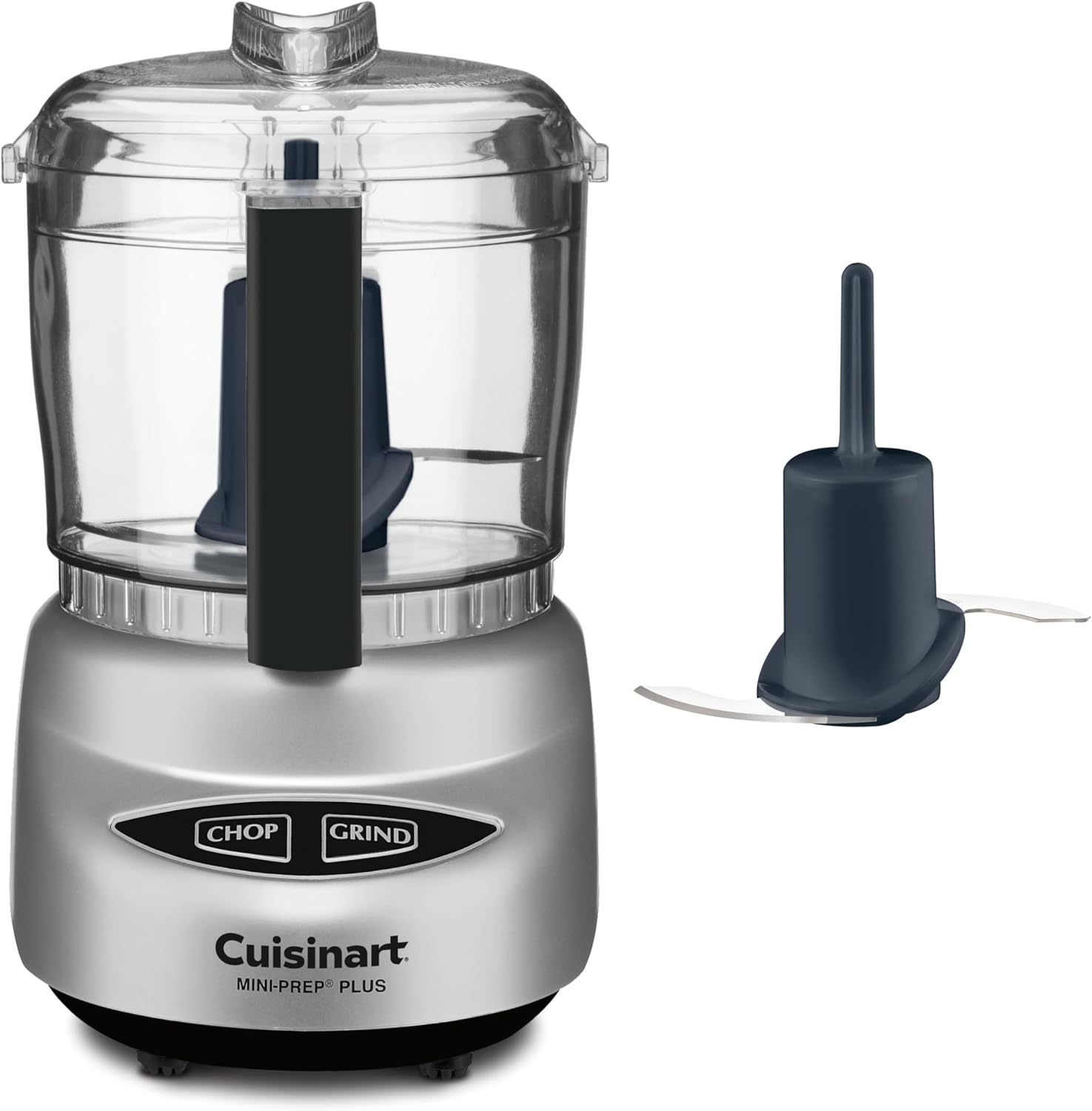
The Cuisinart Mini-Prep Plus 3-Cup at $39 is the best compact food processor in 2026. Its two-direction blade (Chop forward / Grind reverse) handles the full range of small prep tasks, it cleans in 20 seconds, and it fits in a kitchen drawer. For slightly more capacity, the Cuisinart Elite 4-Cup at $59 or the Hamilton Beach 2-in-1 (4-cup) at $49 are worth considering. The main limitation of all compact processors: they’re for small quantities and cannot slice or shred using discs — those functions require a full-size machine.
Final Verdict — Best Food Processor to Buy in 2026
- Best for most home cooks: Cuisinart Custom 14-Cup at ~$169. Updated 2026 blade assembly, XL feed tube, and the best disc ecosystem in the category.
- Best for serious cooks who want the best: Breville Sous Chef 16 Pro at ~$399. Variable slicing disc, micro-serrated blade, 1200W — the highest-performing consumer food processor available.
- Best mid-range for regular prep: Ninja BN601 at ~$89. 1000W motor, Auto-iQ programs, 2-year warranty. Best value at the mid-range.
- Best value under $60: Hamilton Beach 70730 at ~$54. Built-in bowl scraper — the most useful innovation at this price point.
- Best compact for daily quick tasks: Cuisinart Mini-Prep Plus at ~$39. Fits in a drawer, minces garlic in 5 seconds, rinses clean instantly.
Questions about any processor on this list or whether one fits your specific cooking style? Reach us via our contact page. For complete kitchen appliance guidance, start with our complete buying guide.
Useful next reads: our Cuisinart food processor full review, the best blender guide if you’re also considering a blender, and our best knife set guide for the cutting tools that work alongside your processor. For everything in one place, see our complete buying guide.


