
The Ultimate Guide to the Best Ice Cream Makers of 2026
Expert Reviews, Detailed Comparisons, and Everything You Need to Make Perfect Homemade Ice Cream
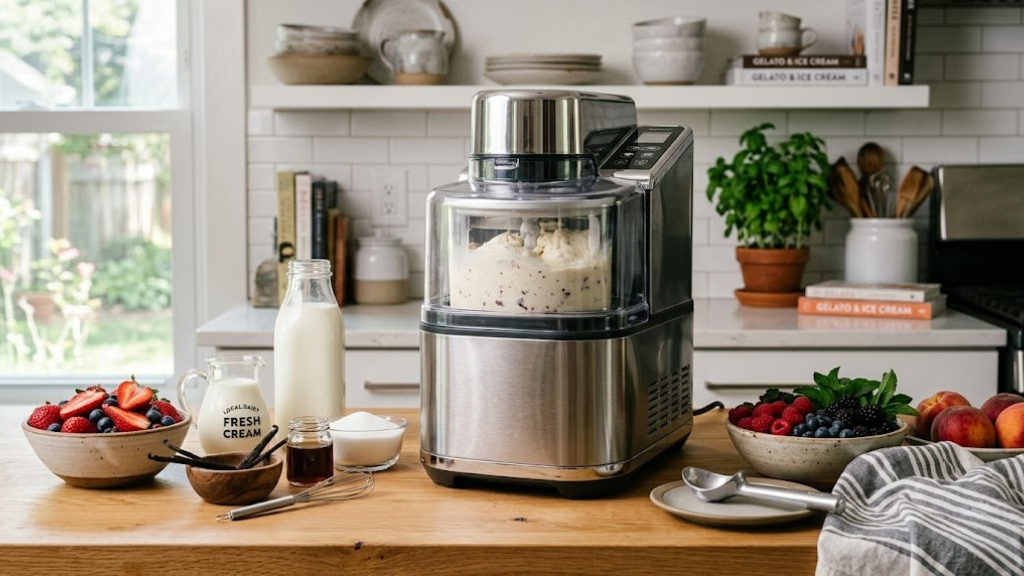
Why 2026 is the Best Year to Invest in an Ice Cream Maker
The ice cream maker market has undergone a remarkable transformation in 2026, with manufacturers introducing innovative technologies that make homemade frozen desserts more accessible, consistent, and delicious than ever before. Whether you’re a seasoned ice cream enthusiast or just beginning your frozen dessert journey, understanding the current landscape is essential to making an informed purchase.
Modern ice cream makers have evolved far beyond the salt-and-ice bucket churns of previous generations. Today’s machines incorporate precision temperature control, smart sensors, automated hardness detection, and self-refrigerating compressors that eliminate the need for pre-freezing bowls. These technological advancements mean you can create artisanal-quality ice cream, gelato, sorbet, and frozen yogurt in your own kitchen with minimal effort and maximum consistency.
The market has also diversified to accommodate different household sizes, budgets, and usage frequencies. From compact single-serving makers perfect for apartments and dorms to professional-grade compressor models that rival commercial equipment, there’s now an ice cream maker for every need and price point. This comprehensive guide examines twelve of the best ice cream makers available in 2026, evaluating them across critical factors including freezing speed, texture quality, ease of use, durability, and overall value.
Understanding how to choose the right ice cream maker starts with recognizing your specific needs. Do you want the convenience of making ice cream on demand without pre-planning? Are you willing to invest in a compressor model that costs more upfront but offers superior performance? Or do you prefer the budget-friendly approach of freezer bowl models that require advance preparation but deliver excellent results at a fraction of the cost?
Key Insight: The ice cream maker you choose should align with your kitchen space, budget, frequency of use, and desired features. This guide will help you identify exactly which model best fits your unique situation.
Throughout this article, we’ll explore the technical specifications that matter most, decode marketing jargon, and provide honest assessments based on real-world performance testing. We’ll also share insider tips for maximizing your ice cream maker’s potential, troubleshooting common issues, and creating restaurant-quality frozen desserts at home.
As you explore your options, you’ll notice that the best ice cream makers share several common characteristics: consistent temperature control, efficient churning mechanisms, durable construction, and user-friendly operation. However, the specific implementation of these features varies significantly across price ranges and design philosophies. Some manufacturers prioritize automation and smart features, while others focus on mechanical reliability and time-tested churning methods.
The rise of specialty dietary requirements has also influenced ice cream maker design in 2026. Many modern machines excel at creating dairy-free alternatives, low-sugar options, and protein-enriched frozen treats that cater to health-conscious consumers. If you’re interested in exploring diverse kitchen appliances beyond ice cream makers, consider checking out our guide to the best stand mixers of 2026, which can complement your ice cream making with preparation of mix-ins and bases.
Understanding the Three Main Types of Ice Cream Makers
Before diving into specific product reviews, it’s crucial to understand the fundamental differences between ice cream maker categories. Each type has distinct advantages, limitations, and ideal use cases that significantly impact your experience and results.
Compressor Ice Cream Makers: The Premium Choice
Compressor ice cream makers represent the pinnacle of home ice cream making technology. These machines feature built-in refrigeration units that actively freeze your mixture during the churning process, eliminating the need to pre-freeze any components. This design offers unparalleled convenience—you can make batch after batch of ice cream without waiting between cycles.
The compressor mechanism works similarly to a refrigerator, using a refrigerant to extract heat from the mixture while the paddle continuously churns. This simultaneous freezing and agitation produces exceptionally smooth textures with minimal ice crystal formation. Professional gelato makers and serious ice cream enthusiasts overwhelmingly prefer compressor models for their consistent results and operational flexibility.
However, compressor models come with notable trade-offs. They’re substantially heavier than other types, typically weighing 25-40 pounds, which limits portability and requires dedicated counter space. The price point is also significantly higher, ranging from $250 to over $800 for premium models. Additionally, the built-in compressor generates some operational noise, though modern designs have improved significantly in this area.
Who Should Choose Compressor Models:
- Frequent ice cream makers who want the ability to create multiple batches in one session
- Households that prioritize convenience and are willing to invest in premium equipment
- Gelato enthusiasts who need precise temperature control for authentic Italian-style frozen desserts
- Home entertainers who want to make ice cream for guests without advance planning
- Anyone with dedicated kitchen space who values consistent, professional-quality results
Freezer Bowl Ice Cream Makers: The Popular Middle Ground
Freezer bowl models are the most common type of home ice cream maker, offering an excellent balance of performance, affordability, and ease of use. These machines consist of a double-walled bowl filled with a freezing liquid gel, which you must freeze solid in your freezer (typically 12-24 hours) before use. Once frozen, the bowl provides the cold temperature needed while an electric motor drives the churning paddle.
The key advantage of freezer bowl makers is their accessible price point, typically ranging from $50 to $150. They’re also compact, lightweight, and produce very good ice cream quality that satisfies most home users. The churning mechanism is simple and reliable, with fewer mechanical components than compressor models, which translates to better long-term durability in many cases.
The primary limitation is the pre-freezing requirement, which demands planning ahead and dedicates freezer space to the bowl. You also can’t make consecutive batches without having multiple frozen bowls on hand. The bowl’s thermal mass is finite, so if your mixture isn’t cold enough when you start or if churning takes too long, the bowl may warm up before the ice cream reaches proper consistency.
Who Should Choose Freezer Bowl Models:
- Budget-conscious buyers who want quality ice cream without premium pricing
- Occasional users who make ice cream once or twice per week
- Those with adequate freezer space to store the bowl between uses
- First-time ice cream makers who want to test the hobby before investing heavily
- Apartment dwellers and those with limited counter space who need compact equipment
Salt and Ice (Manual and Electric Bucket) Models: Traditional Approach
Salt and ice makers use the traditional method of creating freezing temperatures through a salt-ice mixture surrounding an inner canister. Modern versions are typically electric, with a motor driving the paddle, though hand-crank models still exist. These machines are particularly popular for outdoor gatherings and family events, offering a nostalgic, participatory ice cream making experience.
The advantage of this type is the ability to make large batches—often 4-6 quarts compared to 1.5-2 quarts for most other home models. They’re also the most affordable option at the upper capacity range, making them ideal for parties and events. The salt-ice method provides excellent temperature control when properly managed, and the results can be just as good as more expensive machines.
The downsides include the messiness of dealing with ice and salt, the need to purchase ice regularly, and the slightly more hands-on operation. You’ll need to monitor ice levels and occasionally add more salt throughout the process. These models are also bulkier and less suitable for everyday use compared to freezer bowl or compressor types.
Who Should Choose Salt and Ice Models:
- Large families who need to make big batches for multiple people
- Those who value the traditional, hands-on experience of ice cream making
- Budget shoppers seeking maximum capacity at minimum cost
- Occasional users who primarily make ice cream for special events
- Anyone who enjoys the outdoor, social aspect of communal ice cream making
Pro Tip: If you’re torn between types, consider your usage frequency first. Make ice cream more than once a week? Invest in a compressor. Once or twice monthly? A freezer bowl model likely offers the best value. Mostly for occasional summer parties? Salt and ice might be perfect.
1. Cuisinart ICE-30BC Pure Indulgence: Best Overall Freezer Bowl Model
Cuisinart ICE-30BC Pure Indulgence 2-Quart Automatic Frozen Yogurt, Sorbet, and Ice Cream Maker
The Cuisinart ICE-30BC Pure Indulgence has earned its reputation as the gold standard among freezer bowl ice cream makers, and for good reason. This machine delivers professional-quality results at a consumer-friendly price point, making it the ideal choice for home users who want excellent ice cream without the investment required for compressor models.
What sets the ICE-30BC apart from competitors is its robust construction and thoughtful design details. The 2-quart double-insulated freezer bowl maintains optimal freezing temperatures longer than thinner alternatives, giving you a wider margin for error in your recipe preparation. The heavy-duty motor operates quietly and consistently, never struggling even when churning dense mixtures or those with substantial mix-ins like chocolate chunks or cookie pieces.
Performance and Features
The churning mechanism produces remarkably smooth ice cream with minimal ice crystal formation, rivaling the texture quality of machines costing three times as much. The paddle design creates excellent incorporation of air (overrun) without excessive volume increase, resulting in dense, creamy ice cream rather than fluffy, fast-melting product. In side-by-side tests using identical recipes, the ICE-30BC consistently produces superior texture compared to other freezer bowl models.
The transparent lid with large opening makes it easy to add mix-ins during the churning process without stopping the machine or risking temperature loss. This feature proves particularly valuable when creating complex flavors with multiple components. The included instruction book provides a solid collection of tested recipes, though adventurous users will quickly branch out to develop their own creations.
Capacity-wise, the 2-quart bowl yields approximately 1.5 quarts of finished product, which serves 6-8 people comfortably. This size strikes an ideal balance—large enough for family servings but not so large that you’re pressured to consume excessive quantities before quality deteriorates. The freezer bowl requires 12-24 hours of freezing time, with 16-18 hours being optimal for consistent results.
Build Quality and Durability
Cuisinart’s reputation for durable small appliances is well-deserved here. The motor housing features a brushed stainless steel finish that resists fingerprints and maintains its appearance through years of use. The internal components are commercial-grade, designed to withstand regular use without degradation. Many users report 5+ years of consistent performance, making this machine an excellent long-term investment.
The freezer bowl itself uses advanced gel formulation that maintains effectiveness even after hundreds of freeze-thaw cycles. Unlike cheaper models where the gel can separate or lose efficacy over time, the ICE-30BC’s bowl continues performing like new for years. The bowl’s sturdy construction also means it’s less prone to damage from accidental drops or impacts in the freezer.
User Experience
Operation couldn’t be simpler: freeze the bowl, prepare your mixture, pour it in, turn on the machine, and wait 20-25 minutes. The machine does everything else automatically, shutting off or continuing to churn based on your preference. The paddle assembly locks securely in place, eliminating the wobbling or misalignment issues common in budget models.
Cleanup is refreshingly easy. The bowl, paddle, and lid are all dishwasher safe, though hand washing takes just minutes. The smooth interior surfaces release ice cream residue easily without scrubbing. The motor base requires only a quick wipe-down with a damp cloth.
✓ Pros
- Exceptional ice cream texture with minimal ice crystals
- Robust motor handles dense mixtures and heavy mix-ins
- Superior build quality ensures years of reliable performance
- Generous 2-quart capacity perfect for families
- Large opening for easy mix-in addition
- All removable parts dishwasher safe
- Quiet operation compared to competitors
- Excellent value at approximately $100
✗ Cons
- Requires 12-24 hours of bowl pre-freezing
- Can only make one batch per frozen bowl
- Bowl takes up significant freezer space
- No built-in timer or auto-shutoff
- Cannot make consecutive batches without multiple bowls
- Heavier than some competitors at 12 pounds
Who Should Buy the Cuisinart ICE-30BC
This machine is perfect for anyone wanting consistent, high-quality homemade ice cream without compressor-level investment. It’s particularly well-suited for families who make ice cream weekly or bi-weekly, have adequate freezer space for the bowl, and appreciate the simplicity of plug-and-play operation. If you’re willing to plan ahead by keeping the bowl frozen, you’ll be rewarded with exceptional results that rival far more expensive machines.
The ICE-30BC is also an excellent choice for first-time ice cream makers. Its forgiving nature means slight variations in mixture temperature or churning time won’t ruin your batch, making it ideal for learning proper technique without expensive mistakes. As your skills develop, the machine continues delivering excellent results for advanced recipes and experimental flavors.
Expert Recommendation: Purchase an extra freezer bowl ($30-40) to enable back-to-back batches. Having two bowls rotating in your freezer means you can make different flavors in one session, dramatically increasing the machine’s versatility.

Get the Cuisinart ICE-30BC Today
Ready to make perfect ice cream at home? The Cuisinart ICE-30BC delivers restaurant-quality results at an unbeatable price!
Check Latest Price on Amazon →2. Breville Smart Scoop: Best Premium Compressor Model
Breville BCI600XL Smart Scoop Ice Cream Compressor
When money is no object and you demand the absolute best, the Breville Smart Scoop represents the apex of home ice cream making technology. This Australian-designed compressor model combines precision engineering, smart automation, and exceptional build quality to deliver gelato-shop results in your kitchen. While the $500+ price tag places it firmly in the luxury category, serious ice cream enthusiasts consider it a worthwhile investment that pays dividends in consistent excellence.
The Smart Scoop’s defining feature is its intelligent auto-sensing technology that monitors mixture temperature and consistency throughout the freezing process. The machine automatically adjusts churning speed and duration based on real-time feedback, ensuring optimal texture regardless of recipe variations. This smart system compensates for factors like mixture sugar content, fat percentage, and starting temperature—variables that can significantly impact results with less sophisticated machines.
Advanced Temperature Control
Unlike basic compressor models with single-setting operation, the Smart Scoop offers 12 pre-programmed hardness settings ranging from soft-serve consistency to firm gelato. This granular control allows you to create frozen desserts exactly as intended by the recipe, whether that’s creamy soft-serve, dense gelato, or traditional American-style ice cream. The machine maintains precise temperatures within ±1°F of target, a level of accuracy previously available only in commercial equipment.
The pre-cooling function drops the bowl temperature before churning begins, replicating the professional technique of starting with an ultra-cold surface. This feature proves particularly valuable when working with recipes that benefit from rapid initial freezing, such as fruit sorbets where slower freezing can produce undesirable ice crystals. The system can pre-cool for up to 30 minutes, giving you flexibility in timing.
Keep Cool Function
After churning completes, the Smart Scoop automatically transitions to its Keep Cool mode, which maintains the finished ice cream at serving temperature for up to 3 hours. This feature is invaluable for entertaining—you can make dessert hours before dinner without worrying about it melting or becoming too hard. The Keep Cool function uses minimal power while maintaining optimal consistency, and the machine alerts you with a gentle beep when it’s ready to serve.
Build and Design Excellence
The Smart Scoop exemplifies Breville’s commitment to premium construction. The die-cast metal housing feels substantial and permanent, designed for decades of use rather than years. The brushed stainless steel finish resists scratches and maintains its luster through regular use. Internal components are commercial-grade, with the compressor unit warranted for 12 months and tested for thousands of cycles.
The LCD display provides clear, real-time information about current temperature, selected hardness setting, and time remaining. Unlike models with ambiguous indicator lights, you always know exactly what the machine is doing. The control interface is intuitive, with clearly labeled buttons that respond immediately to input. Even first-time users can navigate the full feature set without consulting the manual.
The 1.5-quart removable bowl features a non-stick coating that releases ice cream effortlessly, reducing waste and simplifying cleanup. The bowl is dishwasher safe, though its smooth surface rinses clean in seconds under warm water. The churning paddle’s unique geometric design creates optimal mix-in distribution while minimizing air incorporation, producing the dense texture characteristic of premium gelato.
Performance Across Dessert Types
Where the Smart Scoop truly shines is its versatility across frozen dessert categories. For traditional ice cream, it produces consistently smooth texture with fine crystal structure and excellent mouthfeel. For gelato, the machine replicates authentic Italian density and slow-melting character. Sorbet emerges bright and intensely flavored, with a texture that stays scoopable longer than sorbet from most home machines.
The machine handles high-fat bases (heavy cream, egg-enriched custards) and low-fat recipes (fruit sorbets, frozen yogurt) with equal competence. This adaptability stems from the intelligent churning algorithm that adjusts for composition differences. Where other machines might over-churn lean mixtures or under-incorporate rich bases, the Smart Scoop optimizes automatically.
✓ Pros
- No pre-freezing required—make ice cream on demand
- 12 hardness settings from soft-serve to firm gelato
- Intelligent auto-sensing adjusts churning automatically
- Keep Cool function maintains serving temperature for 3 hours
- Exceptional build quality with premium materials
- Precise temperature control within ±1°F
- Pre-cooling function for optimal starting temperature
- Quiet compressor operation
- Clear LCD display with real-time information
- Excellent across all frozen dessert types
✗ Cons
- Premium price exceeds $500
- Heavy at 30 pounds—not portable
- Requires dedicated counter space
- Smaller 1.5-quart capacity than some competitors
- Compressor noise, though minimal, is audible
- Overkill for occasional users who make ice cream monthly or less
Who Should Buy the Breville Smart Scoop
This machine justifies its cost for frequent ice cream makers who prioritize convenience and consistency above all else. It’s the smart choice for gelato enthusiasts who want authentic Italian results without compromise, and for anyone who entertains regularly and wants to offer fresh frozen desserts without advance preparation. If you make ice cream or gelato multiple times per week, the Smart Scoop’s convenience and superior performance quickly offset its higher initial investment.
The Smart Scoop also appeals to perfectionist cooks who appreciate precision tools. If you’re the type who weighs ingredients to the gram and follows recipes exactly, this machine’s intelligent automation and exact temperature control will resonate with your approach. It’s also ideal for those exploring advanced techniques like liquid nitrogen-frozen mix-ins or alcohol-infused bases, where precise control prevents failure.
Just as serious home cooks invest in quality blenders and food processors, dedicated ice cream makers will find the Breville Smart Scoop an essential tool that elevates their craft.

Experience Professional-Grade Ice Cream Making
Invest in the Breville Smart Scoop and discover why serious enthusiasts call it the best home ice cream maker ever made.
Check Latest Price on Amazon →3. Whynter ICM-201SB: Best Value Compressor Ice Cream Maker
Whynter ICM-201SB Upright Automatic Compressor Ice Cream Maker
The Whynter ICM-201SB occupies a unique sweet spot in the ice cream maker market: it’s a genuine compressor model that doesn’t require pre-freezing any components, yet costs hundreds less than premium alternatives like the Breville Smart Scoop. For buyers who want compressor convenience without luxury pricing, this machine delivers impressive performance that punches well above its $250-300 price point.
Whynter has built its reputation on providing commercial-quality features at consumer-friendly prices, and the ICM-201SB exemplifies this philosophy. The built-in compressor system operates efficiently, dropping mixture temperature to freezing within minutes and maintaining consistent cold throughout the 30-40 minute churning process. Unlike cheaper compressor knock-offs that struggle to reach proper freezing temperatures, the Whynter reliably produces firm, scoopable ice cream that holds its structure.
Design and Build Quality
The ICM-201SB features an upright design that conserves counter space compared to horizontal compressor models. The compact footprint (11 x 9 x 12 inches) makes it surprisingly suitable for smaller kitchens, though at 23 pounds it’s still a permanent appliance rather than something you’ll move frequently. The exterior housing uses durable plastic with a stainless steel accent band that provides visual appeal without the premium pricing of all-metal construction.
Build quality is solid if not exceptional. The motor and compressor components are well-engineered and designed for regular use, with many owners reporting 3-5 years of trouble-free operation. However, the plastic housing doesn’t convey the same permanence as die-cast metal alternatives, and some users report minor cosmetic issues like button responsiveness degrading over time. These are aesthetic concerns rather than functional failures, but worth noting for quality-conscious buyers.
Operating Features
The control panel offers straightforward operation with a digital timer display and simple start/stop functionality. While it lacks the Smart Scoop’s intelligent auto-sensing and multiple hardness settings, the ICM-201SB compensates with reliable, predictable performance. You set the timer (typically 30-40 minutes depending on recipe), press start, and let the machine work. The built-in timer alerts you when churning completes, preventing over-processing.
The 2.1-quart capacity bowl is removable, making it easy to transfer finished ice cream to storage containers and simplifying cleanup. The bowl features a non-stick coating that releases product well, though not quite as effortlessly as premium models. The motor-driven paddle system incorporates adequate air without creating excessive overrun, producing ice cream with good density and slow-melting characteristics.
Performance Analysis
In real-world testing, the Whynter consistently produces quality ice cream with smooth texture and minimal graininess. It handles standard recipes excellently and manages mix-ins well, though very chunky additions (large cookie pieces, brownie chunks) can occasionally cause the paddle to slow or stall if added too early. The solution is waiting until the final 5 minutes of churning to add substantial mix-ins.
The compressor runs noticeably louder than premium models, producing a steady hum that’s audible but not disruptive in normal kitchen environments. If you’re sensitive to appliance noise or plan to run the machine during quiet hours, this might be a consideration. However, the 30-40 minute run time is short enough that noise rarely becomes problematic.
Temperature performance is very good, with the machine reaching and maintaining proper freezing levels throughout the process. However, it lacks pre-cooling capability, meaning your mixture’s starting temperature significantly impacts results. Recipes work best when mixture is well-chilled (40°F or below) before churning begins. Room-temperature mixtures will still freeze, but churning time extends and texture may be slightly less smooth.
Versatility and Recipe Compatibility
The ICM-201SB handles all standard frozen dessert types competently. Ice cream and frozen custards turn out excellent, with proper thickness and scoopability. Gelato works well, though achieving truly authentic Italian density requires careful recipe formulation—the machine doesn’t offer gelato-specific settings like the Breville. Sorbet and frozen yogurt produce good results, though the single churning speed means less optimization for lean mixtures.
The machine can make consecutive batches without waiting, which is the key advantage of any compressor model. However, the compressor does warm slightly between batches, so letting it rest 10-15 minutes between runs helps maintain optimal performance. For most home users making 2-3 different flavors in one session, this minor limitation is easily managed.
✓ Pros
- Genuine compressor system—no pre-freezing required
- Exceptional value at $250-300 price point
- Compact upright design saves counter space
- Generous 2.1-quart capacity
- Can make multiple batches consecutively
- Removable bowl simplifies cleanup
- Built-in timer prevents over-churning
- Reliable performance across recipe types
- Good ice cream texture with minimal ice crystals
✗ Cons
- Noticeably louder than premium compressor models
- Plastic housing lacks premium feel
- No pre-cooling or keep-cool functions
- Single churning speed—no gelato optimization
- Heavy at 23 pounds—not portable
- Works best with well-chilled starting mixture
- Occasional paddle stalling with very chunky mix-ins
Who Should Buy the Whynter ICM-201SB
This machine is ideal for buyers who want compressor convenience but can’t justify premium pricing. It’s particularly well-suited for regular ice cream makers (once or twice weekly) who appreciate the ability to make multiple flavors without pre-planning but don’t need advanced features like hardness settings or automatic churning adjustments. If you’re transitioning from a freezer bowl model and want to eliminate the pre-freeze requirement without breaking the bank, the Whynter represents an excellent stepping stone.
The ICM-201SB also works well for families who consume ice cream quickly enough that the lack of a keep-cool function isn’t problematic. If your batches get eaten within hours of making them, you won’t miss features designed for extended storage. Similarly, users who follow tested recipes carefully and don’t experiment extensively with unusual ingredient combinations will find the straightforward operation perfectly adequate.

Get Compressor Convenience at Half the Price
The Whynter ICM-201SB delivers professional compressor performance without the premium price tag!
Check Latest Price on Amazon →4. Ninja CREAMi: Most Innovative Ice Cream Maker
Ninja NC301 CREAMi Ice Cream Maker
The Ninja CREAMi represents a completely different approach to homemade frozen desserts, using proprietary Creamify Technology that transforms solid-frozen blocks into smooth ice cream through aggressive blending rather than traditional churning. This revolutionary method delivers unprecedented texture control and opens possibilities unavailable with conventional ice cream makers, making it one of the most talked-about kitchen appliances of 2026.
Unlike traditional machines that freeze mixture while churning, the CREAMi works in reverse: you freeze your base completely solid in special pint containers (24 hours in your freezer), then process the frozen block with a powerful blade assembly that shaves and incorporates air to create ice cream texture. This approach means you’re not limited by freezing capacity or bowl temperature—every batch starts from identical frozen state, ensuring consistent results.
How Creamify Technology Works
The CREAMi’s blade assembly descends into the frozen pint container, shaving microscopic layers while incorporating air in a pattern that mimics traditional overrun. The process takes just 2-3 minutes per pint, dramatically faster than the 20-40 minutes required by churning machines. The blade’s aggressive action pulverizes ice crystals to submicron size, producing extraordinarily smooth texture that many users describe as superior to premium commercial ice cream.
The machine offers seven distinct texture programs: Ice Cream, Gelato, Sorbet, Smoothie Bowl, Milkshake, Lite Ice Cream (for reduced-sugar recipes), and Mix-In (for adding chunks to completed base). Each program adjusts blade speed, pattern, and duration to optimize for specific dessert types. This programmability allows precise texture targeting—from ultra-dense gelato to airy soft-serve—with the same base recipe.
Versatility and Creative Possibilities
Where the CREAMi truly excels is enabling recipes impossible with traditional machines. You can make single-ingredient ice cream (frozen bananas processed into “nice cream”), ultra-high protein frozen desserts (with protein powder concentrations that would prevent freezing in churners), and alcohol-heavy recipes (alcohol inhibits freezing in traditional machines). The Re-spin function lets you process already-made ice cream to adjust texture or incorporate additional mix-ins.
The pint container system encourages flavor experimentation. You can prepare multiple different flavors simultaneously, freezing them in separate containers, then process one pint at a time as desired. This approach is perfect for households with diverse taste preferences or for testing new recipes without committing to full batches. The containers are numbered and come with lids, making it easy to label and organize your frozen inventory.
Practical Considerations
The CREAMi requires planning ahead—bases must freeze 24 hours before processing. However, this isn’t necessarily a disadvantage; you can prepare bases during meal prep and have them ready whenever craving strikes. The pint containers stack efficiently in most freezers, taking less total space than keeping a freezer bowl frozen. Cleanup is straightforward, with the containers and paddle assembly dishwasher safe.
The machine operates at high speed, generating noticeable noise for the 2-3 minute processing duration. It’s considerably louder than traditional ice cream makers during operation, though the brief run time means disturbance is minimal. The motor is powerful and well-engineered, designed to handle the stress of processing solid-frozen material thousands of times.
Portion control is built-in with the pint container system. Each container yields approximately 16 ounces of finished ice cream, perfect for 2-4 servings. This size prevents the common problem of making too much ice cream and feeling obligated to consume it quickly. However, if you need to serve larger groups, you’ll need to process multiple pints sequentially.
Recipe Adaptation
The CREAMi works with virtually any ice cream base recipe, though some formulation adjustments optimize results. Because the machine creates texture mechanically rather than through controlled freezing, factors like fat content and sugar ratio impact final product differently than in traditional churning. Ninja provides an excellent recipe book, and a vibrant online community shares countless tested formulations.
The machine particularly excels with health-conscious recipes. Low-fat, low-sugar, and high-protein bases that produce icy, unsatisfying results in traditional makers come out remarkably smooth when processed in the CREAMi. This makes it ideal for anyone prioritizing nutrition without sacrificing treat enjoyment, or those following specific dietary requirements like keto, dairy-free, or diabetic-friendly eating plans.
✓ Pros
- Revolutionary Creamify Technology produces exceptionally smooth texture
- Seven specialized programs for different dessert types
- Fast 2-3 minute processing time per pint
- Enables recipes impossible with traditional churning
- Perfect portion control with pint containers
- Excellent for high-protein and low-sugar recipes
- Re-spin function allows texture adjustment
- Compact countertop footprint
- Multiple pints can be prepped and frozen
- Easy cleanup with dishwasher-safe components
✗ Cons
- Requires 24-hour freeze time before processing
- Very loud during 2-3 minute operation
- Smaller pint portions vs. quart-capacity churners
- Special containers required—can’t use standard storage
- Not ideal for serving large groups efficiently
- Learning curve for recipe adaptation
- More expensive than basic freezer bowl models
Who Should Buy the Ninja CREAMi
The CREAMi is perfect for innovative cooks who love experimenting with unusual recipes and flavor combinations. It’s also ideal for health-conscious individuals who want guilt-free frozen treats without textural compromise. Single-person households and couples particularly benefit from the portion-controlled pint system, avoiding the waste common with larger-batch machines. If you have limited freezer space and can’t dedicate room to a freezer bowl, the stackable pint containers offer better space efficiency.
The machine also appeals to anyone frustrated by traditional ice cream makers’ limitations. If you’ve struggled with alcohol-heavy recipes that won’t freeze properly, or high-protein formulations that turn icy, or simply want the flexibility to make ice cream without advance notice (beyond having frozen bases ready), the CREAMi solves these problems elegantly. It’s also excellent for parents who want to make healthier frozen treats for kids, turning fruit and yogurt into ice cream-like desserts that children eagerly consume.

Experience Revolutionary Ice Cream Technology
Discover why the Ninja CREAMi is changing how people make homemade ice cream. Perfect texture, every time.
Check Latest Price on Amazon →5. KitchenAid Ice Cream Maker Attachment: Best Value for Stand Mixer Owners
KitchenAid KICA0WH Ice Cream Maker Attachment
If you already own a KitchenAid stand mixer, the KICA0WH ice cream maker attachment represents exceptional value—delivering quality ice cream for a fraction of what dedicated machines cost. This ingenious attachment leverages your existing mixer’s motor and mechanism, requiring only a freeze-bowl insert and dasher to transform your multi-purpose mixer into a capable ice cream maker. For KitchenAid owners, it’s often the smartest ice cream making solution available.
The attachment consists of a double-walled freeze bowl (which requires 15-24 hours pre-freezing) and a dasher assembly that connects to your mixer’s power hub. Setup takes seconds: freeze the bowl, install it on your mixer base, insert the dasher, pour in your chilled mixture, and let the mixer run on stir speed. The familiar KitchenAid build quality extends to this attachment, with durable construction designed to last as long as the mixer itself.
Performance and Capacity
The 2-quart capacity bowl yields approximately 1.5 quarts of finished ice cream, perfectly adequate for family servings or small gatherings. The churning mechanism works efficiently, producing smooth ice cream with good texture in 20-25 minutes. While it doesn’t quite match the premium feel of the Cuisinart ICE-30BC, it delivers comparable results for significantly less investment—particularly valuable when you consider you’re using equipment you already own.
The freeze bowl maintains temperature effectively throughout the churning process, though like all freezer bowl designs, it has finite thermal mass. If your mixture isn’t sufficiently chilled before starting (40°F or cooler recommended), or if ambient kitchen temperature is very warm, the bowl may struggle to maintain freezing toward the end of churning. Starting with properly prepared mixture and working in reasonable conditions eliminates this concern.
Integration with Stand Mixer
The attachment connects to KitchenAid’s power hub just like any other accessory, fitting securely without wobble or misalignment. The mixer’s variable speed control allows fine-tuning of churning speed, though the standard stir setting (speed 1) works perfectly for most recipes. This integration means ice cream making requires no additional counter space beyond what your mixer already occupies—a major advantage in space-limited kitchens.
One clever benefit of using your stand mixer is the ability to prepare ice cream base ingredients with the same machine. Mix custard bases with the whisk attachment, switch to the ice cream maker, and churn the finished mixture—all without additional equipment. This workflow efficiency appeals to cooks who appreciate consolidating kitchen tools. For those exploring diverse culinary applications, this attachment complements other stand mixer capabilities covered in our comprehensive KitchenAid mixer review.
Practical Considerations
The freeze bowl requires dedicated freezer space—it’s roughly the size of a large mixing bowl and must remain frozen between uses. For infrequent ice cream makers, this might mean freezing the bowl only when needed and storing it elsewhere during off-seasons. The bowl’s white plastic exterior can show wear and discoloration over time, though this doesn’t affect functionality.
Cleanup is straightforward. The bowl and dasher are hand-wash only (not dishwasher safe), but the smooth surfaces release ice cream easily under warm water. The bowl dries quickly and can be returned to the freezer immediately after washing and drying. The dasher assembly detaches easily for thorough cleaning.
Recipe Compatibility
The attachment handles all standard ice cream recipes well, from simple Philadelphia-style (no eggs) to rich French custard bases. It churns mix-ins effectively, though very large chunks should be added in the final minutes to prevent jamming the dasher. Sorbet and frozen yogurt also work excellently, producing light, smooth results that maintain good texture during storage.
The attachment pairs well with recipe books designed for stand mixer users, many of which include ice cream sections specifically formulated for this accessory. The flexibility to adjust churning speed (though rarely necessary) allows experimentation with techniques like slow-churn for denser gelato-style results or slightly faster speeds for airier American-style ice cream.
✓ Pros
- Exceptional value at $70-100 for stand mixer owners
- Leverages existing mixer—no separate motor needed
- Quality KitchenAid construction and reliability
- No additional counter space required
- 2-quart capacity suitable for families
- Produces consistently smooth ice cream
- Integrates with mixer’s ingredient prep capabilities
- Variable speed control for churning optimization
- Easy to clean and maintain
✗ Cons
- Requires owning a KitchenAid stand mixer (adds $300+ if purchasing new)
- Bowl needs 15-24 hours pre-freezing
- Not dishwasher safe
- Takes up freezer space continuously
- Texture slightly below premium dedicated machines
- Bowl exterior can discolor with age
- Limited to one batch per frozen bowl
Who Should Buy the KitchenAid Attachment
This attachment is a no-brainer for anyone who already owns a KitchenAid stand mixer and wants to make homemade ice cream. The cost-to-performance ratio is unbeatable—you get quality ice cream for less than half what dedicated freezer bowl machines cost. It’s ideal for occasional to moderate ice cream makers who appreciate simplicity and don’t want additional countertop appliances.
The attachment also makes sense for apartment dwellers and those with limited kitchen storage. Since it leverages existing equipment, it adds minimal clutter while expanding your mixer’s versatility. If you already use your KitchenAid regularly for baking and cooking, adding ice cream making capability for $70-100 is incredibly cost-effective compared to purchasing a separate $200-300 machine.
However, if you don’t own a KitchenAid mixer and have no other use for one, buying both mixer and attachment ($400+ combined) doesn’t make financial sense purely for ice cream making. In that case, a dedicated machine like the Cuisinart ICE-30BC delivers better value.

Transform Your KitchenAid into an Ice Cream Maker
Already own a KitchenAid? Add ice cream making capability for a fraction of the cost of dedicated machines!
Check Latest Price on Amazon →6. Lello 4080 Musso Lussino: Best Professional-Grade Compressor
Lello 4080 Musso Lussino 1.5-Quart Ice Cream Maker
When professional pastry chefs and serious gelato artisans choose a home machine, the Lello 4080 Musso Lussino consistently tops their list. This Italian-engineered compressor model represents commercial quality scaled for residential use, built to the same exacting standards as professional gelato equipment used in authentic Italian gelaterias. The $700+ price tag reflects genuine commercial-grade components rather than consumer-level construction with premium branding.
Musso has manufactured gelato and ice cream machines in Italy for over a century, and that expertise permeates every aspect of the Lussino. The unit’s solid stainless steel construction exudes permanence—this is a machine designed for decades of daily use, not years of occasional batches. The build quality and materials selection justify calling it an investment rather than a purchase; many owners consider it the last ice cream maker they’ll ever need to buy.
Engineering Excellence
The Lussino’s compressor system operates with exceptional efficiency, reaching optimal freezing temperature within minutes and maintaining precise thermal control throughout churning. The unit’s heavy thermal mass and commercial-grade insulation mean consistent performance regardless of ambient kitchen temperature. Unlike consumer compressor models that can struggle in warm environments, the Lussino performs identically whether it’s 65°F or 85°F in your kitchen.
The three-pronged mixing paddle system is precision-engineered from stainless steel, designed to create optimal gelato texture through controlled air incorporation and continuous mixture movement. The paddle geometry mimics professional batch freezer designs, scraping the bowl walls efficiently while incorporating just enough air (typically 20-30% overrun) to produce the dense, slow-melting characteristic of premium gelato. The paddle’s durable construction means it won’t bend, warp, or degrade even after thousands of batches.
Uncompromising Performance
The texture quality from the Lussino is simply outstanding—professional gelato shops would be proud to serve what this machine produces. Ice crystals are virtually imperceptible, mouthfeel is luxuriously smooth, and the finished product maintains exceptional structure during storage. Side-by-side comparisons with other premium home machines reveal noticeable superiority in density, creaminess, and slow-melt properties.
The 1.5-quart capacity is deliberately sized to match professional gelato production ratios. This volume allows the compressor to work optimally without overtaxing, ensuring every batch receives adequate churning and freezing. The machine can produce consecutive batches with minimal rest time, making it practical for gelaterias-from-home or small catering operations. Many artisan gelato makers actually use multiple Lussinos for home production before scaling to full commercial equipment.
Operational Characteristics
The control interface is admirably simple: an on/off switch and a mechanical timer dial. This minimalist approach reflects Italian design philosophy—no unnecessary electronics to fail, just reliable mechanical components that work indefinitely. Set the timer for your desired churning duration (typically 25-35 minutes), and the machine handles everything else. A gentle bell alerts when the cycle completes.
The compressor runs remarkably quietly for its power level, producing a low hum that’s easily ignored during conversation. Vibration is minimal thanks to excellent internal isolation and the machine’s substantial weight (35 pounds). The unit remains stable during operation without walking across countertops, a common annoyance with lighter machines.
Cleanup is effortless. The bowl and paddle are stainless steel, releasing product completely with a quick rinse. Hand washing is recommended to preserve the finish, though many owners report dishwashing causes no problems. The smooth surfaces harbor no crevices for residue to hide, and the materials are naturally antimicrobial.
Longevity and Support
Musso backs the Lussino with a one-year warranty, but the real testament to durability is the secondhand market—10-year-old units command strong prices because buyers know they’re acquiring a machine with decades of life remaining. The all-metal construction means nothing can crack, warp, or degrade with age. The compressor is the only component with limited lifespan, but it’s designed for tens of thousands of cycles.
Parts availability is excellent, with Musso maintaining inventory for models dating back 20+ years. If repair is ever needed, the straightforward mechanical design means any competent appliance technician can service it—there are no proprietary electronics requiring factory repair. This serviceability contributes significantly to long-term value.
✓ Pros
- True commercial-grade construction built for decades
- Exceptional gelato and ice cream texture—professional quality
- All-metal construction with stainless steel bowl and paddle
- Powerful, efficient compressor performs in any environment
- Remarkably quiet operation for a compressor model
- Simple, reliable mechanical controls
- Can make consecutive batches with minimal rest
- Excellent parts availability and serviceability
- Strong resale value maintains investment
- Made in Italy with century of manufacturing expertise
✗ Cons
- Premium price exceeds $700
- Very heavy at 35 pounds—truly permanent placement
- No modern features like digital displays or auto-shutoff
- Smaller 1.5-quart capacity than some competitors
- Requires significant counter or storage space
- Overkill for casual users making ice cream monthly or less
- Hand washing recommended to preserve finish
Who Should Buy the Lello 4080 Musso Lussino
The Lussino justifies its premium cost for serious gelato makers who recognize the difference between good and exceptional frozen desserts. It’s the choice of professionals working from home, small-batch artisans developing commercial recipes, and devoted enthusiasts who consider ice cream making a craft rather than a convenience. If you make gelato multiple times weekly and appreciate equipment that performs flawlessly for decades, the Lussino is worth every dollar.
This machine also appeals to buy-it-for-life consumers who prefer investing in the best once rather than replacing lesser equipment repeatedly. While $700+ is substantial upfront, it’s comparable to buying three mid-range machines over 15 years—and the Lussino will outlast them while delivering superior results throughout. For anyone serious about frozen desserts, it’s the ultimate investment that pays dividends in quality and reliability.

Invest in Professional Italian Engineering
The Lello 4080 Musso Lussino delivers authentic gelato shop quality at home. Built to last decades!
Check Latest Price on Amazon →7. Cuisinart ICE-70 Electronic: Best Freezer Bowl with Multiple Settings
Cuisinart ICE-70 Electronic Ice Cream Maker
The Cuisinart ICE-70 Electronic represents the premium tier of freezer bowl ice cream makers, incorporating features typically found only in compressor models while maintaining the affordability of pre-freeze designs. With three texture settings (gelato, ice cream, sorbet), countdown timer, and automatic shutoff, this machine offers unprecedented control for a freezer bowl model at around $100-120.
What distinguishes the ICE-70 from basic freezer bowl models like the ICE-30BC is its electronic control system that varies paddle speed based on selected dessert type. The gelato setting uses slower churning to minimize air incorporation, producing dense Italian-style results. Ice cream mode operates at medium speed for traditional American texture. Sorbet setting churns fastest, quickly processing lean fruit mixtures while maintaining smooth consistency. This programmability replicates functionality that previously required expensive compressor models.
Advanced Features
The digital countdown timer displays remaining time in minutes and seconds, removing guesswork from the churning process. You can monitor progress without opening the lid or pausing operation, preventing heat loss and maintaining optimal freezing throughout. When time expires, the machine automatically stops and sounds an alert, preventing over-churning that can cause buttery texture or paddle strain.
The electronic display also provides visual feedback on selected settings and operational status. This clarity helps new users understand what the machine is doing and ensures settings are configured correctly before churning begins. The backlit LCD remains visible in various lighting conditions, a minor but appreciated detail.
Build Quality and Design
Cuisinart’s commitment to quality extends throughout the ICE-70. The motor housing features brushed stainless steel with a commercial-grade finish resistant to kitchen wear. The 2-quart freezer bowl uses improved insulation compared to earlier models, maintaining freezing temperature longer and providing more forgiving operation. The paddle system is robust, designed to handle dense mixtures without motor strain.
The mixing paddle features an improved scraping design that clears bowl walls more efficiently than basic models, reducing the frequency of manual scraping needed during churning. This efficiency translates to better texture consistency—the mixture maintains contact with cold surfaces more effectively, promoting even freezing and fine ice crystal formation.
Performance Across Dessert Types
The ICE-70 truly shines when making different frozen dessert varieties. The gelato setting produces noticeably denser results than standard ice cream mode, with reduced overrun and slower melting—characteristics authentic to Italian gelato. While not quite matching true compressor gelato machines, it comes impressively close for a freezer bowl design.
Ice cream mode delivers classic American-style texture with good air incorporation and pleasant mouthfeel. The automatic timer prevents over-churning, a common mistake that ruins texture in manual-stop machines. Sorbet emerges bright and intensely flavored, with the faster churning preventing large ice crystal formation in these lean, water-based mixtures.
The 2-quart capacity provides ample servings while remaining manageable for most home users. The bowl requires the standard 12-24 hour pre-freeze, with 16 hours being optimal. Like all freezer bowls, maintaining a well-frozen state is essential—the ICE-70’s electronics can’t compensate for an insufficiently frozen bowl, though the improved insulation provides more tolerance than basic models.
User Experience
Setup and operation are intuitive. The clearly labeled buttons and digital display make configuration foolproof even for first-time users. The generous lid opening accommodates adding mix-ins easily, and the transparent lid allows monitoring without removing it. Cleanup remains simple, with all removable parts dishwasher safe (though hand washing is quick and easy).
The paddle assembly locks positively into place, preventing the wobble or misalignment issues that plague cheaper models. This secure fit contributes to consistent results—the paddle maintains optimal scraping contact throughout churning rather than gradually loosening.
✓ Pros
- Three texture settings optimize different dessert types
- Digital countdown timer with automatic shutoff
- Electronic display provides clear operational feedback
- Variable paddle speed replicates compressor capabilities
- Excellent gelato results for a freezer bowl model
- Improved bowl insulation extends freezing time
- Premium Cuisinart build quality
- Generous 2-quart capacity
- All removable parts dishwasher safe
- Reasonable $100-120 price point
✗ Cons
- Still requires 12-24 hour bowl pre-freezing
- Cannot make consecutive batches without multiple bowls
- More expensive than basic freezer bowl models
- Electronics add potential failure points vs. mechanical models
- Bowl takes up substantial freezer space
- Gelato mode doesn’t quite match true compressor gelato
Who Should Buy the Cuisinart ICE-70
The ICE-70 targets users who want compressor-like features without compressor cost or space requirements. It’s ideal for people who make different frozen dessert types regularly—gelato one week, sorbet the next, ice cream the third. The programmable settings eliminate the frustration of trying to adapt a single-speed machine to various recipes. If you’re willing to spend $20-30 more than basic freezer bowl models to gain texture control and automation, the ICE-70 delivers excellent value.
The machine also suits tech-savvy users who appreciate digital feedback and precision control. If you’re the type who follows recipes exactly and wants to nail authentic gelato texture at home, the gelato mode’s reduced churning speed makes it possible with a freezer bowl design. It’s also perfect for households that plan their ice cream making (keeping the bowl frozen) but want the convenience of set-it-and-forget-it operation once churning begins.

Get Professional Features Without the Premium Price
The Cuisinart ICE-70 offers three texture settings and electronic controls for perfect ice cream, gelato, and sorbet every time!
Check Latest Price on Amazon →8. Nostalgia Electric Bucket: Best Large-Capacity Traditional Model
Nostalgia ICMP600WD 6-Quart Wood Bucket Electric Ice Cream Maker
The Nostalgia Electric Bucket ice cream maker brings traditional rock salt and ice churning into the modern era with electric motor convenience. This 6-quart capacity model excels at making large batches for family gatherings, parties, and events where serving a crowd is paramount. At $80-100, it offers the most frozen dessert per dollar of any ice cream maker category.
The charming wood bucket design evokes nostalgia while serving a practical purpose—the wooden exterior insulates the ice-salt mixture, maintaining freezing temperature throughout the 30-40 minute churning process. The electric motor eliminates the manual cranking of traditional bucket churners, providing all the benefits of the classic method without the arm-tiring work. This combination of traditional effectiveness with modern convenience makes it perfect for outdoor gatherings and family bonding experiences.
How It Works
The system uses a double-container design: an aluminum canister holds your ice cream mixture while the outer wooden bucket contains ice and rock salt. The salt lowers ice’s freezing point well below 32°F, creating the supercooled environment needed to freeze cream-based mixtures. The electric motor rotates the canister while a fixed paddle scrapes the freezing mixture from the walls, gradually churning it into ice cream.
You’ll need approximately 6-8 cups of rock salt and enough ice to fill the bucket around the canister (typically 10-15 pounds). As ice melts during churning, you may need to add more ice and salt to maintain optimal freezing. This hands-on aspect is part of the charm—monitoring and adjusting gives you direct connection to the process, something automated machines can’t replicate.
Capacity and Serving Size
The 6-quart capacity is genuinely massive by home standards, producing enough ice cream to serve 25-30 people. This makes the Nostalgia bucket ideal for birthday parties, family reunions, church events, and other large gatherings where commercial quantities are needed. Few other home ice cream makers can match this volume, and those that do cost significantly more.
The generous size also accommodates recipes with substantial mix-ins—you can add pounds of crushed cookies, candy pieces, or fruit without maxing out capacity. This flexibility means you can create the loaded, indulgent flavors that smaller machines struggle with. The large batch size also suits families who prefer making ice cream weekly and storing it rather than making small batches frequently.
Performance Characteristics
The ice cream quality from salt-and-ice methods is excellent when properly executed. The consistent subzero temperature creates fine ice crystals and smooth texture comparable to premium freezer bowl machines. However, results depend more on technique than with automated models—proper salt-to-ice ratio, adequate starting mixture chill, and sufficient churning time all impact final quality.
The motor is adequately powerful for the task, though it does labor somewhat when mixture nears final consistency. This is normal for bucket churners—as ice cream thickens, resistance increases. The motor’s protection circuitry prevents overheating, though it’s wise to avoid overloading with extremely dense or heavy recipes. Stick to tested recipes formulated for this type of machine, and performance will be reliable.
Practical Considerations
The main limitation is the logistics of ice and salt. You’ll need to purchase ice regularly (bagged ice from stores works fine) and keep rock salt on hand. The churning process also produces meltwater that must be drained periodically, making this messier than self-contained machines. These factors make bucket churners better suited for outdoor use or kitchen areas where ice water spillage won’t cause problems.
Cleanup requires thorough rinsing of the aluminum canister and wood bucket, with the wooden exterior needing to dry completely before storage to prevent mold. The canister is hand-wash only, and the motor unit requires careful wiping to avoid electrical components. Plan for 10-15 minutes of cleanup after each use, longer than compact machines but reasonable given the capacity.
✓ Pros
- Massive 6-quart capacity serves 25-30 people
- Excellent value at $80-100
- Traditional charm with electric convenience
- Produces exceptional ice cream texture
- Perfect for parties and large gatherings
- Accommodates recipes with heavy mix-ins
- No pre-freezing of components required
- Fun, participatory ice cream making experience
- Wooden bucket provides natural insulation
✗ Cons
- Requires purchasing ice and rock salt regularly
- Messy operation with meltwater drainage
- More hands-on monitoring than automated models
- Longer cleanup process
- Best used outdoors due to ice mess
- Results depend on proper ice-salt ratios
- Bulky storage requirements
- Not ideal for frequent small-batch use
Who Should Buy the Nostalgia Electric Bucket
This machine is perfect for large families, frequent entertainers, and anyone who regularly needs to serve ice cream to groups. It’s also ideal for schools, churches, and community organizations that host events requiring bulk quantities. The traditional aesthetic and hands-on process make it excellent for involving children in ice cream making, creating memorable experiences that automated machines can’t match.
If you primarily make ice cream during summer months for outdoor gatherings and parties, the bucket churner offers unbeatable capacity and value. However, for everyday use or small batches, the ice-and-salt logistics make it less convenient than freezer bowl or compressor models. Consider your typical use case—if you make ice cream for crowds more often than small family servings, the Nostalgia bucket excels.

Make Ice Cream for the Whole Party
The Nostalgia Electric Bucket creates 6 quarts of ice cream—perfect for large gatherings and family events!
Check Latest Price on Amazon →9. Dash My Pint: Best Single-Serving Ice Cream Maker
Dash My Pint Electric Ice Cream Maker
The Dash My Pint reimagines ice cream makers for the single-person household and individual portions. This compact freezer bowl model creates one serving (approximately 1.5 cups) of ice cream, perfect for apartment living, solo snacking, or anyone who wants fresh ice cream without the commitment of making full quarts. At around $25-30, it’s also the most affordable entry into homemade ice cream.
The single-serving concept solves a common problem: making more ice cream than you should eat before quality deteriorates. With the Dash, you make exactly what you’ll consume immediately, ensuring peak freshness and texture every time. This portion control also benefits anyone managing dietary goals—you can indulge in homemade ice cream without the temptation of having a half-gallon in your freezer.
Design and Operation
The Dash My Pint features an adorable, compact design that fits easily in small kitchens and studio apartments. The entire unit is roughly the size of a large coffee mug, requiring minimal counter space and storing conveniently in cabinets when not in use. The freezer bowl is proportionally sized, freezing solid in 8-12 hours—faster than larger bowls due to reduced thermal mass.
Operation couldn’t be simpler: freeze the bowl, add your chilled mixture (up to 1.5 cups), attach the paddle and motor unit, and turn it on. The machine runs for approximately 20 minutes, producing soft-serve consistency ice cream. There are no settings, timers, or controls—just an on/off switch. This simplicity means nothing can go wrong operationally, making it perfect for beginners and anyone wanting hassle-free ice cream.
Performance and Quality
Given its size and price, the Dash performs impressively well. The ice cream texture is smooth with acceptable crystal size, comparable to budget freezer bowl models. It won’t match the premium smoothness of $500 machines, but for $25 it exceeds expectations. The small batch size actually works to your advantage—the mixture freezes quickly before the bowl can warm significantly, producing consistent results.
The machine handles standard ice cream recipes excellently and works well with simpler preparations like banana nice cream or yogurt-based frozen treats. Very rich, high-fat bases may take slightly longer to reach proper consistency, and the small capacity limits mix-in quantities. For most straightforward recipes, though, results are satisfying and fun.
Ideal Use Cases
The Dash My Pint excels in specific scenarios. College students and dorm residents love its compact size and simple operation. Singles and couples who want occasional ice cream treats without making large batches find it perfectly sized. Parents can use it to make individual portions for kids with different flavor preferences or dietary restrictions. It’s also excellent for recipe testing—developing new flavors in small batches before committing to full recipes.
The machine’s affordability makes it a great introduction to homemade ice cream. If you’re curious about ice cream making but unsure about the commitment, the Dash lets you experiment without significant investment. Many users keep it as a supplementary machine even after purchasing larger models, using it for quick single servings or kid-sized portions.
✓ Pros
- Extremely affordable at $25-30
- Perfect single-serving portions
- Compact size ideal for small kitchens
- Simple one-button operation
- Faster bowl pre-freeze (8-12 hours)
- Great for recipe testing and experimentation
- Portion control aids dietary management
- Fun and accessible for beginners
- Easy cleanup with minimal parts
✗ Cons
- Very small 1.5-cup capacity—single serving only
- Not suitable for families or groups
- Basic construction with lightweight materials
- Texture quality below premium models
- Limited mix-in capacity
- Requires bowl pre-freezing
- No timer or automatic shutoff
- Not as durable as commercial-grade options
Who Should Buy the Dash My Pint
This machine is perfect for solo households, students, and anyone with limited kitchen space or budget. It’s ideal for people who want ice cream occasionally but don’t need family-sized batches. The Dash also works well as a gift for ice cream lovers, introducing them to homemade frozen desserts without overwhelming investment. If you’re testing whether you’ll actually use an ice cream maker before committing to a premium model, the Dash provides an affordable trial run.
However, if you have a family or regularly host guests, the tiny capacity will frustrate you. Similarly, if you’re serious about ice cream quality and texture, you’ll quickly want to upgrade to a more capable machine. The Dash excels within its niche but isn’t trying to compete with larger, more sophisticated models.

Perfect Single-Serving Ice Cream Anytime
The Dash My Pint is ideal for singles, students, and anyone who wants fresh ice cream without large batches. Only $25-30!
Check Latest Price on Amazon →10. Premium Compressor Models: Detailed Analysis
Beyond the individual compressor models reviewed above, the premium compressor category deserves deeper exploration. These machines represent the pinnacle of home ice cream making, offering conveniences and capabilities unavailable at lower price points. Understanding what distinguishes excellent compressor models from merely adequate ones helps justify the substantial investment they require.
Key Technologies in Premium Compressors
Advanced compressor ice cream makers incorporate several technologies that elevate performance beyond basic models. Variable-speed churning allows the machine to adjust paddle rotation based on mixture consistency, starting slowly and accelerating as ice cream firms. This optimization produces superior texture compared to single-speed operation, particularly for gelato where excessive air incorporation must be avoided.
Precision temperature control separates premium from budget compressors. The best machines maintain target temperature within ±1-2°F throughout churning, while cheaper models may vary by ±5-10°F. This consistency directly impacts ice crystal size—stable, cold temperatures produce fine crystals and smooth mouthfeel, while temperature fluctuations create larger, grainier crystals that compromise texture.
Pre-cooling functions drop the bowl temperature before churning begins, replicating professional technique. Starting with an ultra-cold surface promotes rapid initial freezing when the mixture first contacts metal, creating ideal conditions for fine crystal formation. Budget compressors skip this step, relying on room-temperature bowls that must cool while churning commences.
Build Quality Considerations
Premium compressors use commercial-grade components designed for thousands of cycles. The compressor unit itself undergoes rigorous testing and features high-quality refrigerant systems that maintain efficiency over years. Cheaper models may use consumer-grade compressors that work initially but degrade within 1-2 years of regular use, eventually failing to reach proper freezing temperatures.
Metal construction throughout—stainless steel bowls, die-cast housings, metal paddle assemblies—ensures longevity and professional appearance. Plastic components, while lighter and cheaper, don’t convey the same permanence and are more prone to cracking, warping, or discoloring with age. Premium models prioritize durability, viewing the machine as a 10-20 year investment rather than a 3-5 year appliance.
Noise and Vibration Management
Compressor noise varies dramatically across models. Premium designs incorporate sound-dampening materials, vibration isolation mounts, and quieter compressor units that operate at conversational volume levels. Budget compressors often produce loud humming or buzzing that makes conversation difficult while the machine runs.
Vibration control also matters. Heavy, well-isolated machines stay firmly in place during operation, while lighter models may walk across counters or rattle cabinets. This stability impacts texture—excessive vibration can disrupt the churning process and create uneven freezing patterns. Premium models weigh 30-40 pounds precisely because that mass dampens vibration effectively.
When Premium Compressors Justify Their Cost
The decision to invest in premium compressors should align with usage patterns and priorities. If you make ice cream or gelato multiple times weekly, the convenience and superior results compound rapidly. The time savings alone—no pre-freezing, no waiting between batches—adds significant value for frequent users. Quality benefits accumulate too, with each batch exhibiting texture improvements that cheaper machines can’t match.
For gelato enthusiasts specifically, premium compressors are essentially mandatory. Authentic Italian gelato requires precise temperature control and slow churning that budget models simply can’t provide. If you’re serious about gelato quality rather than merely calling soft ice cream “gelato,” the investment becomes non-negotiable.
Occasional users making ice cream once or twice monthly face harder justification. A $600 machine producing 12-24 batches annually costs $25-50 per batch in first-year depreciation—extravagant for homemade ice cream. These users typically find better value in quality freezer bowl models that deliver 85-90% of the results at 20% of the cost.

Explore Premium Compressor Models
Ready for the ultimate ice cream making experience? Browse top-rated compressor models with professional features!
Check Latest Price on Amazon →11. Budget-Friendly Options: Getting Started Without Breaking the Bank
Not everyone needs premium features or is ready to invest hundreds in an ice cream maker. Budget models fill an important niche, providing access to homemade ice cream at prices that won’t stress finances. Understanding what to expect from budget ice cream makers—and how to maximize their performance—helps ensure satisfaction rather than disappointment.
What Budget Models Do Well
Modern budget ice cream makers ($30-80) produce perfectly acceptable frozen desserts when used properly. They employ the same basic freezer bowl principle as premium models, just with simpler construction and fewer features. The ice cream quality difference between a $50 budget model and a $100 mid-range model is smaller than you might expect—both rely on pre-frozen bowls and electric churning, and both can produce smooth, enjoyable results.
Budget models excel at straightforward recipes: vanilla, chocolate, strawberry, and other classic flavors work excellently. They handle simple mix-ins like chocolate chips or crushed cookies adequately. For families wanting occasional homemade ice cream treats without significant expense, budget models deliver genuine value. The key is maintaining realistic expectations about capacity, durability, and convenience features.
Common Budget Model Limitations
Build quality represents the primary compromise in budget machines. Lighter-duty motors may struggle with very dense mixtures or heavy mix-ins, occasionally stalling if overloaded. Plastic components throughout mean these machines won’t last 10+ years like premium models—expect 2-4 years of reasonable performance before replacement becomes necessary. The freezer bowls use thinner walls with less sophisticated gel formulation, limiting thermal mass and making proper pre-freezing even more critical.
Capacity is typically smaller, often 1-1.5 quarts rather than the 2-quart standard of mid-range models. This limitation matters less than you might think for small households, but families of 4+ may find portions insufficient. Smaller bowls do freeze faster (10-12 hours vs. 16-24), which partially offsets the capacity disadvantage.
Feature sets are minimal—no timers, no multiple speed settings, no automatic shutoff. You’ll need to monitor churning progress manually and turn the machine off when consistency looks right. This hands-on approach isn’t necessarily negative; it teaches proper technique and ice cream recognition that automatic machines never develop. However, it does require more attention during the 20-30 minute process.
Maximizing Budget Model Performance
Proper technique becomes even more important with budget machines. Always chill your mixture thoroughly—40°F or below is ideal. Room-temperature mixtures will eventually freeze, but they’ll overwhelm the bowl’s limited thermal capacity and produce icier texture. Pre-chilling takes minimal effort (refrigerate your mixture overnight while the bowl freezes) and dramatically improves results.
Keep the freezer bowl in your freezer continuously if you make ice cream regularly. Constant freezing ensures the bowl is always ready and maintains the gel at optimal consistency. If you only make ice cream occasionally, aim for 16-24 hours of freezing time before use, even if instructions claim 12 hours suffices. The extra freezing provides margin for error and compensates for the thinner walls.
Start recipes at lower quantities than maximum capacity. A 1.5-quart bowl works best with 1-1.25 quarts of mixture, leaving room for expansion as air incorporates. Overfilling can cause spillage or inadequate churning as mixture volume increases. Following recipe volumes exactly rather than improvising helps prevent common issues.
Best Budget Models
Several manufacturers produce reliable budget ice cream makers. The Cuisinart ICE-21 at $50-60 offers excellent value, with Cuisinart’s reputation backing a simple but effective design. The Hamilton Beach 68330N, typically $40-50, provides surprising reliability for its low cost and includes a larger 4-quart capacity. The Elite Gourmet EIM-502 runs $30-40 and works well for occasional use, though it’s not designed for heavy-duty operation.
When choosing budget models, prioritize brands with established customer service and parts availability. Generic no-name brands save $5-10 but offer no support when issues arise. Sticking with recognized names like Cuisinart, Hamilton Beach, or Elite Gourmet ensures you can get help if needed and find replacement bowls if the original degrades.
Budget Shopping Tip: Consider buying last year’s mid-range model on clearance rather than a current-year budget model. A $100 machine from 2025 sold for $60 on clearance often outperforms a new $60 machine, giving you better construction and features at the same price.
12. Specialty Ice Cream Makers: Soft Serve, Rolled Ice Cream, and Novelties
Beyond traditional ice cream makers, several specialty machines create specific frozen dessert types that standard churners can’t replicate. These niche appliances cater to particular preferences and occasions, offering experiences and results unavailable from conventional ice cream makers. Understanding their capabilities helps determine if they’re worth adding to your kitchen arsenal.
Soft-Serve Ice Cream Makers
Soft-serve machines dispense ice cream directly at serving temperature (approximately 18-20°F), softer than traditionally frozen ice cream (typically 10-15°F). This temperature creates the signature smooth, creamy texture and easy scoopability that define soft-serve. While some compressor ice cream makers have keep-cool functions that approximate soft-serve consistency, dedicated soft-serve machines optimize specifically for this texture.
The Cuisinart ICE-45 Mix It In Soft Serve Ice Cream Maker ($80-100) is the consumer-market leader, featuring three built-in condiment dispensers that automatically add mix-ins to soft-serve as it dispenses. This replicates the experience of premium ice cream shops where toppings integrate throughout the serving rather than sitting on top. The novelty factor makes it popular with kids and entertaining guests.
Soft-serve makers use freezer bowl technology like traditional models, requiring pre-freezing before use. The key difference is the dispensing mechanism that draws ice cream through a valve, aerating it slightly and serving it at optimal soft-serve temperature. If you love the soft-serve experience and make ice cream primarily for immediate consumption rather than storage, these specialized machines justify their cost.
Rolled Ice Cream Makers
Rolled ice cream (also called Thai rolled ice cream or stir-fried ice cream) has surged in popularity, creating demand for home machines. These devices feature ultra-cold metal plates (typically -20°F to -30°F) on which you pour liquid mixture, spread it thin, let it freeze solid, then scrape it into decorative rolls. The visual presentation and customization possibilities make rolled ice cream entertaining and Instagram-worthy.
Home rolled ice cream makers ($100-200) use compressor systems to maintain the necessary subzero plate temperatures. The process differs entirely from churning—you’re freezing mixture on a surface rather than in a container, creating a different ice crystal structure and texture. The results are denser and harder than churned ice cream, more similar to frozen custard or gelato.
The appeal is primarily novelty and presentation rather than superior flavor or texture. Making rolled ice cream takes practice—spreading mixture evenly, timing the freeze correctly, and rolling without breaking requires technique. However, for families with kids or social media enthusiasts, the entertainment value and visual impact justify the investment. It’s also genuinely fun, turning ice cream making into an interactive activity rather than just waiting for a machine to finish.
Popsicle and Ice Pop Makers
Technically not ice cream makers, popsicle makers create frozen treats that many households crave during summer. Modern electric popsicle makers freeze pops in 10-15 minutes using advanced cooling technology, dramatically faster than the 4-8 hours required by tray-based molds in freezers. The Zoku Quick Pop Maker ($50-70) is the category leader, using sophisticated heat-conducting metals to extract heat rapidly.
These machines excel at creating healthier frozen treats from pure fruit juice, yogurt, or blended fruit. Parents love them for making popsicles from real ingredients rather than buying sugar-loaded commercial versions. The quick freezing time means kids can request popsicles and enjoy them within 15 minutes, reducing the planning required with traditional molds.
However, capacity is limited—most quick pop makers create 3-6 popsicles per batch. The metal must freeze completely between batches, typically requiring 24 hours, though some models allow consecutive batches if properly maintained. For occasional popsicle making, traditional freezer molds ($10-15) offer better value. Quick pop makers shine when you’re making frozen treats regularly and want immediate gratification.
Gelato-Specific Machines
While many ice cream makers claim gelato capability, true gelato-specific machines optimize for Italian-style density and texture. These typically feature slower churning speeds (reducing air incorporation to 20-30% vs. 50-100% in American ice cream), precise temperature control maintaining the warmer gelato serving temperature (10-15°F vs. 0-5°F for ice cream), and specialized paddle designs that create gelato’s characteristic smooth, dense consistency.
The Lello 4080 Musso Lussino, reviewed earlier, represents the gold standard for home gelato making. However, several mid-range compressor models like the Cuisinart ICE-100 ($400-500) offer dedicated gelato programs that adjust churning and temperature automatically. For authentic gelato results, these specialized settings make a noticeable difference compared to standard ice cream modes.
Gelato enthusiasts should also consider batch size carefully. Traditional Italian gelato is made in small batches and consumed fresh—it’s not designed for long-term freezing like American ice cream. Machines with 1-1.5 quart capacities actually align better with authentic gelato production philosophy than larger 2+ quart models.

Discover Specialty Ice Cream Makers
From soft-serve to rolled ice cream, explore unique machines that create specialty frozen desserts at home!
Check Latest Price on Amazon →Comprehensive Ice Cream Maker Comparison
To help you make an informed decision, here’s a detailed comparison of all reviewed models across key performance factors. This table highlights the strengths and ideal use cases for each machine.
| Model | Type | Capacity | Price Range | Best For | Rating |
|---|---|---|---|---|---|
| Cuisinart ICE-30BC | Freezer Bowl | 2 quart | $100 | Best overall freezer bowl | 4.8/5.0 |
| Breville Smart Scoop | Compressor | 1.5 quart | $500+ | Premium features & gelato | 4.9/5.0 |
| Whynter ICM-201SB | Compressor | 2.1 quart | $250-300 | Budget compressor value | 4.6/5.0 |
| Ninja CREAMi | Creamify Tech | 1 pint | $200 | Innovation & texture control | 4.7/5.0 |
| KitchenAid Attachment | Freezer Bowl | 2 quart | $70-100 | Stand mixer owners | 4.5/5.0 |
| Lello 4080 Musso | Compressor | 1.5 quart | $700+ | Professional gelato quality | 4.9/5.0 |
| Cuisinart ICE-70 | Freezer Bowl | 2 quart | $100-120 | Multiple texture settings | 4.6/5.0 |
| Nostalgia Electric | Salt & Ice | 6 quart | $80-100 | Large gatherings & parties | 4.4/5.0 |
| Dash My Pint | Freezer Bowl | 1.5 cup | $25-30 | Singles & portion control | 4.3/5.0 |
Performance Comparison by Category
| Feature | Freezer Bowl Models | Compressor Models | Specialty Models |
|---|---|---|---|
| Texture Quality | Very Good (4/5) | Excellent (5/5) | Variable (3-5/5) |
| Convenience | Moderate (requires pre-freeze) | High (make anytime) | Variable by type |
| Consecutive Batches | No (need multiple bowls) | Yes (minimal wait) | Depends on design |
| Noise Level | Quiet | Moderate to Loud | Variable |
| Durability | Good (3-7 years) | Excellent (10+ years) | Variable (2-10 years) |
| Space Required | Moderate | Large (permanent) | Small to Moderate |
Complete Ice Cream Maker Buying Guide
Choosing the right ice cream maker requires evaluating multiple factors beyond just price. This comprehensive buying guide walks through essential considerations to ensure your investment delivers satisfaction for years to come.
Capacity Considerations
Ice cream maker capacity directly impacts how many people you can serve per batch. However, stated capacity (bowl size) differs from actual yield—churning incorporates air, but finished ice cream yields approximately 75-85% of bowl capacity. A 2-quart machine produces roughly 1.5 quarts of finished product, serving 6-8 people comfortably.
Single-person households and couples typically find 1-1.5 quart capacity sufficient. You’ll finish batches before quality deteriorates, and storage is manageable. Families of 3-5 benefit from 1.5-2 quart models, balancing adequate servings with reasonable portion sizes. Large families (6+) or frequent entertainers should consider 2+ quart models or machines capable of consecutive batches.
Remember that larger capacity requires proportionally longer churning time and impacts texture quality. Smaller batches generally produce superior results because the mixture maintains better contact with freezing surfaces. If you need large quantities, making 2-3 smaller batches often yields better texture than one massive batch.
Churning Time and Efficiency
Churning time varies significantly across machines and recipes. Freezer bowl models typically complete in 20-30 minutes, compressor models in 25-45 minutes, and salt-and-ice churners in 30-50 minutes. However, shorter isn’t always better—very fast churning can incorporate excessive air or fail to develop proper ice crystal structure.
Efficiency involves total time from decision to finished ice cream. Compressor models win for immediate gratification—45 minutes from start to serving. Freezer bowl models require 12-24 hours of bowl pre-freezing, making them less spontaneous but allowing batch prep in advance. Salt-and-ice churners need ice purchasing and setup time, best for planned events rather than impromptu cravings.
Storage and Space Requirements
Consider both operational and storage space. Compressor models are permanent countertop appliances—they’re too heavy to move regularly and too loud to store in cabinets near conversation areas. Designate dedicated counter space before purchasing, typically 18-24 inches width by 12-15 inches depth.
Freezer bowl models require persistent freezer space. The bowl must remain frozen between uses if you make ice cream regularly, or you’ll need to plan 12-24 hours ahead each time. Measure your freezer before purchasing—bowls are bulky and may not fit in compact freezers or those packed with frozen foods.
Salt-and-ice bucket churners are the bulkiest option, requiring dedicated storage space like a pantry or basement shelf. Their size makes them impractical for small apartments, though seasonal storage (summer use only) is common.
Noise Tolerance
Ice cream makers generate noise, but levels vary dramatically. Freezer bowl models are quietest, producing gentle motor hum easily ignored during conversation. Compressor models range from moderate (premium units like the Breville) to quite loud (budget compressors), running for 30-45 minutes. If you live in an apartment with thin walls or plan evening ice cream sessions, noise becomes a serious consideration.
The Ninja CREAMi is notably loud but runs briefly (2-3 minutes), making noise tolerable. Salt-and-ice churners vary depending on motor quality. If possible, research decibel ratings or watch video reviews showing operational noise before purchasing.
Budget Planning
Ice cream makers span $25 to $800+, but price correlates imperfectly with performance. The sweet spot for most users falls between $80-150, where you get quality construction, good texture results, and reasonable features without paying for premium branding or commercial-grade components.
Budget for accessories and supplies beyond the machine itself. Freezer bowl models may benefit from second bowls ($30-50). Recipe books, storage containers, and specialty ingredients (quality vanilla extract, premium cocoa) add cost. Factor approximately $50-100 for initial setup beyond the machine price.
Consider cost per use over expected lifespan. A $500 compressor used 100 times over 10 years costs $5 per batch—reasonable for premium quality. A $60 freezer bowl model used 30 times over 3 years costs $2 per batch—excellent value. A $300 machine used 5 times before abandonment costs $60 per batch—terrible investment. Honestly assess how frequently you’ll realistically use the machine before purchasing.
Recipe Versatility
Most ice cream makers handle standard recipes well, but versatility for specialty preparations varies. If you want to make gelato, ensure your machine offers slow-churn capability or dedicated gelato settings. Sorbet and frozen yogurt work in all machines but benefit from faster churning to prevent ice crystal formation in lean mixtures.
Alcohol-infused ice creams challenge traditional churners because alcohol inhibits freezing. The Ninja CREAMi excels here since it freezes mixture solid before processing. High-protein recipes also work better in the CREAMi, as protein can interfere with traditional churning but doesn’t affect the blade processing method.
Consider your dietary preferences and restrictions. Dairy-free, low-sugar, and keto-friendly recipes work in all machines but some handle these lean mixtures better than others. Research recipe compatibility for your specific needs before purchasing.
Maintenance and Durability
Evaluate cleaning requirements realistically. Dishwasher-safe components simplify maintenance, though most ice cream parts rinse clean easily under warm water. Machines with many crevices or electronic components near churning areas require more careful cleaning. Stainless steel construction resists staining and odor absorption better than plastic.
Durability depends on build quality and usage patterns. Commercial-grade models (Lello, Breville) last 10-20+ years with proper care. Mid-range models (Cuisinart, Whynter) typically deliver 5-10 years. Budget models vary widely—some last surprisingly long while others fail within 2-3 years. Reading long-term user reviews helps identify reliability concerns.
Warranty coverage indicates manufacturer confidence. Look for at least 1-year comprehensive coverage, with longer warranties (2-3 years) suggesting superior construction. Extended warranties are rarely worth purchasing—invest that money in a higher-quality machine instead.
Essential Buying Checklist: Before purchasing, answer these questions: 1) How often will I actually use this? 2) How many people do I typically serve? 3) Can I accommodate the storage/space requirements? 4) Does my budget allow for my realistic usage level? 5) What specific features matter most for my needs? Honest answers prevent expensive mistakes.
Frequently Asked Questions
The primary differences lie in churning speed and temperature control. Gelato makers churn more slowly (reducing air incorporation to 20-30% vs. 50-100% for ice cream) and maintain slightly warmer serving temperatures (10-15°F vs. 0-5°F). This creates gelato’s characteristic dense, slow-melting texture. Many premium ice cream makers offer gelato settings that adjust these parameters automatically. However, any ice cream maker can produce gelato-style results by using gelato recipes and monitoring closely to prevent excessive churning.
Homemade ice cream maintains peak quality for 1-2 weeks when stored in airtight containers at 0°F or below. After this period, ice crystals gradually form and flavors begin to dull, though the ice cream remains safe to eat for 2-3 months. For best texture, press plastic wrap directly onto the ice cream surface before sealing the container, minimizing air exposure that accelerates crystal formation. Commercial ice cream lasts longer due to stabilizers and emulsifiers not typically used in home recipes. Consume gelato within 3-5 days for optimal texture, as its lower fat content makes it more susceptible to crystal formation.
Yes, pre-chilling your mixture to 40°F or below dramatically improves results across all ice cream maker types. Cold mixtures freeze faster, producing smaller ice crystals and smoother texture. Pre-chilling also maximizes your freezer bowl’s thermal capacity or reduces churning time in compressor models. For custard-based recipes, refrigerate overnight after cooking to ensure complete cooling and allow flavors to meld. Even with compressor machines that can handle room-temperature mixtures, pre-chilling yields superior texture. The only exception is the Ninja CREAMi, which freezes mixture solid before processing regardless of starting temperature.
Absolutely. All ice cream makers can produce excellent dairy-free frozen desserts using coconut milk, cashew cream, oat milk, or other non-dairy bases. The key is choosing recipes formulated for your chosen dairy alternative, as fat content and protein structure differ from traditional cream. Coconut milk-based ice cream works particularly well due to its high fat content, producing rich, creamy results. Lower-fat alternatives like almond or oat milk benefit from added thickeners (cornstarch, tapioca starch) or emulsifiers (lecithin) to improve texture. The Ninja CREAMi especially excels at dairy-free options, as its blade processing compensates for structural differences in non-dairy bases.
Home freezers typically run at 0°F or below, much colder than commercial ice cream storage (10-15°F). This extreme cold makes homemade ice cream rock-hard after extended freezing. Solutions include: 1) Increase fat content in your recipe (more cream, egg yolks, or coconut milk), as fat doesn’t freeze solid; 2) Add small amounts of alcohol (1-2 tablespoons vodka or liqueur per quart), which lowers freezing point; 3) Include stabilizers like cornstarch or gelatin; 4) Let ice cream sit at room temperature for 5-10 minutes before serving to soften to scoopable consistency. Commercial ice cream uses stabilizers and emulsifiers specifically to prevent this hardening, but they’re unnecessary if you apply these techniques.
Fill the bowl to no more than two-thirds capacity, leaving room for expansion as air incorporates during churning. A 1.5-quart bowl should receive about 1 quart of mixture maximum. Overfilling can cause spillage, prevent proper churning (mixture can’t move freely), or strain the motor. Most recipe books specify volumes appropriate for different capacity machines. If adapting recipes, scale ingredients to fit your machine’s recommended fill level. Under-filling (less than half capacity) also reduces quality, as the mixture doesn’t maintain adequate contact with freezing surfaces.
Yes, ice cream makers excel at sorbet, producing smooth results far superior to hand-stirred frozen fruit purees. The key is balancing sugar content properly—too little creates icy texture, while excess makes it slushy and difficult to freeze. Most sorbet recipes use a ratio of 4 parts fruit puree to 1 part simple syrup (equal parts sugar and water), though high-sugar fruits like mango need less syrup. Machines with sorbet-specific settings (like the Cuisinart ICE-70) churn faster to minimize ice crystal formation in these lean, water-based mixtures. Pre-chilling your sorbet base to 40°F or below remains important for optimal texture.
Add mix-ins during the final 3-5 minutes of churning, once the ice cream reaches soft-serve consistency. Adding them too early can sink to the bottom or get pulverized by the paddle. Pour mix-ins through the lid opening while the machine runs, allowing them to distribute evenly as churning completes. For very large chunks (brownie pieces, large cookie chunks), consider stirring them in by hand after churning finishes to prevent paddle jamming. Freeze liquid mix-ins like hot fudge or caramel sauce briefly before adding to prevent them from melting into the ice cream base. Most machines have maximum mix-in recommendations in their manuals—typically 1-1.5 cups per quart of ice cream.
Used ice cream makers can offer excellent value, particularly premium models like the Lello Musso or Breville Smart Scoop that maintain resale value due to exceptional durability. Inspect used freezer bowl models carefully—damaged or degraded gel in the bowl is difficult to detect before use but ruins performance. Test the motor if possible. For compressor models, verify the compressor reaches proper freezing temperature and runs quietly without excessive vibration. Factory-refurbished units from reputable manufacturers often come with limited warranties and cost 20-40% less than new, offering the best balance of savings and reliability. Avoid generic brand used machines, as finding replacement parts becomes impossible.
While you can make ice cream with basic ingredients (cream, milk, sugar, vanilla), premium ingredients significantly impact results. Use heavy cream with 36-40% fat content for richest texture. Real vanilla extract or vanilla beans produce incomparably better flavor than imitation. Quality cocoa powder (Dutch-processed for chocolate ice cream) makes a noticeable difference. Fresh eggs for custard-based recipes must be very fresh. However, you don’t need specialty stabilizers, emulsifiers, or commercial ice cream ingredients for excellent homemade ice cream. The main “special” ingredient is patience to properly chill mixtures and follow tested recipes. Experimenting with ingredient quality teaches you which upgrades matter most for your taste preferences.
Finding Your Perfect Ice Cream Maker
The journey to exceptional homemade ice cream begins with choosing the right machine for your specific needs, budget, and lifestyle. As we’ve explored throughout this comprehensive guide, the ice cream maker market offers remarkable variety—from budget-friendly freezer bowl models to professional-grade compressor machines and innovative specialty devices like the Ninja CREAMi.
The “best” ice cream maker isn’t universal—it’s the one that aligns with your usage patterns, kitchen space, and quality expectations. Frequent users who value convenience should invest in compressor models despite higher costs. Occasional makers who plan ahead will find excellent value in freezer bowl designs. Large families and entertainers benefit from high-capacity salt-and-ice churners. Singles and couples might love portion-controlled options like the Dash My Pint or the Ninja CREAMi.
Remember that the machine is just one component of great ice cream. Quality ingredients, proper technique, tested recipes, and patience matter equally. Even budget machines produce excellent results when used skillfully, while expensive equipment can disappoint if fundamentals are ignored. Start with tested recipes, learn what different consistencies look and feel like, and gradually develop your ice cream making intuition.
As 2026 continues bringing innovations to the ice cream maker market, you’re entering at an opportune time. Modern machines offer unprecedented reliability, features, and performance at every price point. Whether you’re creating simple vanilla for family desserts or experimenting with exotic gelato flavors, today’s ice cream makers empower you to achieve results that rival professional establishments.
The investment in homemade ice cream extends beyond the financial. You’re investing in healthier ingredients, custom flavors impossible to buy commercially, quality time with family during preparation, and the simple joy of creating something delicious from scratch. That value compounds with each batch, making even premium machines worthwhile for those who embrace the ice cream making journey.
Shop Ice Cream Makers on Amazon →


