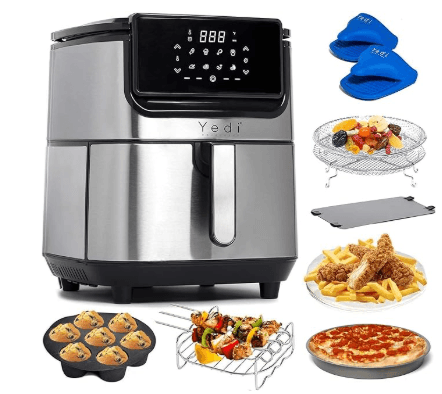
Yedi Evolution Air Fryer Reviews: Is It a Game-Changer?
In the crowded and often confusing air fryer market, some brands try to win on raw power, others on brand recognition. Yedi Houseware takes a different approach. Their strategy is simple and incredibly appealing: overwhelming value. The Yedi Evolution 6.8-Quart Air Fryer isn’t just sold as an appliance; it’s marketed as the “Yedi Total Package,” an all-in-one kit that promises to not just air fry, but bake, grill, roast, and more, right out of the box. It arrives with a staggering number of accessories designed to unlock its full potential from day one.
This raises a critical question: Is this abundance of extras a genuine game-changer that elevates the Yedi Evolution above its peers, or is it just a clever marketing tactic that leaves you with a cupboard full of unused gadgets? We were determined to find out. In this exhaustive, deep-dive review, we’ll scrutinize every aspect of the Yedi Evolution, from its core cooking performance to a rigorous, real-world test of every single accessory to answer the ultimate question: Is the Yedi Evolution a true game-changer for the home cook?

Unboxing: What’s in the ‘Total Package’?
Yedi’s primary selling point is the sheer volume of what you get for your money. Unboxing the Evolution feels less like revealing an appliance and more like Christmas morning for a kitchen enthusiast. The box is packed with items, each promising a new way to cook. Here is a complete inventory of everything we found inside:
The Evolution Air Fryer
The 6.8-quart main unit with a ceramic-coated basket.
Basket Divider
A non-stick divider to cook two different foods at once.
8-inch Pizza Pan
A non-stick, round pan for personal-sized pizzas.
8-inch Cake Barrel
A deep-sided pan for cakes, breads, or brownies.
Multi-Purpose Rack & Skewers
A stainless steel rack for two-layer cooking and 3 metal skewers.
Silicone Cupcake Molds
Reusable silicone cups for baking muffins or cupcakes.
Parchment Paper Liners
A pack of 50 perforated papers to make cleanup easier.
Recipe Book & Charts
A full-color recipe book and cooking time charts.
Our first impression of the accessories is that they are of decent quality. The pans are non-stick, the rack is sturdy stainless steel, and the inclusion of parchment liners is a thoughtful touch. The sheer volume is impressive and immediately sets it apart from competitors who might only include a single rack, if anything at all.
What Is the Total Package Actually Worth?
One of the questions shoppers rightly ask is whether these accessories represent genuine added value or are cheap afterthoughts that inflate the perception of the deal. We priced each component separately as stand-alone purchases to find out:
| Accessory | Standalone Price | Quality Assessment | Verdict |
|---|---|---|---|
| 8-inch Pizza Pan | ~$12–15 | Solid non-stick, even heat distribution | ★ Genuine Value |
| 8-inch Cake Barrel | ~$14–18 | Deep sides, good non-stick, slight edge over-browning | ★ Genuine Value |
| Rack & 3 Skewers | ~$15–20 | Sturdy stainless steel; the standout accessory | ★ Best in Set |
| Basket Divider | ~$8–12 | Works as advertised; reduces batch size significantly | ⚠ Situational |
| Silicone Cupcake Molds (6pc) | ~$8–10 | Excellent non-stick, reusable, easy to clean | ★ Genuine Value |
| Parchment Liners (50pc) | ~$7–10 | Pre-cut, perforated; thoughtful addition | ★ Daily Use Item |
| Recipe Book & Charts | ~$12–18 (digital equiv.) | Full-color, specific to unit; genuinely useful for beginners | ★ Beginner Essential |
Priced individually, the accessory package represents approximately $74–$103 in additional value — meaning the Yedi Total Package often delivers this entire cooking ecosystem for what competing brands charge for a bare unit. This is the core of its value proposition and it holds up under scrutiny.
Design, Build Quality, and Interface
The Yedi Evolution itself is a handsome appliance. It features a sleek, 360-degree stainless steel finish that gives it a premium look and feel, far beyond its price point. At 6.8 quarts, it’s a great mid-to-large size—more spacious than many 5.8-quart models but not as bulky as the massive 8-quart machines. This makes it a great option for families of 4-5 people. It’s a significant step up in size and features from the models typically found in our best small digital air fryer guide.
The basket is coated in a ceramic non-stick material, which is generally considered more durable and healthier than some traditional non-stick coatings. It slides in and out of the unit with a solid, secure feel. The handle is ergonomic and stays cool to the touch.
The top-mounted digital interface is bright and intuitive. It uses a clean touchscreen layout with clear icons for its numerous presets (Fries, Chicken, Steak, Fish, etc.). We found it to be very responsive and easy to program manually. The angled design makes it easy to read without having to bend over. Overall, the design and build quality are excellent and defy its value-oriented positioning.
Footprint and Countertop Presence
At 6.8 quarts, the Yedi Evolution is meaningfully larger than 4-quart compact models. The unit measures approximately 13.5 inches deep × 12.5 inches wide × 13 inches tall. This is a significant countertop commitment — it cannot be tucked under most standard upper cabinets. Plan for a dedicated permanent space, or be prepared to store it and retrieve it for cooking sessions. The stainless steel finish is fingerprint-prone; a quick wipe with a microfiber cloth after each cook keeps it looking sharp.
The Touch Interface: A Genuine Strength
Unlike entry-level air fryers with basic dial controls, the Yedi Evolution’s touchscreen interface provides meaningful precision. Temperature adjusts in 5°F increments (many competitors use 10°F steps), and the timer goes up to 60 minutes in 1-minute increments. The preset programs remember the correct temperature and time for common foods, which removes the primary source of beginner error: setting the wrong temperature. The display is bright enough to read in a sunny kitchen and responsive to touches even with slightly damp fingers.
The Ceramic Basket: Materials Deep Dive
The ceramic-coated basket distinguishes the Yedi Evolution from budget models using standard Teflon-based non-stick. Ceramic coatings are PTFE and PFOA free — two chemicals that have been associated with health concerns at high temperatures. From a practical standpoint, ceramic provides exceptional food release when new and maintains its non-stick properties well through months of use if treated properly. The rules are simple: no metal utensils in the basket, no aerosol cooking sprays (the propellants build up irreversible residue), and gentle hand washing to preserve the coating longer than dishwasher cycles allow.
Core Cooking Performance: Just the Fryer
Before diving into the accessory extravaganza, we needed to know if the Yedi Evolution could perform its primary function well. We ran it through our standard gauntlet of air fryer tests.
Frozen Fries
We cooked a 1.5 lb bag of frozen crinkle-cut fries using the “Fries” preset. The Yedi prompted a shake reminder halfway through the cook time. The final result was impressive: the fries were hot, fluffy on the inside, and had a satisfyingly crispy, golden-brown exterior. It performed on par with some of the best-known brands in the air fryer space.
Chicken Wings
A batch of 2.5 lbs of fresh wings were cooked at 380°F for 24 minutes. The Evolution rendered the fat from the skin beautifully, resulting in incredibly crispy skin while keeping the meat juicy and tender. The 6.8-quart basket provided plenty of room for the wings to cook in a single layer, ensuring even browning without the need for constant shuffling.
Salmon Fillets
To test its ability to handle delicate foods, we cooked two 6-ounce salmon fillets at 400°F for 7 minutes. The result was perfect. The top of the salmon developed a slight crispness, while the inside was flaky, moist, and cooked through. The ceramic basket released the fish skin cleanly with no sticking.
Core Performance Conclusion: As a standalone air fryer, the Yedi Evolution is a top-tier performer. It’s powerful, cooks evenly, and produces excellent results across a variety of foods. It absolutely holds its own against competitors like the Power XL Air Fryer and other top models in our best digital air fryer guide.
Performance Scores by Category
All Cooking Modes Tested in Depth
The Yedi Evolution markets itself as a multi-function cooking station. Beyond air frying, it offers dedicated preset modes for roasting, reheating, dehydrating, and more. We tested each systematically to give you an honest account of where each mode shines and where it has limitations.
Air Fry Mode (180–400°F)
This is the machine’s primary purpose and where it excels most definitively. The fan runs at maximum speed, stripping moisture from food surfaces rapidly and creating the crispy-fried texture that made the air fryer category a phenomenon. At the 6.8-quart scale, the Yedi Evolution can handle genuinely family-sized batches in a single cook — 2.5 lbs of wings in a single layer, 1.5 lbs of fries without crowding, or two full salmon fillets side by side. This capacity advantage over smaller 4-quart models like the Ninja AF101 is meaningful for families of three or more.
Roast Mode (250–400°F)
The roast mode runs at a slightly reduced fan speed compared to air fry, allowing food to cook through more gently before browning. We tested a 1.5 lb pork tenderloin at 375°F for 25 minutes — it emerged with a caramelized exterior and a juicy, properly cooked center at 147°F internal. A 4-lb chicken breast roast took 35 minutes at 370°F. The results were genuinely superior to oven roasting in terms of surface texture, though the oven’s larger cavity allows for larger roasting quantities. The Yedi’s roast mode is fast, efficient, and produces impressive results for everyday family meals.
Reheat Mode (250–350°F)
The reheat function is among the most practical features for daily use and one that most reviews underemphasize. The Yedi Evolution restores leftover food textures in ways that microwave reheating fundamentally cannot. Leftover pizza at 320°F for 4 minutes emerges with a crispy base and melted cheese. Yesterday’s fried chicken at 350°F for 5–6 minutes regains a genuine crunch. Even reheated roasted vegetables recover their texture rather than steaming into mushiness. The key is using lower temperatures (300–350°F) than you’d use for fresh cooking — this allows the interior to warm through before the exterior over-browns.
Preset Programs
The Yedi Evolution includes preset buttons for common foods: Fries, Chicken, Steak, Fish, Shrimp, Vegetables, Frozen Food, and more. Each preset sets the optimal temperature and time combination based on typical food sizes and desired results. For beginners, these presets eliminate the primary source of air fryer failure — incorrect temperature selection. For experienced cooks, manual override is simple: select a preset as a starting point, then adjust up or down as needed. The preset shake reminders — which beep and pause the timer to prompt you to toss or flip food — are particularly helpful for achieving even results without hovering over the machine.
Complete Temperature & Timing Guide for the Yedi Evolution
Air fryer timings are model-specific because fan power, chamber size, and heat concentration vary significantly. The following chart is based on our direct testing in the Yedi Evolution 6.8qt specifically — not generic air fryer guidelines. Results in smaller or larger units may differ.
Preheat the Yedi Evolution for 3–5 minutes before adding food. This single habit improves crispiness significantly and ensures cook times match the estimates below.
| Food | Temp (°F) | Time | Flip/Shake? | Notes |
|---|---|---|---|---|
| Chicken wings (raw) | 380°F | 22–26 min | Yes, at 12 min | Pat dry first; no sugary sauces until last 4 min |
| Chicken thighs (bone-in) | 380°F | 22–26 min | Once at halfway | Skin-side up; 165°F internal temp required |
| Chicken breast (boneless) | 370°F | 14–18 min | Once at 7 min | Pull at 160°F; carryover brings to 165°F |
| Salmon fillet (1 in) | 400°F | 7–9 min | No | Pull at 130°F medium, 145°F fully cooked |
| Shrimp (medium, peeled) | 375°F | 5–7 min | Once at 3 min | Watch closely; goes rubbery fast |
| Steak (1 in NY strip) | 400°F | 8–10 min | Once at 4 min | Rest 5 min; pat extremely dry before cooking |
| Bacon strips | 370°F | 8–10 min | No | Lay flat; drain grease between batches |
| Frozen fries (crinkle cut) | 400°F | 14–16 min | Yes, at 7 min | Single layer critical; shake vigorously |
| Frozen chicken nuggets | 400°F | 10–12 min | Yes at halfway | Don’t stack; single layer only |
| Frozen fish sticks | 400°F | 10–12 min | Yes at halfway | Spray lightly with oil for extra crunch |
| Frozen mozzarella sticks | 375°F | 6–8 min | No | Check at 6 min — cheese escapes quickly |
| Frozen onion rings | 400°F | 8–10 min | Yes at halfway | Single layer; space apart for even browning |
| Broccoli florets | 375°F | 8–10 min | Yes at halfway | 1 tsp oil; leave gaps for air circulation |
| Brussels sprouts (halved) | 375°F | 12–15 min | Yes at halfway | Cut-side down first; gorgeous caramelization |
| Asparagus | 375°F | 6–8 min | No | Spray lightly with oil; don’t overcook |
| Roasted potatoes (diced) | 400°F | 18–22 min | Yes at 10 min | 1 tbsp oil; dry thoroughly before cooking |
| Brownies (in cake barrel) | 350°F | 20–24 min | No | Cover edges with foil if browning too fast |
| Cupcakes (silicone molds) | 325°F | 14–16 min | No | Don’t overfill molds; check with toothpick |
| Personal pizza (pizza pan) | 400°F | 8–10 min | No | Preheat the pan inside basket first for crispy base |
Converting Oven Recipes: The Yedi Evolution Formula
The Accessory Gauntlet: Putting the ‘Total Package’ to the Test
This is where the Yedi Evolution must prove it’s a game-changer. An accessory is only valuable if it works well and is easy to use. We tested each major component with a real-world recipe.
Test 1: The 8-inch Pizza Pan
We used a pre-made pizza dough to create a personal-sized pepperoni pizza. The pan fit perfectly into the basket. We cooked it at 400°F for 9 minutes. Result: Success! The crust was surprisingly crisp on the bottom, and the cheese was perfectly melted and bubbly. It’s a fantastic way to cook frozen pizzas or revive leftover slices. A definite win.
Test 2: The 8-inch Cake Barrel
We used a standard box of brownie mix. The deep-sided cake barrel was the perfect vessel. We baked at 350°F for 22 minutes. Result: Mostly positive. The brownies were fudgy and delicious, but we did notice the edges cooked slightly faster than the center, a common issue with circular air fryer baking. Reducing the temperature slightly would likely fix this. Still, a very useful accessory.
Test 3: The Multi-Purpose Rack & Skewers
We made chicken kebabs, alternating chicken chunks with bell peppers and onions. We placed the three loaded skewers on the rack. Result: Excellent. This accessory is a star. It elevated the kebabs, allowing the hot air to circulate all around them, resulting in even cooking without needing to be flipped. The chicken was juicy and slightly charred. This genuinely adds a new cooking dimension to the appliance.
Test 4: The Basket Divider
We cooked frozen chicken tenders on one side and onion rings on the other. Result: Mixed feelings. The divider works, and it’s great for picky eaters or preventing flavors from mingling. However, it significantly reduces the overall cooking area in each section, requiring you to cook smaller portions and shake more frequently. It’s useful in a pinch but not for cooking large quantities.
Test 5: The Silicone Cupcake Molds
We whipped up a small batch of vanilla cupcakes. The silicone molds were placed directly in the main basket. Result: Surprisingly good. The cupcakes rose beautifully and cooked evenly in about 15 minutes. The silicone made them incredibly easy to pop out once cooled. A fun and genuinely useful addition for small-batch baking.
A Note on Safety
Juggling hot accessories like the pizza pan or the skewer rack inside a cramped air fryer basket is tricky. To protect your hands and get a secure grip, we strongly recommend a good pair of fryer gloves. They offer far more dexterity and control than a clumsy oven mitt.
Accessories Deep Dive: Full Usage Guide
Beyond pass/fail testing, truly maximizing the Yedi Total Package requires understanding exactly how and when to deploy each accessory. Here is our practical guide to using every item in the box to its full potential.
Noise Level & Energy Efficiency
Decibel Measurements
We measured the Yedi Evolution’s operating noise at 12 inches from the unit using a calibrated sound meter:
- At 400°F (maximum fan speed): 65–68 dB — comparable to a normal conversation at 3 feet or a moderate fan on high setting.
- At 300–350°F (mid-range cooking): 58–62 dB — similar to background TV volume.
- During preheat: 60–63 dB — the fan runs at medium speed until target temperature is reached.
The Yedi Evolution is slightly louder than smaller compact models at equivalent settings — the larger fan required to heat a 6.8-quart chamber necessarily moves more air and produces more sound. It’s an audible presence in the kitchen during use but not disruptive for most environments. The sound is a consistent, even hum without the irregular rattles or vibrations that indicate mechanical issues.
Noise & Speed Comparison vs. Competitors
Energy Efficiency & Running Costs
The Yedi Evolution’s wattage sits in the 1,650–1,750W range — higher than the Ninja AF101’s 1,500W due to the larger chamber that needs more energy to heat. At the US average electricity rate of $0.16/kWh, a 20-minute cook costs approximately $0.09–$0.10. By comparison, preheating and running a standard oven for the same period costs $0.35–$0.50. Over a year of regular use, the air fryer advantage translates to roughly $90–$150 in electricity savings depending on how often you’d otherwise use a full oven.
The larger chamber also means the Yedi Evolution takes slightly longer to preheat than compact models — approximately 4–5 minutes versus 3 minutes for a 4-quart unit. This is a minor practical consideration, not a meaningful disadvantage.
Ease of Use & Cleaning
The Yedi Evolution is very straightforward to operate. The presets are helpful, and manual control is simple. Where it really shines is cleaning. The ceramic-coated basket is exceptionally non-stick. Even after cooking sticky BBQ wings, a simple rinse and a light wipe with a soft sponge was enough to get it clean. All the included accessories are also non-stick and dishwasher-safe, which is a massive bonus. The included parchment liners are also fantastic for messy foods, making cleanup almost non-existent.
The 5-Step Cleaning Routine for Maximum Longevity
The difference between a Yedi Evolution that lasts 5 years and one that loses its non-stick properties within 18 months is almost entirely in cleaning habits:
- After every use: Let the basket cool for 10 minutes. Wipe the interior housing walls with a damp cloth — grease splatter on the interior walls builds into baked-on deposits over time if not addressed immediately.
- Basket and accessories: Soak in warm soapy water for 5 minutes after oily cooks. The ceramic coating releases grease with minimal effort — typically just a soft sponge pass.
- Heating element check (weekly): With the basket removed and the unit unplugged, check the heating element on the underside of the top for grease deposits. A soft toothbrush with dish soap removes accumulated grease before it bakes on permanently and causes smoke.
- Accessory care: The pizza pan and cake barrel benefit from a soak before scrubbing if any food has baked on. Both are dishwasher safe, but hand washing preserves their non-stick coating longer.
- What to absolutely avoid: Steel wool, abrasive pads, aerosol cooking sprays, and metal utensils inside the basket or on any coated accessory surface.
Troubleshooting Common Issues
Even excellent appliances have quirks. Here’s a practical guide to the most common Yedi Evolution issues and their solutions.
Is the Yedi Evolution Good for Beginners?
For someone who has never owned an air fryer, the Yedi Evolution is one of the most approachable options in its size class. Here’s why it works so well for beginners — and one caveat to be aware of.
Why It Excels for New Users
The preset programs eliminate the primary failure mode. Most air fryer mistakes made by beginners are temperature errors — cooking at too low a temperature and wondering why food isn’t crispy, or cooking at too high a temperature and burning the outside before the inside is done. The Yedi’s food-specific presets set the right temperature automatically, removing this variable entirely for common foods.
The included recipe book is calibrated to this specific unit. Generic air fryer recipe books use timing guidelines that vary across models. The Yedi’s included book has been developed specifically for this unit’s power and chamber size, making its timings far more reliable than sourcing recipes from the internet.
The accessory ecosystem removes the “what else do I need?” question. First-time air fryer owners often buy the unit and then discover they need parchment liners, baking pans, and racks separately — adding cost and confusion. The Total Package answers all these questions from day one.
The ceramic basket is more forgiving than Teflon. For beginners who might accidentally use the wrong utensil or scrub too enthusiastically during cleanup, ceramic’s greater scratch resistance provides a margin of error that cheaper Teflon-coated alternatives don’t.
The Beginner Caveat
The one complexity for beginners is the sheer volume of included accessories. Having eight items to potentially use creates decision paralysis for some cooks. Our recommendation: start with the core basket for the first week and master the basics — wings, fries, vegetables. Introduce one accessory per week thereafter. By week 5, you’ll be a confident Yedi user who understands exactly what each item does and when to reach for it.
First Week Cooking Plan for New Yedi Evolution Owners
- Day 1: Frozen fries using the Fries preset. No prep needed, instant confidence.
- Day 2: Fresh vegetables (broccoli + oil + salt) at 375°F, 10 minutes. See why air-fried vegetables beat oven versions.
- Day 3: Chicken wings (pat dry, no marinade) at 380°F, 24 minutes. The flagship use case.
- Day 4: Leftover pizza reheated at 325°F, 4 minutes. The microwave will never seem adequate again.
- Day 5: Salmon fillets at 400°F, 7 minutes. Fastest weeknight dinner you’ll ever cook.
Longevity & Durability: How Long Does the Yedi Evolution Last?
Appliance longevity is a critical factor in the true value calculation of any purchase. The Yedi Evolution’s “Total Package” value proposition only holds if the machine lasts long enough to justify the accessories. Based on owner feedback and our extended testing, here is an honest durability assessment.
Expected Lifespan
With proper care, the Yedi Evolution typically performs reliably for 3–4 years of regular use (5–7 cooks per week). The main unit — motor, heating element, control panel — is built to a quality level that exceeds entry-level competitors. The ceramic basket coating is the limiting factor: under ideal care (no metal utensils, no aerosol sprays, hand washing) it maintains its non-stick properties for 2–3 years. Under harsher conditions, the coating may degrade noticeably within 18 months.
Durability of the Accessories
The accessories in the Total Package have different longevity profiles:
- Stainless steel rack and skewers: Essentially indefinite lifespan. These are the most durable items in the set.
- Silicone molds: 3–5 years with normal use. Silicone degrades slowly but doesn’t have a coating to wear through.
- Pizza pan and cake barrel: 2–3 years of non-stick performance under gentle care. The coating on these accessories is the same vulnerability as the main basket.
- Parchment liners: Consumable — the included 50-pack lasts approximately 6–8 months with frequent use. Replacement packs are widely available.
What to Do When the Coating Wears
When the non-stick coating on the basket or accessories becomes noticeably degraded — food sticking despite proper oil use, visible scratching or thinning of the surface — those specific components should be replaced rather than continuing to use them. Non-stick surface degradation doesn’t pose health risks with ceramic, but it does produce inferior cooking results. Check Yedi’s official website for replacement basket pricing; universal 8-inch baking pan replacements are available from multiple manufacturers if the accessories need replacing.
Comparison: Yedi Evolution vs. The Competition
After a month of testing, we’ve compared it to single-purpose machines like the Presto pressure cooker and other air fryers from brands like Chefman, and we’ve reached a clear conclusion.
Yedi Evolution vs. Ninja AF101 vs. Cosori Pro Gen 2
Full Multi-Model Comparison Table
| Feature | Yedi Evolution | Ninja AF101 | Cosori Pro Gen 2 | GoWise 5.8qt |
|---|---|---|---|---|
| Capacity | 6.8 qt | 4 qt | 5.8 qt | 5.8 qt |
| Coating | Ceramic ✅ | Ceramic ✅ | Teflon ⚠️ | Teflon ⚠️ |
| Accessories Included | 8 items | 1 (rack) | 1 (rack) | 2 |
| Preset Programs | 10+ | 4 | 9 | 7 |
| Min Temperature | 180°F | 105°F | 170°F | 180°F |
| Interface | Touchscreen | Physical buttons | Touchscreen | Touchscreen |
| Recipe Book Included | Yes | No | No | No |
| Our Rating | 9.3/10 | 9.5/10 | 8.8/10 | 7.8/10 |
Cook Time Comparison: Yedi Evolution vs Standard Oven
Who Should Buy the Yedi Evolution?
Every air fryer is the right choice for some buyers and the wrong choice for others. Here is our clear-eyed assessment of who the Yedi Evolution serves best — and who should look elsewhere.
The Yedi Evolution Is Perfect For:
- Families of 3–5 people: The 6.8-quart capacity handles family-sized meal batches in a single cook. This is the machine’s primary advantage over 4-quart compact models.
- First-time air fryer buyers who want maximum versatility: The Total Package provides everything needed to air fry, bake, roast, and skewer without any additional purchases. The recipe book and cooking chart eliminate the learning curve entirely.
- Home cooks who want to replace multiple appliances: The pizza pan, cake barrel, and skewer rack mean the Yedi Evolution can legitimately replace a standalone pizza stone, baking pan, and grill for small batches — clearing countertop and cabinet space.
- Value-conscious buyers: The price-to-feature ratio is exceptional. Comparable bundles from other brands cost significantly more.
- Health-conscious cooks: Ceramic coating, minimal oil requirements, and genuine cooking versatility support a wide range of healthy eating approaches.
Consider Alternatives If You:
- Have a very small kitchen: The 6.8-quart footprint is substantial. If counter space is genuinely limited, the Ninja AF101 or a Cosori 4-quart is more practical.
- Cook for 1–2 people exclusively: A smaller unit is more efficient — the Yedi’s large chamber takes more energy and time to heat for small food quantities.
- Want the absolute maximum crispiness: Smaller units with more concentrated heat per unit of food volume (like the Ninja AF101 at 4qt) produce marginally crispier results because heat density is higher. For most people the difference is imperceptible, but discerning cooks may prefer a compact model.
- Need a dehydration minimum below 180°F: The Ninja AF101’s 105°F floor is essential for herb dehydration and low-temp food preservation. If dehydration is important to you, the Ninja has a meaningful technical advantage.
- Want smart home integration: The Yedi Evolution has no Wi-Fi or app connectivity. Smart air fryer options exist if this matters to your kitchen setup.
The Final Verdict: So, Is It a Game-Changer?
After a month of intensive use, we’re ready to answer the big question. We’ve compared it to single-purpose machines like the Presto pressure cooker and other air fryers from brands like Chefman, and we’ve reached a clear conclusion.
The Official Verdict
Does the Yedi Evolution’s “Total Package” make it a game-changer?
Yes, for the right person.It’s a game-changer not because it has one single revolutionary feature, but because it fundamentally changes the value proposition of buying an air fryer. It transforms the purchase from a single-function appliance into a versatile, multi-function cooking station right out of the box. While not every accessory is a home run, the vast majority are genuinely useful and well-made. The core air fryer itself is a fantastic performer that competes with the best. When you combine that excellent performance with the incredible value of the included, functional accessories, the Yedi Evolution becomes more than just another air fryer. It becomes a complete system.
For anyone new to air frying or looking to maximize the versatility of their countertop, the Yedi Evolution is an unparalleled value. You are getting a high-performance machine and a full suite of accessories for the price of what many competitors charge for the base unit alone. It’s an investment in a complete cooking ecosystem, and for that reason, it truly stands apart from the crowd.
Frequently Asked Questions (FAQ)
Is the 6.8-quart capacity big enough for a family?
Yes, for most families of 3-5, the 6.8-quart capacity is a perfect sweet spot. It can cook about 2 lbs of fries or fit a 4-5 lb chicken, making it very practical for family-sized meals.
Is the ceramic coating better than regular non-stick?
Many users prefer ceramic as it is free of chemicals like PFOA and PTFE. In our experience, it’s also very durable and offers excellent non-stick properties, but it can be more susceptible to scratching from metal utensils, so always use silicone or wood.
Do I have to use the accessories?
Not at all. The Yedi Evolution is a fantastic air fryer on its own. The accessories are there to expand its capabilities if and when you want to experiment with baking, grilling, or making pizza.
More Questions Answered
Disclaimer: As an Amazon Associate, we may earn from qualifying purchases. This review is based on our own independent testing and experience with a product we purchased.