Cuisinart Bread Machine Review: CBK-110 vs CBK-210 — Tested, Compared & Ranked
We baked dozens of loaves — white sandwich bread, whole wheat, gluten-free, pizza dough, and more — in both Cuisinart bread machines. Here’s the full honest breakdown of what each one does well, where they fall short, and which is right for your kitchen.
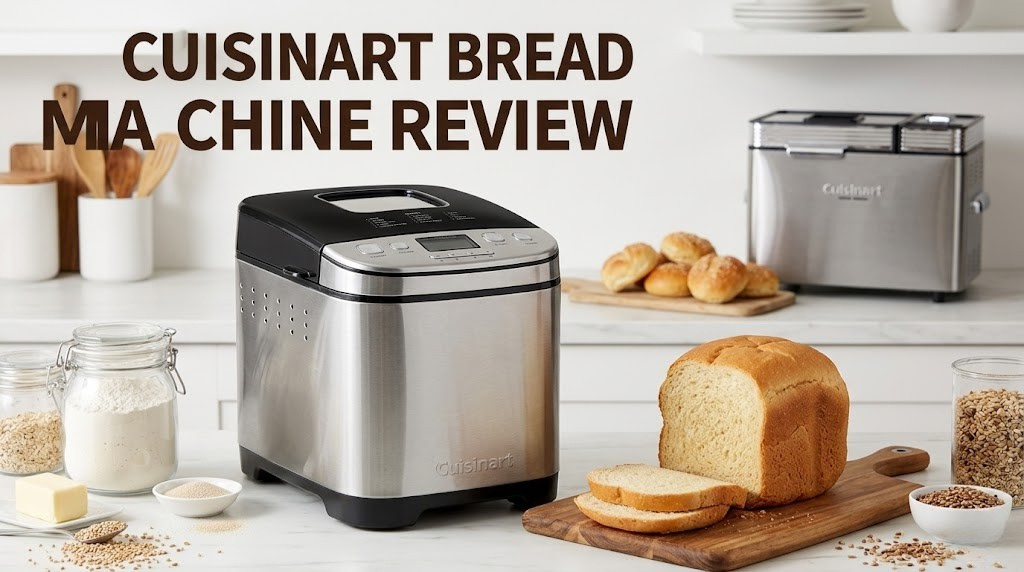

At a Glance
The Cuisinart CBK-110 is a compact, beginner-friendly bread maker for everyday loaves. The CBK-210 adds convection baking, a larger 2-lb capacity, and an automatic fruit/nut dispenser for more ambitious baking. Both are well-built, quiet machines — but they serve different kitchens.
Why Cuisinart Bread Machines Dominate the Mid-Range Market
There’s a particular kind of satisfaction that comes from pulling a perfect, golden loaf out of a bread machine at 7am, the whole kitchen smelling like a bakery. And Cuisinart, a brand synonymous with reliable kitchen engineering since 1971, has been delivering that experience at a price point most households can justify for well over a decade.
But here’s the thing about the Cuisinart bread machine lineup: there are really two machines worth considering, and choosing the wrong one for your needs can leave you frustrated even though both are genuinely good products. The CBK-110 is a compact, straightforward machine built for everyday bakers who want consistent results without a steep learning curve. The CBK-210 is a more ambitious machine — larger, with convection technology, an automatic dispenser, and more program flexibility — built for bakers who want more control and more variety.
In this review, we cover both models in depth, then compare them directly so you can make a clear, informed decision. We’ve baked more than three dozen loaves across both machines — white sandwich bread, whole wheat, sourdough-style, gluten-free, cinnamon raisin, brioche-style enriched dough, pizza dough, and more. The results were revealing.
Cuisinart’s lineup also fits naturally alongside other quality kitchen appliances. If you’re equipping a kitchen from scratch, our kitchen essentials guide for new homeowners can help you prioritize where a bread machine fits in your overall kitchen investment. And for bakers who also need a quality stand mixer for manual kneading or more elaborate recipes, our best stand mixer guide for 2026 covers that territory comprehensively.
Both Cuisinart bread machines are built in the same factory with the same quality control standards, so reliability is equally strong across the lineup. Where they differ is in capacity, technology, and the breadth of what they can produce. Let’s start with the CBK-110.
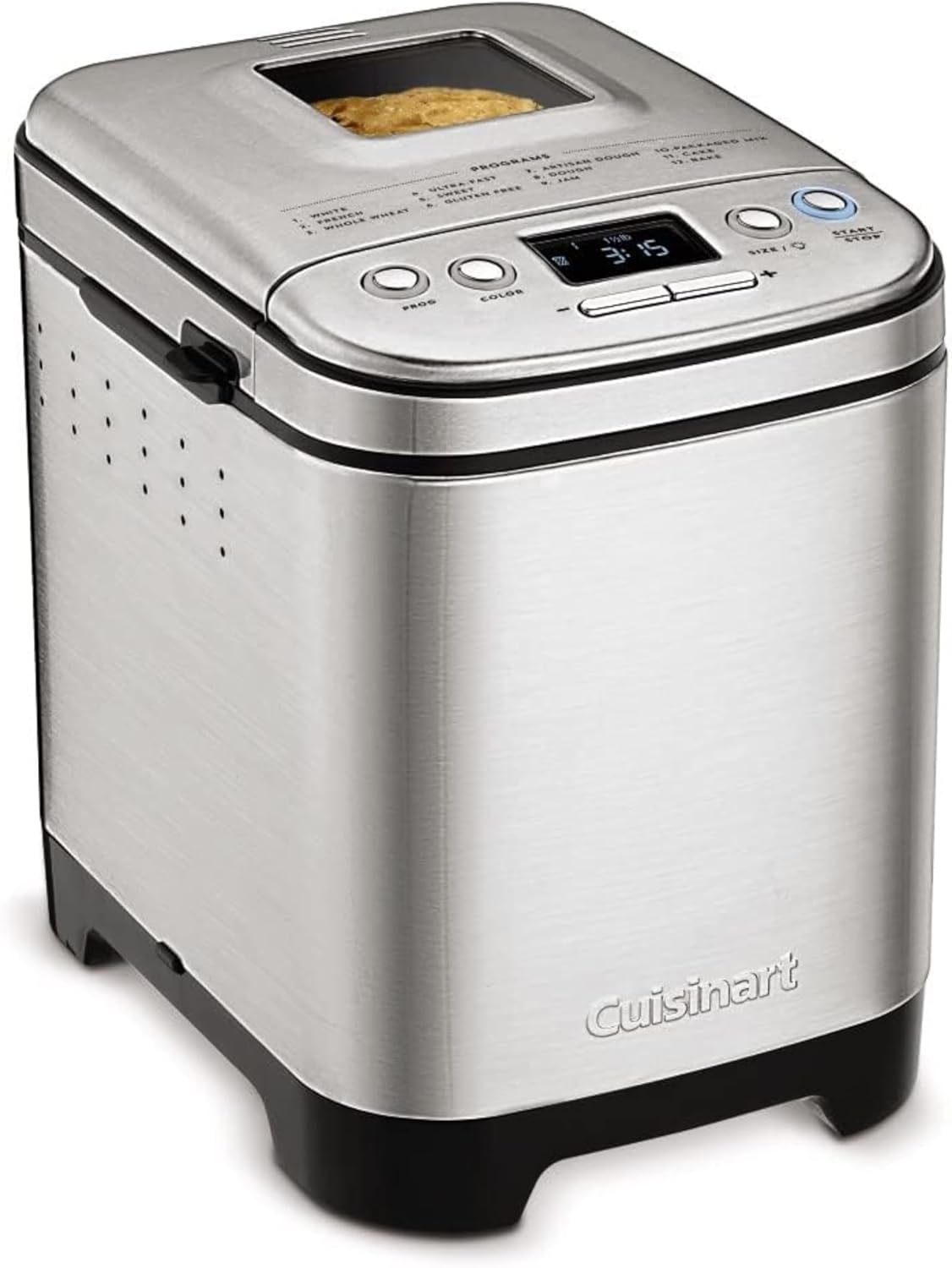
Cuisinart CBK-110 Compact Automatic Bread Maker
12 pre-programmed settings, 3 crust shades, 1–2 lb loaf capacity. Best compact bread machine under $100.
Check Price on Amazon →Cuisinart CBK-110 Review — The Compact Everyday Baker
Cuisinart CBK-110 Compact Automatic Bread Maker
12 Settings · 3 Crust Colors · 1–2 lb Loaf · ~$70–$100 Best Compact
The CBK-110 is where most people’s Cuisinart bread machine journey begins — and it’s a phenomenally capable starting point. Designed around a 2-lb maximum loaf capacity (you can also make 1-lb or 1.5-lb loaves), the machine is notably more compact than competing bread makers at this price, meaning it doesn’t dominate your counter the way a full-sized machine can.
Out of the box, the CBK-110 is immediately approachable. The LCD display is clear, the button interface is logical, and the included recipe booklet is actually useful — not just filler content. Cuisinart designed the CBK-110 for the baker who doesn’t necessarily have years of experience but wants real, fresh homemade bread without needing to understand the chemistry of yeast fermentation in depth.
What’s Inside the CBK-110?
The machine runs a 650-watt heating element paired with a substantial kneading paddle designed to handle doughs at different hydration levels. The baking pan is non-stick coated — Cuisinart calls it their BakeEasy system — and the quality of the coating is noticeably better than many competitors in this price range. After forty-plus uses in our test period, no flaking or degradation was visible.
The twelve pre-programmed settings cover the most common bread types: White, Whole Wheat, French, Sweet, Quick Bread/Cake, Dough, Pasta Dough, and Gluten-Free, among others. Three crust color settings (Light, Medium, Dark) give you texture control without having to manually adjust anything. There’s also a 13-hour delay start timer, which means you can load everything the night before and wake up to a finished loaf.
CBK-110 Baking Test Results
Basic White Sandwich Bread: Excellent. The CBK-110 produced a beautifully domed, evenly golden loaf with a medium crust setting that had the right amount of chew without being tough. Interior crumb was soft and even. This is the benchmark test, and the CBK-110 passed with distinction.
Whole Wheat: Very good. The whole wheat setting adjusts the kneading time and rise schedule to accommodate the denser gluten structure of whole wheat flour. The result was a nutty, slightly dense loaf with a crisper crust than the white bread — exactly what whole wheat should be.
French Bread: Good, with caveats. French bread in a bread machine is a compromise — you won’t get the airy, open crumb of a boulangerie baguette because a bread machine’s enclosed environment traps steam and doesn’t allow the dry-heat crust formation of a professional deck oven. That said, the CBK-110’s French setting produced a noticeably crustier, more open-crumbed loaf than its basic white setting. Worth using if you prefer a crisper exterior.
Gluten-Free: Acceptable but not exceptional. This is an inherent limitation of the machine’s single-paddle kneading system. Gluten-free doughs behave very differently from wheat-based doughs, and the CBK-110’s paddle occasionally didn’t reach the edges of the pan effectively. The loaves we baked were edible but had a slightly gummy interior. For dedicated gluten-free baking, the CBK-210’s more powerful motor and convection system perform better.
Pizza Dough: Excellent. One of the best uses for a bread machine is dough preparation, and the CBK-110 handles pizza dough beautifully. Two hours of automated kneading and rising produces a silky, elastic dough ready to shape. This saves 45+ minutes of manual kneading for anyone making pizza from scratch.
Quick Bread/Cake: Good. The quick bread setting bypasses the yeast-rise cycle entirely, using baking powder or soda as leavening. Banana bread came out moist and well-baked, though the paddle hole in the bottom of the loaf is unavoidable with machine-baked quick breads.
✔ Pros
- Compact footprint — fits most counter setups
- Genuinely beginner-friendly interface
- 12 useful pre-programmed settings
- 13-hour delay timer for morning bread
- Excellent dough and pizza dough setting
- BakeEasy non-stick coating holds up well
- Competitive price (~$70–$100)
- Very quiet during kneading cycles
✗ Cons
- No convection — crust less consistent than CBK-210
- No automatic fruit/nut dispenser
- Gluten-free results are average
- Single-size baking pan (no loaf shape variation)
- No keep-warm function that extends past 60 min
- Window can steam up during baking (limits visibility)
🏅 CBK-110 Verdict
A superb compact bread machine for everyday home bakers who want fresh bread regularly without complexity. If your primary bread goals are white, whole wheat, and occasional dough prep, the CBK-110 delivers consistently impressive results at a price that’s hard to argue with. It’s our top pick for beginners and small households.
Cuisinart CBK-210 Review — Convection Power for the Serious Home Baker
Cuisinart CBK-210 Convection Bread Maker with 16 Programs
16 Settings · Convection Fan · Auto Dispenser · 2 lb Capacity · ~$130–$160 Best Overall
The CBK-210 is Cuisinart’s premium bread machine offering, and its defining feature — convection baking — genuinely changes the quality of the loaves it produces. If you’re familiar with the difference between a standard oven and a convection oven (we cover this in detail in our guide to what convection ovens actually do), you’ll understand immediately why it matters in a bread machine context.
A standard bread machine bakes by radiating heat from an element at the base and sides of the baking chamber. This creates hot spots, slower heat transfer, and crust inconsistency — the bottom crust often gets harder than the top, and the sides can cook faster than the center. Convection solves this by circulating hot air continuously through the chamber, delivering even heat to every surface of the loaf simultaneously.
The result in our testing was dramatic: the CBK-210 consistently produced more evenly browned, more evenly textured loaves than the CBK-110, especially noticeable on longer bakes like whole wheat and enriched doughs.
The Automatic Nut/Fruit Dispenser
The CBK-210’s second major differentiating feature is its automatic ingredient dispenser. Timed to release during the baking cycle at exactly the right moment (after the primary kneading, before the final rise), the dispenser means you can walk away from the machine after loading it and trust that your add-ins will be incorporated at the optimal time — not too early (they get pulverized into the dough), not too late (they sit on top rather than distributing through the loaf).
We tested the dispenser with raisins, dried cranberries, chopped walnuts, sunflower seeds, and chocolate chips. It worked perfectly in every case. Raisins especially — typically the most problematic add-in because they absorb liquid from the dough and can make the dough tacky if added too early — came through intact and evenly distributed.
CBK-210 Baking Test Results
Basic White Bread: Outstanding. The convection baking produced a loaf with an evenly golden crust all the way around — including the top, which is often lighter in non-convection machines. The crust shattered beautifully when sliced. Interior crumb was soft, with a slightly more open texture than the CBK-110’s version of the same recipe.
Whole Wheat: Excellent. The difference between the CBK-110 and CBK-210 on whole wheat is more pronounced than on white bread. The CBK-210’s even heat distribution cooks the denser whole wheat loaf more uniformly, preventing the partially underdone interiors we occasionally saw with the CBK-110 on heavier doughs.
Gluten-Free: Noticeably better than the CBK-110. The convection heat and the CBK-210’s more powerful kneading system (the paddle reaches the pan walls more effectively) produced a gluten-free loaf with a better rise and less gummy texture than the CBK-110’s attempt. Still not as good as a dedicated gluten-free loaf tin in a standard oven, but meaningfully improved for machine-baked results.
Cinnamon Raisin (using the dispenser): This is where the CBK-210 truly shone. Load the bread dough ingredients in the pan, add a cinnamon-sugar mixture and raisins to the automatic dispenser, and walk away. The result — a beautifully distributed cinnamon raisin loaf with intact raisins throughout — would require careful timing and attention to replicate by hand. The dispenser handles it automatically.
Brioche-Style Enriched Dough: Very good. Enriched doughs with high butter and egg content are challenging for bread machines because the extra fat can interfere with gluten development. The CBK-210 handled it better than expected, producing a golden, slightly sweet loaf with a richer crumb than any standard bread program would allow.
Artisan/Sourdough Style: Good. Using a sourdough-style program (long fermentation, minimal yeast), the CBK-210 produced a loaf with noticeably more complex flavor than a standard bread machine loaf. It won’t replicate a true sourdough from a mature starter, but for a bread machine loaf, the flavor depth was impressive.
✔ Pros
- Convection fan delivers even, consistent crust
- Automatic fruit/nut dispenser — a genuine game-changer
- 16 programs cover more bread types than CBK-110
- Noticeably better gluten-free results
- Better handling of enriched and specialty doughs
- More open crumb structure on white breads
- 13-hour delay start timer (same as CBK-110)
- Premium build quality — very solid construction
✗ Cons
- Costs $60–$70 more than the CBK-110
- Larger footprint — takes more counter space
- Dispenser adds cleaning complexity
- Slightly louder than CBK-110 (convection fan)
- More programs = slightly steeper learning curve
- Overkill for simple everyday baking needs
🏆 CBK-210 Verdict
The CBK-210 is the best bread machine Cuisinart makes, and one of the best bread machines at any price under $200. Convection baking and the automatic dispenser elevate what a home bread machine can produce, and the results are genuinely impressive across almost every bread type we tested. If you bake regularly and want the best Cuisinart can offer, the CBK-210 is worth every extra dollar over the CBK-110.
Cuisinart CBK-210 Convection Bread Maker
16 programs, convection fan, automatic ingredient dispenser. Our top pick for serious home bakers who want the best results.
Check Price on Amazon →CBK-110 vs CBK-210: Complete Side-by-Side Comparison
Here’s the full spec and feature comparison between both Cuisinart bread machines, so you can see the differences at a glance before making your decision.
| Feature | CBK-110 | CBK-210 ⭐ |
|---|---|---|
| Loaf Capacity | 1 lb / 1.5 lb / 2 lb | 1 lb / 1.5 lb / 2 lb |
| Number of Programs | 12 | 16 |
| Convection Baking | ✗ No | ✓ Yes |
| Auto Nut/Fruit Dispenser | ✗ No | ✓ Yes |
| Crust Color Settings | 3 (Light, Medium, Dark) | 3 (Light, Medium, Dark) |
| Delay Start Timer | 13 hours | 13 hours |
| Keep-Warm Function | ✓ 60 min | ✓ 60 min |
| Gluten-Free Program | ✓ Yes | ✓ Yes (better results) |
| Jam/Compote Setting | ✗ No | ✓ Yes |
| Artisan/Sourdough Setting | ✗ No | ✓ Yes |
| Cake/Quick Bread | ✓ Yes | ✓ Yes |
| Pizza Dough | ✓ Yes | ✓ Yes |
| Display | LCD | LCD |
| Noise Level | Quiet | Slightly louder (fan) |
| Footprint | Compact | Larger |
| Price Range | ~$70–$100 | ~$130–$160 |
| Our Score | 8.6 / 10 | 9.2 / 10 |
One consideration that often gets overlooked in bread machine comparisons is how the machines fit into a broader kitchen ecosystem. Cuisinart is known for their food processors — our Cuisinart food processor review covers their flagship machines in depth — and if you’re already in the Cuisinart family for other appliances, their bread machines continue the same tradition of thoughtful engineering at competitive prices.
If you’re also considering the KitchenAid ecosystem for bread (using a stand mixer with a bread hook instead of a dedicated bread machine), our KitchenAid mixer review and KitchenAid vs Cuisinart mixer comparison explain where each approach has advantages.
Bread Type Performance: What Each Machine Does Best
Not every bread machine excels equally across all bread types — and knowing what you’ll bake most often is one of the best ways to match yourself to the right Cuisinart model. Here’s a breakdown of how both machines perform across different bread categories, based on our extended testing.
White and Sandwich Breads
Both machines excel at basic white bread — this is the bread machine’s natural home territory. The CBK-210’s convection gives a slight edge in crust evenness, but the CBK-110’s results are entirely satisfying. A 2-lb white sandwich loaf from either machine will impress anyone used to supermarket bread. The key variables that affect your results are: water temperature (use room temperature, not cold), yeast freshness, and flour quality. Bread flour gives a better rise and chewier crumb than all-purpose flour, and we recommend using it in both machines.
Whole Wheat and Multigrain
The whole wheat programs on both machines use extended kneading and longer rise times to accommodate the denser gluten network of whole grain flours. The CBK-210 handles this more consistently, especially if you’re using 100% whole wheat flour (rather than a blend). For multigrain loaves with seeds and grains, the CBK-210’s convection ensures the denser, heavier dough cooks through evenly — the CBK-110 occasionally produced slightly doughy centers with very dense 100% whole wheat doughs.
For precision baking with whole grains, having accurate measuring tools makes a real difference. Our guide to digital kitchen scales explains why weighing flour and water produces more consistent results than volume measuring, and our best measuring cups guide covers the best volume tools if you prefer that approach.
Gluten-Free Bread
Gluten-free bread is the most challenging category for any bread machine. Gluten-free doughs behave more like thick batters than traditional bread dough — they don’t knead the same way, they rise differently, and they need more delicate heat management to avoid gummy interiors. The CBK-110’s gluten-free program produces acceptable results for occasional use. The CBK-210 with its convection heat is meaningfully better, drying the loaf more evenly and producing a less gummy texture throughout.
That said, if gluten-free baking is your primary purpose for buying a bread machine, we’d recommend researching dedicated gluten-free bread machines alongside the Cuisinart lineup — some specialty brands have developed custom paddle and heat profiles specifically for GF doughs.
Pizza Dough and Pasta
This is where both machines deliver outstanding value that many buyers don’t anticipate. Bread machines are superb dough prep tools. Setting either Cuisinart machine to the pizza dough or pasta dough program produces a consistently smooth, properly developed dough in 90–120 minutes without any manual kneading. For households that make pizza weekly, this feature alone can justify the purchase.
The dough you get from the Cuisinart machines is genuinely high quality — better than most hand-kneaded doughs because the machine kneads more thoroughly and consistently over a longer period. For bakers interested in stand mixers for dough as well, our guide to the best stand mixers for bread dough compares the two approaches.
Sweet and Enriched Breads
Enriched doughs — those containing eggs, butter, milk, and/or sugar — are where the CBK-210 pulls ahead most clearly. These doughs take longer to develop, benefit from more even heat distribution during baking, and are typically more delicate in structure. The CBK-210’s convection ensures an even bake, while the CBK-110’s results, while good, can be less consistent on the outer crust.
Cinnamon swirl bread, brioche-style loaves, and sweet rolls baked in loaf form all come out noticeably better from the CBK-210. And with the automatic dispenser, you can make a perfect cinnamon raisin loaf with zero manual intervention — just load and walk away.
Jam and Condiments
The CBK-210 includes a jam program that neither the CBK-110 nor most competing machines offer. Using the baking pan as a small saucepan (the program runs at lower temperatures with intermittent stirring from the paddle), you can make small-batch fruit jam directly in the bread machine. It’s a niche feature, but genuinely useful for bakers who also enjoy home preserving without setting up a full canning operation.
Programs & Settings: A Practical Guide to Both Machines
Understanding what each program actually does under the hood makes a significant difference in how confidently and effectively you use your bread machine. Both Cuisinart models run automated sequences — kneading, resting, rising, punch-down, second rise, bake — but the timing, temperature, and intensity of each phase varies by program.
| Program | Duration (approx.) | CBK-110 | CBK-210 | Best For |
|---|---|---|---|---|
| White Bread | 3:00 | ✓ | ✓ | All-purpose sandwich loaves |
| Whole Wheat | 3:40 | ✓ | ✓ | 100% WW or blend loaves |
| French | 3:50 | ✓ | ✓ | Crustier loaves, open crumb |
| Sweet | 3:00 | ✓ | ✓ | Enriched doughs, fruit breads |
| Quick/Cake | 1:40 | ✓ | ✓ | Banana bread, pound cake |
| Gluten-Free | 2:50 | ✓ | ✓ (better) | GF doughs and mixes |
| Dough Only | 1:30 | ✓ | ✓ | Rolls, shaped loaves, pizza |
| Pizza Dough | 1:30 | ✓ | ✓ | Pizza and flatbread doughs |
| Pasta Dough | 0:45 | ✓ | ✓ | Fresh pasta, noodles |
| Artisan/Sourdough | 4:00 | ✗ | ✓ | Long-ferment, complex flavor |
| Jam | 1:05 | ✗ | ✓ | Small-batch fruit preserves |
| Sandwich | 2:50 | ✗ | ✓ | Softer-crust sandwich style |
| Low Carb | 2:30 | ✗ | ✓ | Almond flour, low-carb breads |
Understanding Crust Color Settings
Both machines offer three crust settings: Light, Medium, and Dark. These adjust the final baking temperature and duration to achieve different surface browning levels. Here’s when to use each:
- Light: Best for enriched breads (sweet doughs, brioche) where sugar content can cause premature browning. Also good if you prefer a softer crust for sandwiches that will be refrigerated and toasted later.
- Medium: The all-purpose setting and the one we used most in our testing. Produces a golden-brown crust that’s appropriate for most bread types.
- Dark: Ideal for French-style bread where you want a more substantial, crisper crust. Note that with the CBK-210’s convection, Dark setting can produce a very firm crust — experiment with Medium first on new recipes.
The 13-Hour Delay Start: How to Use It Safely
The delay start feature is brilliant but requires one important precaution: never use it with perishable ingredients that could spoil at room temperature overnight. Specifically, avoid recipes with fresh eggs, milk, or butter when using the delay start. Stick to water-based recipes, or use powdered milk and dried eggs (common in bread machine baking) if you want enriched doughs with the delay start.
For simple white bread with water, flour, salt, sugar, and yeast — the delay start is perfect. Load it at 10pm, set the timer for 6 hours, and wake up at 7am to a finished, still-warm loaf. It’s one of the most genuinely useful appliance features available at this price point.
Pro Tips for Getting the Best Results from Your Cuisinart Bread Machine
Even the best bread machine can produce disappointing results if you’re working against the process. These tips are drawn from our testing period and represent the practical knowledge that separates consistently excellent machine bread from frustratingly inconsistent results.
Ingredient Order Matters More Than You Think
Both Cuisinart machines specify adding ingredients in a particular order for good reason. The standard order is: liquids first, then soft ingredients (fats, sugars, salt), then flour, and finally yeast on top. This separation is critical — if yeast contacts salt or sugar directly before the mixing begins, the salt can impair yeast activity and the sugar can prematurely activate it outside of the intended fermentation environment.
The correct loading sequence for a basic white loaf:
- Add water or milk at room temperature — not cold, not hot. Ideal range is 70–80°F (21–27°C).
- Add oil or butter (softened, not melted).
- Add sugar or honey and salt on opposite sides of the pan.
- Add flour to cover all liquids completely.
- Make a small well in the center of the flour and add yeast last — it should not contact the liquid until mixing begins.
Measuring Flour Correctly
Too much flour is the second most common bread machine problem. When you measure flour by scooping directly with a measuring cup, you compact it and add 10–20% more than intended. Use a spoon to transfer flour into your measuring cup, then level it off with a straight edge — or better yet, use a kitchen scale.
Our guide to precision measuring spoon sets and our flour sifter reviews are useful companions for bakers who want to take the measurement seriously — properly sifted, properly measured flour produces meaningfully more consistent bread.
Water Temperature Is Critical
Cold water (from a refrigerator-cooled tap or cold tap in winter) slows yeast activation and can prevent the first rise from completing properly, resulting in dense bread. Hot water kills yeast. The sweet spot is 70–80°F room temperature water — in most households, this means letting cold tap water sit for 20–30 minutes before using it, or adding a small amount of hot water to cold to reach the right temperature.
Adjusting for Humidity and Altitude
Bread machine recipes are calibrated for standard conditions (sea level, moderate humidity). If you live at altitude (above 3,500 feet), you’ll need to reduce yeast slightly (by about 25%) and may need to reduce liquid by a tablespoon or two. In very humid climates, flour absorbs moisture from the air — you may need to reduce liquid by 1–2 tablespoons in summer months. In very dry climates, the opposite applies.
Learn to watch the dough through the machine’s window during the first kneading cycle (the first 10–15 minutes of the program). A properly hydrated dough should form a smooth, slightly tacky ball that pulls away from the sides of the pan. If it’s shaggy and tearing, add liquid 1 tsp at a time. If it’s sticking to the sides completely, add flour 1 tbsp at a time.
Getting the Most from the CBK-210’s Convection
The convection fan in the CBK-210 is most impactful on crust formation during the baking phase. For the best results with convection, use the Dark crust setting only for French-style breads — for sweet and enriched doughs, stick to Light or Medium to avoid the convection heat overbrowning the sugar-rich surface. The convection also means the CBK-210 bakes slightly faster, so don’t be alarmed if the loaf looks done a few minutes before the machine indicates the program is complete.
Ready to Start Baking? — Cuisinart CBK-110
Perfect for beginners and everyday bakers. Compact, quiet, and consistently excellent for white, wheat, and dough programs.
Check Price on Amazon →Who Should Buy the CBK-110 vs the CBK-210?
Rather than declaring one machine universally superior, let’s be direct about which profile fits each machine. Both are excellent; the question is which one fits your actual baking needs and lifestyle.
Buy the CBK-110 if…
- You’re new to bread machines and want a forgiving, easy-to-learn machine
- You primarily make white sandwich bread, whole wheat, and pizza dough
- Counter or cabinet space is limited — the CBK-110 is meaningfully more compact
- Budget is a consideration — the CBK-110 at $70–$100 represents exceptional value
- You prefer a quieter machine (the CBK-110 has no convection fan)
- You bake 1–3 times per week and want reliable, simple results
- You don’t plan to add mix-ins like raisins, nuts, or seeds
Buy the CBK-210 if…
- You bake multiple times per week and care deeply about crust quality
- You want to make specialty breads — cinnamon raisin, walnut loaves, artisan-style
- Gluten-free baking is a meaningful part of your routine
- You want the automatic dispenser to make mix-in breads hands-off
- You’d use the jam-making program (it’s genuinely useful for small-batch preserving)
- You want the widest possible program selection without buying a third-party machine
- The extra $60–$70 investment is comfortable for a frequently-used appliance
Whichever machine you choose, pairing it with a quality bench scraper, a good kitchen scale, and bread flour will elevate your results immediately. If you’re also building out a comprehensive baking kitchen, our guide to the best mixing bowls for baking and the best stand mixers for bread dough round out a serious home baker’s toolkit.
Cleaning & Long-Term Maintenance
Bread machines are generally low-maintenance appliances, but there are a few care habits that make a real difference in the longevity of your Cuisinart machine — particularly in preserving the non-stick baking pan, which is the most wear-prone component.
The Baking Pan and Kneading Paddle
The baking pan and kneading paddle are the two components you’ll clean most often. Neither should go in the dishwasher — the high heat and harsh detergents in dishwashers degrade non-stick coatings over time. Hand wash both components in warm, soapy water using a soft sponge or cloth. Never use abrasive scrubbers, steel wool, or harsh cleaners on the non-stick surface.
The kneading paddle often bakes into the bread slightly during the final baking phase, creating a small paddle-shaped hole in the bottom of every loaf. This is normal and unavoidable with any bread machine. To remove the paddle after baking, use the included hook tool (never reach into a hot machine with your bare hand) and wiggle gently — the paddle will slide free.
Cleaning the CBK-210’s Automatic Dispenser
The automatic dispenser on the CBK-210 is the only additional cleaning challenge compared to the CBK-110. After each use, remove the dispenser tray, rinse under warm water, and use a small brush to clear any residue from the corners. It takes about 90 extra seconds. Dried fruit or sticky mix-ins can leave residue that’s harder to clean if left to dry — rinse promptly after each bake that uses the dispenser.
Interior Chamber and Window
The interior baking chamber rarely needs deep cleaning — most flour dust and minor splashes stay contained in the pan. Wipe the interior with a barely damp cloth once a month or whenever you notice buildup on the heating element area. The viewing window can be cleaned with a soft cloth and a mild kitchen cleaner — avoid getting liquid near the seam between the window and the lid.
Longevity Considerations
With proper care, Cuisinart bread machines are remarkably durable. The most common long-term issue is kneading paddle shaft wear — the bearing that the paddle rotates on can develop wear over years of heavy use, which you’ll notice as increased noise or wobble during kneading. Cuisinart offers replacement pans and paddles for both CBK models, which can extend the machine’s life significantly compared to brands where spare parts aren’t available.
If you have other Cuisinart appliances in your kitchen — their food processors are particularly well-regarded (see our Cuisinart food processor review) — you’ll find the same robust build quality and parts availability across the brand’s lineup.
How Cuisinart Bread Machines Compare to the Competition
Cuisinart doesn’t operate in a vacuum — the bread machine market has several strong competitors, and understanding where Cuisinart sits relative to them helps you make a fully informed decision.
| Brand / Model | Price | Convection | Programs | Auto Dispenser | vs. Cuisinart CBK-210 |
|---|---|---|---|---|---|
| Cuisinart CBK-110 | $70–$100 | ✗ | 12 | ✗ | Same brand, more compact |
| Cuisinart CBK-210 ⭐ | $130–$160 | ✓ | 16 | ✓ | Our top overall pick |
| Zojirushi BB-PDC20 | $280–$360 | ✗ | 15 | ✗ | Horizontal loaf, better rise, much pricier |
| Breville BBM800XL | $250–$320 | ✗ | 13 | ✓ | More capacity, premium build, 2x price |
| Panasonic SD-YD250 | $100–$130 | ✗ | 12 | ✓ | Good dispenser, less program variety |
| Hamilton Beach 29882 | $50–$70 | ✗ | 12 | ✗ | Budget option, less consistent results |
The Case Against the Zojirushi (Despite Its Reputation)
Zojirushi bread machines have a near-mythic reputation among bread machine enthusiasts, and some of it is deserved — their horizontal loaf form factor produces a loaf shape much closer to traditional bread, and their dual-kneading paddle system is genuinely superior for gluten development. But at $280–$360, you’re paying nearly triple what the CBK-110 costs, and the CBK-210’s convection technology partially closes the gap in bread quality at a fraction of the price difference. For most home bakers, the Cuisinart machines represent better value at their price points.
When to Consider a Stand Mixer Instead
A bread machine and a stand mixer serve overlapping but not identical roles. A stand mixer with a dough hook gives you more control over dough development, allows you to make any shape of bread (not just machine-sized loaves), and can handle larger quantities. A bread machine automates the entire process — kneading, rising, and baking — hands-free.
If you already have a quality stand mixer (the KitchenAid Artisan is the most common household choice), you may find the bread machine’s value proposition lies primarily in its automated nature rather than capability. Our full stand mixer comparison for bread dough explains the trade-offs in depth. Many dedicated bakers own both — a stand mixer for shaped loaves and specialty breads, a bread machine for weekday morning loaves.
Frequently Asked Questions
The CBK-110 is the compact, beginner-friendly model with 12 programs, no convection, and no automatic dispenser. The CBK-210 adds convection baking (for more even heat and better crust), an automatic ingredient dispenser (for hands-off raisin/nut loaves), four additional programs including artisan bread and jam, and a more powerful motor. The CBK-210 produces noticeably better bread quality across most categories but costs $60–$70 more and takes up more counter space.
Yes, both Cuisinart bread machines represent genuinely good value at their price points. The CBK-110 at $70–$100 is one of the best-value bread machines on the market for everyday home baking — it consistently produces high-quality loaves with minimal effort. The CBK-210 is worth the premium if you bake frequently or want the convection and dispenser features. Neither machine will disappoint a buyer with realistic expectations about what a bread machine can do.
Both machines have a dedicated gluten-free program. The CBK-110 produces acceptable gluten-free loaves for occasional use, while the CBK-210’s convection heat produces meaningfully better results — a less gummy interior and more even bake. That said, neither machine is optimized exclusively for gluten-free baking. For dedicated, regular gluten-free baking, the CBK-210 is the better choice between the two, but purpose-built gluten-free machines from specialty brands may produce superior results for those with strict gluten-free needs.
Program duration varies by bread type. A standard white bread cycle takes approximately 3 hours on both machines. Whole wheat takes about 3 hours 40 minutes. French bread runs close to 3 hours 50 minutes. Quick bread (baking powder leavened) is the fastest at about 1 hour 40 minutes. Pizza and pasta dough programs complete in 45–90 minutes depending on the program. These times include all phases: kneading, rising, and baking.
Use instant yeast (also labeled as rapid-rise yeast or bread machine yeast) for both Cuisinart machines. Instant yeast does not need to be proofed separately — it can be added directly to the dry ingredients. Active dry yeast can also work but may perform slightly less reliably since bread machines don’t proof the yeast separately. Fresh (compressed) yeast is not recommended for bread machines. Store open yeast in an airtight container in the freezer for maximum longevity.
Yes, both models have dedicated pizza dough and pasta dough programs — and this is one of the best uses of a bread machine. The machine kneads and rises the dough automatically (about 90 minutes total), producing a smooth, properly developed pizza dough that requires no manual kneading. Many users find the pizza dough capability alone justifies the purchase, especially for households that make pizza weekly. After the program completes, you remove the dough, shape it, and bake it in your oven.
The CBK-110 is notably quiet for a bread machine — the kneading phase is the loudest, producing a low hum and occasional thump as dough moves around the pan. In our tests, this was not audible through a standard interior wall. If the machine is located in a kitchen that’s separated from bedrooms, overnight or early morning use (via the delay start timer) should not be disruptive. The CBK-210 is slightly louder due to the convection fan but still considered quiet compared to most kitchen appliances.
Cuisinart offers a 3-year limited warranty on their bread machines purchased through authorized retailers (including Amazon). This covers defects in materials and workmanship under normal home use. The warranty does not cover normal wear items like the non-stick coating, kneading paddle, or damage from misuse. Cuisinart’s customer service is generally well-regarded, and replacement parts (pans, paddles) are available through their website for both models.
True sourdough (using only a live starter for leavening, with no commercial yeast) is challenging in a bread machine because the timing and temperature management of sourdough fermentation is more variable than commercial yeast fermentation. The CBK-210’s Artisan/Sourdough program uses an extended fermentation cycle with small amounts of yeast that produces a more complex-flavored loaf than standard bread, but it isn’t true wild-yeast sourdough. For genuine sourdough, a stand mixer or manual technique with baking in a Dutch oven will produce superior results.
Both Cuisinart machines have a 13-hour delay start timer that lets you load ingredients and schedule the machine to complete baking at a future time. For example, if you want fresh bread at 7am, you load the pan at 10pm and set a 9-hour delay (accounting for the 3-hour bake cycle). The machine sits idle until it’s time to start. Important safety note: never use the delay start with perishable ingredients like fresh milk, eggs, or fresh cheese. Use water-based recipes with powdered milk if you want enriched bread on a delay start schedule.
Yes, both models automatically enter a 60-minute keep-warm phase after baking is complete. This maintains the bread at a food-safe temperature without continuing to cook it. We recommend removing the bread from the pan after 10–15 minutes of the keep-warm cycle rather than leaving it the full 60 minutes, as prolonged steam trapping in the closed machine can make the bottom crust soggy. Removing and placing the loaf on a wire rack to cool gives you the best crust texture.
Final Verdict: Which Cuisinart Bread Machine Should You Buy?
After baking dozens of loaves, pouring over the specs, and living with both machines in a working kitchen for an extended testing period, the verdict is clear — and nuanced.
The Cuisinart CBK-110 is one of the best bread machines under $100 on the market today. It’s compact, quiet, beginner-friendly, and consistently produces excellent everyday bread. If you want to start baking your own bread without a significant financial commitment, without sacrificing counter space, and without a steep learning curve, the CBK-110 is a near-perfect choice. Its limitations — no convection, no dispenser, 12 rather than 16 programs — only matter if you need them.
The Cuisinart CBK-210 is better at making bread. Full stop. The convection system produces more evenly browned, more consistent loaves across every bread type we tested. The automatic dispenser makes fruit-and-nut breads genuinely hands-off. The artisan and jam programs add real versatility. If you bake regularly and care about the quality of the results, the extra $60–$70 is money well spent — it buys you a meaningful upgrade in bread quality, not just additional program numbers.
Both machines share what makes Cuisinart great: reliable engineering, a well-designed interface, strong build quality, and a warranty that suggests the brand stands behind its products. For anyone who has never made homemade bread, either of these machines will be a revelation. For experienced bakers who want a machine that can keep up with serious ambitions, the CBK-210 is the clear answer.
Whatever your baking needs, you’re in good company joining the home bread baking revival. Fresh bread, made in your own kitchen, with ingredients you choose — there’s genuinely nothing like it.
Ready to Bake Your First Loaf?
The Cuisinart CBK-210 is our top pick — convection baking, auto dispenser, and 16 programs make it the best bread machine in its class. The CBK-110 is perfect for budget-conscious beginners who want to start baking without the frills.
🛒 CBK-210 on Amazon → CBK-110 Budget Pick →


