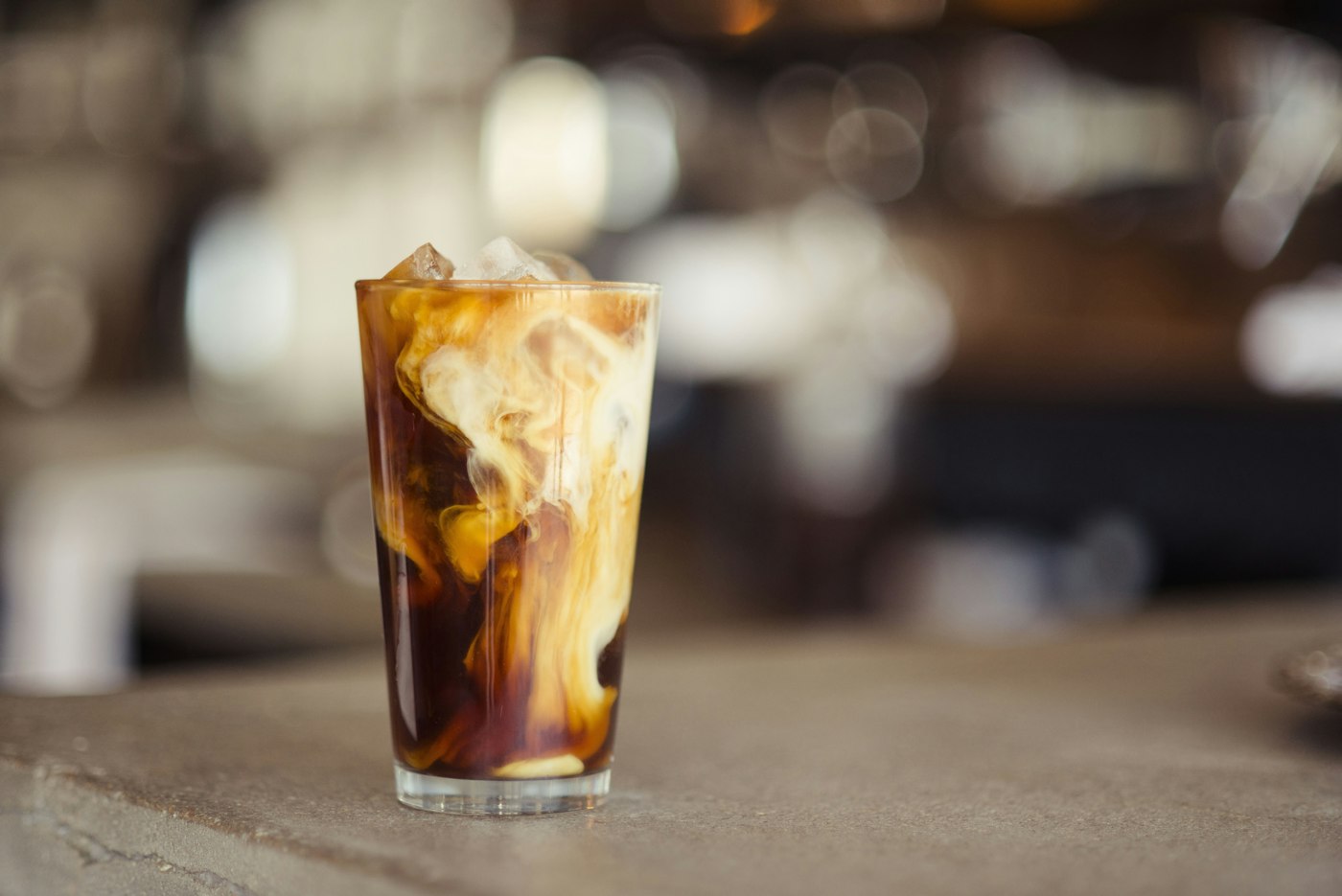
How to Make Cold Brew Coffee at Home: A Complete Step-by-Step Guide
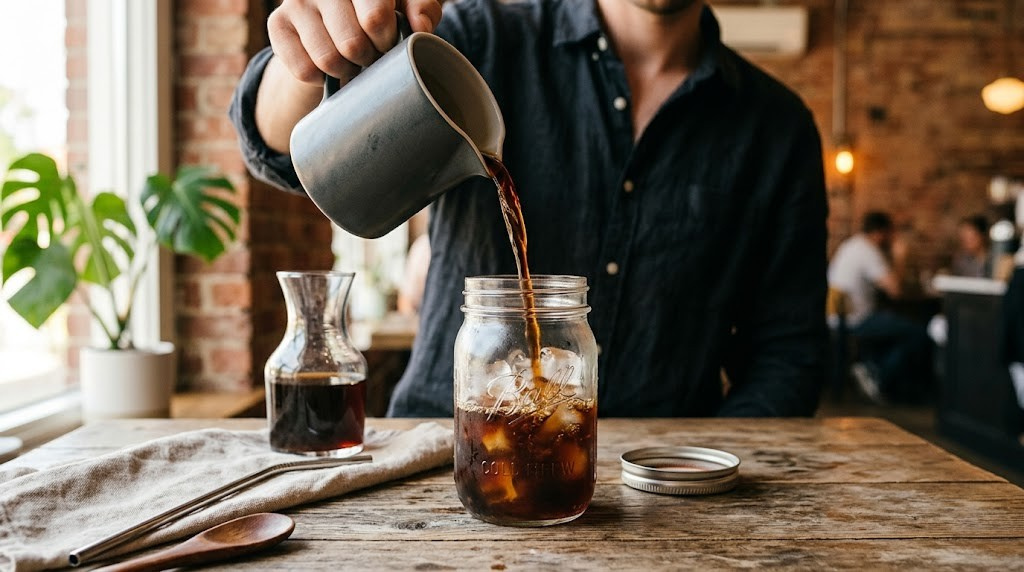
Cold brew concentrate steeping in a mason jar — the simplest, most rewarding DIY coffee project.
There’s a moment — you’ve been doing iced coffee all wrong — that changes everything. You brew hot coffee, pour it over ice, and wonder why it tastes bitter, watery, and somehow disappointing. Then someone hands you a glass of cold brew. It’s smooth. It’s chocolatey. It has a sweetness that doesn’t need sugar. That’s what coffee can taste like?
The good news: cold brew isn’t complicated. You don’t need expensive equipment. You don’t need a barista certificate or a $500 machine. You need coffee, water, time, and the right technique. This guide gives you everything — from the science behind why cold extraction tastes so different, to the exact ratios, steeping times, and filtration methods that produce consistently excellent results, every single batch.
Whether you want a rich concentrate to dilute all week, a ready-to-drink pitcher for hot summer days, or a silky nitro-style cold brew to impress guests — this is the only guide you’ll need.
If you’re in a rush: Use a 1:5 coffee-to-water ratio by weight, steep at room temperature for 12–16 hours, filter, and refrigerate. That’s it. The rest of this guide makes you great at it.
What Is Cold Brew Coffee?
Cold brew is coffee made by steeping coarsely ground coffee beans in cold or room-temperature water for an extended period — typically 12 to 24 hours. Unlike traditional brewing methods that use heat to extract flavors rapidly (in minutes), cold brew relies entirely on time and the solvent properties of water at low temperatures.
The result is a fundamentally different beverage. Cold brew tends to be lower in acidity, higher in natural sweetness, and richer in body than hot-brewed coffee. The slow extraction at low temperatures means that certain bitter and acidic compounds — specifically chlorogenic acids and certain quinones that form during roasting — are extracted at much lower rates.
Cold brew is typically made as a concentrate (a strong, intensely flavored brew) that you dilute with water, milk, or milk alternatives before serving. A properly made cold brew concentrate is about twice as strong as regular coffee, which is why the dilution step is important. Some people prefer to brew at a ready-to-drink strength from the start, which simply means using more water in the steeping process.
Cold Extraction
Brewed at 35–70°F (2–21°C) over 12–24 hours
Low Acidity
Up to 67% less acidic than hot-brewed coffee
Rich Flavor
Smooth, chocolatey, sweet notes without bitterness
Higher Caffeine
Concentrate has 2× the caffeine of drip coffee
The Science of Cold Extraction
Understanding why cold brew tastes different helps you brew it better. Coffee contains hundreds of flavor compounds, and not all of them extract at the same rate or temperature. Heat dramatically speeds up solubility — which is why you can brew a cup of hot coffee in four minutes. But heat also accelerates the extraction of harsher compounds.
At cold temperatures, the less volatile, more pleasant compounds — sugars, certain organic acids like citric and malic acid, and aromatic compounds — have more time to infuse before the harsh bitter compounds catch up. The extended contact time compensates for the reduced solubility, but the selective nature of cold extraction means you end up with a cleaner, sweeter cup profile.
Additionally, because there’s no heat involved, many of the volatile aromatic compounds that evaporate during hot brewing remain suspended in the cold brew, contributing to its distinctive flavor complexity. This is why well-made cold brew from a single-origin Ethiopian bean, for instance, can showcase floral and fruit notes that are often muted in the same bean brewed hot.
If you’re interested in exploring other extraction methods, our comparison of drip coffee vs. French press covers how different brewing approaches change flavor profiles — many of the principles apply to cold brew as well.
Cold Brew vs. Iced Coffee: What’s Actually the Difference?
These terms are used interchangeably at coffee shops, but they describe fundamentally different drinks made through completely different processes. Understanding the distinction will help you decide which method suits your tastes and lifestyle.
| Feature | Cold Brew | Iced Coffee | Cold Drip / Kyoto |
|---|---|---|---|
| Brewing Method | Steeping in cold/room temp water | Hot brew poured over ice | Drip cold water through grounds |
| Time Required | 12–24 hours | 5–10 minutes | 4–8 hours |
| Temperature | 35–70°F (2–21°C) | 200°F (93°C) then iced | 40–50°F (4–10°C) |
| Acidity Level | Very low | High (same as hot coffee) | Low–medium |
| Flavor Profile | Smooth, sweet, chocolatey | Bright, acidic, can be bitter | Clean, complex, bright |
| Caffeine | High (especially concentrate) | Standard | Medium–high |
| Equipment | Jar + filter | Brewer + ice | Specialty cold drip tower |
| Shelf Life | 1–2 weeks refrigerated | 1–2 days | 3–5 days |
| Cost to Make | Very low | Very low | Medium (equipment) |
Iced coffee is essentially hot-brewed coffee that’s been chilled — the entire flavor extraction process happens at high temperatures, so you get the same acids and bitter compounds as regular coffee. The ice then dilutes it, often making it taste thinner than you’d like.
Cold brew skips the hot brewing entirely. Because the extraction is slow and cold, you get a drastically different chemical composition. This is why cold brew tastes almost like a different beverage, not just “coffee that’s cold.”
If you’re curious about how other coffee brewing equipment affects flavor, check out our reviews of the best coffee makers and the Breville espresso machine review — understanding your full coffee toolkit makes you a better home barista overall.
- Much smoother, less acidic taste
- Gentler on sensitive stomachs
- Lasts 1–2 weeks in the fridge
- Perfect for batch preparation
- Highly versatile (cocktails, desserts, etc.)
- No special machine needed
- Requires planning ahead (12–24 hrs)
- Uses more coffee than standard brew
- Less bright/acidic for those who prefer it
- Filtration takes patience
- Can taste muddy if over-extracted
Equipment You Need to Make Cold Brew at Home
One of the most liberating truths about cold brew is that you don’t need specialized equipment. The cold brew market is full of dedicated gadgets — mason jars, dedicated cold brew systems, even countertop machines — but at its core, cold brew requires only three things: a container, a filtration medium, and coffee.
Essential Equipment
A Container. Any food-safe container with a lid works. The most common options are wide-mouth glass mason jars (32 oz or 64 oz), glass pitchers, large French presses, or dedicated cold brew pitchers. Wide-mouth containers make straining easier. Avoid reactive metals like aluminum — stick to glass, stainless steel, or food-grade plastic.
A Filter. You need something to separate the grounds from the liquid after steeping. Options include: a fine-mesh metal strainer, cheesecloth, a paper coffee filter, a nut milk bag, or a dedicated cold brew system with a built-in filter basket. Each method produces slightly different results in clarity and sediment.
A Grinder (or pre-ground coffee). For best results, you want a coarse grind — similar to raw sugar or coarse sea salt. Burr grinders produce more consistent particle sizes than blade grinders, which matters especially for cold brew because uneven grinding creates over- and under-extracted zones in your brew. That said, pre-ground coffee works fine for beginners.
A Scale. Brewing coffee by weight rather than volume gives you repeatable, consistent results. A simple kitchen scale is one of the best investments you can make for any home coffee brewing. Our roundup of the best digital kitchen scales can help you find an accurate, affordable option.
Optional but Helpful
- Cold Brew Maker — Dedicated systems like OXO, Toddy, or Filtron have built-in filtration and make the process smoother
- Nitro Whipper — For making nitro cold brew at home
- Coffee Storage Container — For keeping your beans fresh
- Fine-mesh sieve — Useful for double-filtering
| Equipment Type | Budget Option | Mid-Range | Premium |
|---|---|---|---|
| Container | 32oz Mason Jar (~$3) | 64oz Glass Pitcher (~$15) | OXO Cold Brew Maker (~$45) |
| Filter | Cheesecloth (~$5) | Nut Milk Bag (~$12) | Toddy Cold Brew System (~$45) |
| Grinder | Blade Grinder (~$20) | Baratza Encore (~$160) | Fellow Ode Gen 2 (~$350) |
| Scale | Basic digital (~$10) | OXO Food Scale (~$55) | Acaia Lunar (~$220) |

The best all-in-one cold brew maker for home use. Built-in filter, drip-stand, and glass carafe make the process effortless. Produces 32 oz of concentrate per batch.
Check Price on AmazonChoosing the Right Coffee Beans for Cold Brew
The coffee you choose matters more for cold brew than for many other brewing methods, because cold brew’s low acidity and extended contact time allows the natural character of the bean to shine through unmasked. There are no shortcuts here — good beans make great cold brew; mediocre beans make mediocre cold brew.
Roast Level: Does It Matter?
Yes, significantly. Each roast level produces distinctly different cold brew characteristics:
| Roast Level | Flavor Profile in Cold Brew | Best For | Example Beans |
|---|---|---|---|
| Light Roast | Fruity, floral, bright, complex — but can taste thin | Single-origin lovers, tea-like profiles | Ethiopian Yirgacheffe, Kenyan AA |
| Medium Roast | Balanced, chocolatey, nutty, sweet | Most home brewers — the sweet spot | Colombian, Brazilian, Guatemalan |
| Medium-Dark | Rich, bold, caramel, low acidity | Those who like a heavier, sweeter cold brew | Sumatra Mandheling, Peru |
| Dark Roast | Bold, bitter-chocolate, smoky — can be harsh | Espresso-style cold brew, milk drinks | French Roast, Italian Roast |
The most widely recommended choice for beginners is a medium to medium-dark roast with chocolate and nutty notes. These beans tend to produce the most crowd-pleasing cold brew — smooth, rich, and naturally sweet without being bitter or overly complex. Brazilian and Colombian beans are classic choices for this reason.
Single-Origin vs. Blends
Both work well, but they produce different experiences. Single-origin coffees allow you to explore the specific terroir of a region — an Ethiopian Sidama might produce a cold brew with distinct blueberry and jasmine notes, while a Colombian Huila might emphasize red fruit and caramel. Blends are generally engineered for consistency and balance, making them more forgiving for everyday brewing.
Freshness Matters
For cold brew, fresh coffee matters a lot. Coffee beans begin to go stale as soon as they’re roasted and even faster once they’re ground. Ideally, use beans within 2–4 weeks of their roast date (look for the roast date on the bag, not the “best by” date). Store beans in an airtight, opaque container at room temperature — not in the freezer or refrigerator for everyday use, as condensation degrades the beans.
If you’re building out your kitchen appliance collection beyond coffee, you might enjoy browsing our guide to the kitchen essentials for new homeowners — cold brew making pairs beautifully with a good blender for coffee smoothies.

A medium-dark espresso blend with hazelnut and brown sugar notes — makes incredibly smooth, naturally sweet cold brew. One of the most popular choices among cold brew enthusiasts.
Check Price on AmazonThe Perfect Coffee-to-Water Ratio for Cold Brew
Ratio is the single most important variable in cold brew. Too little coffee and you get a weak, watery brew. Too much and it’s unpleasantly bitter and harsh. The right ratio depends on whether you’re making a concentrate or a ready-to-drink batch — and on your personal taste preferences.
Understanding Concentrate vs. Ready-to-Drink Ratios
Most cold brew guides recommend making a concentrate — a double-strength or stronger brew that you dilute 1:1 with water (or milk) before drinking. This approach makes economic sense because you can store the concentrate in a smaller container and dilute to taste as needed.
The numbers represent coffee : water by weight. So a 1:5 ratio means for every 1 gram of coffee, you use 5 grams (ml) of water. This is the gold-standard starting ratio for concentrate — strong enough to dilute comfortably but not so intense that it becomes unpleasant on its own.
Practical Examples by Batch Size
| Batch Size | Coffee (grams) | Water (grams/ml) | Ratio | Yield (diluted) |
|---|---|---|---|---|
| Small (1 jar) | 100g | 500ml | 1:5 | ~1 liter |
| Medium (pitcher) | 150g | 750ml | 1:5 | ~1.5 liters |
| Large (64oz) | 200g | 1000ml | 1:5 | ~2 liters |
| Gallon Batch | 300g | 1500ml | 1:5 | ~3 liters |
| RTD Small | 80g | 640ml | 1:8 | ~640ml (no dilution) |
| RTD Large | 150g | 1200ml | 1:8 | ~1.2 liters (no dilution) |
Water is straightforward: 1ml ≈ 1 gram. Coffee is trickier — 1 tablespoon of coarsely ground coffee weighs approximately 5–6 grams, but this varies significantly by grind size and bean density. Always measure by weight for consistency. If you don’t have a scale, a rough volume guide is 1 cup of coarsely ground coffee per 4 cups of water for concentrate.
Adjusting to Your Taste
Your ideal ratio depends on personal preference, how you take your coffee, and the beans you’re using. If your cold brew tastes too strong or bitter even when diluted, decrease the coffee amount. If it tastes weak or watery, increase it. Start with 1:5 for concentrate and adjust by 10% in either direction after your first batch. Keep notes — it takes 2–3 batches to dial in your perfect ratio.
How to Make Cold Brew Coffee: Step-by-Step Method
Below is the complete, detailed method for making cold brew at home using a mason jar — the most accessible and reliable approach. We’ll cover the mason jar method in full, then discuss variations using other equipment. This method uses a 1:5 ratio for a concentrate that’s diluted 1:1 before serving.
Weigh out your coffee — for a standard 32 oz mason jar, use 100 grams of whole bean coffee (or pre-ground). Grind it coarsely, aiming for a consistency similar to raw turbinado sugar or coarse sea salt. This is significantly coarser than espresso (fine powder) or drip coffee (medium granules).
Why coarse? Finer grinds have more surface area, which causes over-extraction during the long steep. Coarse grounds extract slowly and evenly, preventing the harsh, bitter compounds from dominating. If using a blade grinder, pulse in short bursts and check frequently — you want visible, distinct particles, not powder.
Pour your coarsely ground coffee into a clean, dry 32 oz (or larger) wide-mouth mason jar or dedicated cold brew container. There’s no need to pre-wet or “bloom” the grounds as you would with hot brewing methods — in cold brew, the slow saturation process handles this naturally over the first hour of steeping.
If you’re using a dedicated cold brew maker with a filter basket (like the OXO or Filtron system), add the grounds directly to the filter chamber. For mason jar brewing, the grounds go directly into the jar and are filtered out after steeping.
Slowly pour 500 ml (500 grams) of cold or room-temperature water over the grounds. For a 1:5 ratio with 100g of coffee, this is the correct amount. Pour in a slow, circular motion to saturate all the grounds evenly — you want every particle in contact with water from the start.
Use filtered water if possible. Water quality significantly affects coffee flavor because coffee is approximately 98% water. Hard water with high mineral content can produce flat, chalky cold brew, while very soft water can taste empty. Standard filtered tap water (Brita, etc.) is usually ideal.
Temperature choice: Room-temperature water (65–72°F / 18–22°C) steeps slightly faster than refrigerator-cold water (35–40°F / 2–4°C). Both produce excellent cold brew, but the room-temp method may need slightly less time (12–15 hours vs. 16–24 hours).
Use a long spoon or chopstick to stir the coffee and water together gently. Your goal is to ensure every ground is in contact with water — look for any dry pockets or floating grounds and push them down. You don’t need to stir vigorously; gentle is fine. The grounds will settle on their own over the first 30 minutes.
Some brewers also gently shake the jar for 30–60 seconds at this point. Either method works. The key is ensuring complete saturation before you put the jar away to steep.
Seal the jar with its lid (or cover with plastic wrap if using a pitcher) and leave it to steep. You have two steeping environments to choose from:
Room temperature steeping (65–72°F / 18–22°C): Faster extraction, typically 12–15 hours. Good for making a batch in the evening to have ready the next morning. The slightly warmer temperature encourages slightly more extraction of all compounds, including some acidity. Many professional cold brew producers use this method.
Refrigerator steeping (35–42°F / 2–6°C): Slower extraction, typically 18–24 hours. The colder temperature means a slightly more selective extraction — some people find fridge-brewed cold brew to be a touch smoother and “cleaner.” It also has the advantage of being food-safe for the full duration without any concern about fermentation.
After your steeping time is up, it’s time to separate the liquid from the grounds. This step takes patience — rushing it can result in cloudy, over-extracted cold brew or grounds slipping through into your final product. There are several straining methods, each with trade-offs.
Method A — Fine Mesh + Paper Filter: Set a paper coffee filter inside a fine-mesh strainer over a clean jar or pitcher. Pour the cold brew slowly through this double filter. The mesh catches the bulk of the grounds, and the paper catches the fine particles. This is the clearest, cleanest method but takes 15–30 minutes to drain fully. Do not squeeze or press.
Method B — Nut Milk Bag: Pour the brew into a nut milk bag and squeeze gently over a container. Faster than paper filtration (5–10 minutes) but can leave some fine sediment in the cup. Reusable and easy to clean.
Method C — French Press: If you brewed in a French press, simply press the plunger down and pour. Quick and convenient, but usually produces cloudier cold brew with noticeable sediment.
If you made a concentrate (1:5 ratio), dilute it 1:1 with cold water or milk before serving — this brings it to approximately the strength of standard brewed coffee. Fill a glass with ice, add equal parts concentrate and water/milk, and stir. Taste and adjust — some people prefer a 2:1 dilution (2 parts water to 1 part concentrate) for a lighter cup.
If you made a ready-to-drink batch (1:8 ratio), simply pour over ice. You can add cream, oat milk, or simple syrup to taste.
Flavor add-ins: Cold brew is extraordinarily versatile. Try it with vanilla extract (a few drops), a splash of sweetened condensed milk, coconut milk, flavored simple syrups (lavender, cinnamon, vanilla), or a sprinkle of sea salt, which enhances the natural sweetness.

The sleekest, most elegant cold brew pot for home use. Japanese design, fine mesh filter, fridge-ready slim profile. Makes 1 liter of concentrate with minimal cleanup.
Check Price on AmazonSteeping Time & Temperature: Getting It Right
Steeping time is the dial you turn to adjust cold brew strength and flavor. Too short and it’s weak and hollow. Too long and it turns harsh, bitter, and astringent. The right time depends on your temperature, grind size, and personal taste preferences.
The Steeping Time Matrix
| Temperature | Minimum Time | Optimal Range | Maximum Time | Flavor Risk |
|---|---|---|---|---|
| Room Temp (68°F/20°C) | 8 hours | 12–15 hours | 18 hours | Over-extraction → bitterness |
| Fridge (38°F/3°C) | 14 hours | 18–24 hours | 36 hours | Under-extraction → weakness |
| Warm Room (78°F/26°C) | 6 hours | 8–10 hours | 14 hours | Fermentation risk above 14hr |
| Hot Bloom Hybrid | N/A | 6–8 hours fridge | 12 hours | Loses cold brew smoothness |
Coffee and water combined. All grounds saturated and covered. Place in fridge or leave at room temperature.
Early extraction phase. The brew looks like pale tea — mostly surface compounds. Not ready for room temp, definitely not for fridge method.
Room temperature batches enter the sweet spot. Flavor is developing — smooth, chocolatey, balanced. Start tasting from here.
Most room-temperature batches are done. Fridge batches are approaching optimal. Pull room-temp batches before bitterness creeps in.
Optimal window for fridge batches. Maximum smoothness, full body, ideal sweetness. Most commercial cold brew is brewed at 20 hours.
Diminishing returns begin. Some astringency may appear. Still usable but strain immediately when you notice any sharpness at the back of your throat.
How to Tell When Your Cold Brew Is Done
The best way is to taste it. Remove a small amount of the brewing liquid with a clean spoon and dilute it 1:1 with water before tasting — you’re evaluating the concentrate at drinking strength. Look for:
- Smoothness: No sharp, scratchy sensation at the back of the throat
- Balance: Sweet and coffee flavors in harmony, not one dominating
- Body: A round, slightly syrupy mouthfeel — not thin and watery
- Finish: A clean, pleasant aftertaste — not a lingering bitterness
If it tastes right — strain it immediately. Continuing to steep after your optimal point is the most common cold brew mistake.
Cold brew brewed at room temperature for longer than 18 hours carries a small but real risk of bacterial growth, particularly in warm climates (above 75°F/24°C). If your kitchen is warm, always steep in the refrigerator. If you steep at room temp, don’t leave it longer than 15–16 hours maximum, and transfer to the fridge immediately after straining.
Straining & Filtering: From Muddy to Crystal Clear
The filtration step separates excellent cold brew from mediocre cold brew. Proper filtering removes the fine sediment and coffee oils that can make cold brew taste muddy, gritty, or excessively bitter. Different filtration methods produce different results in clarity and flavor profile.
Filtration Method Comparison
| Method | Clarity | Time Required | Equipment Cost | Flavor Notes |
|---|---|---|---|---|
| Double paper filter | ⭐⭐⭐⭐⭐ Crystal clear | 20–40 min | $0.10/filter | Cleanest, tea-like, no oils |
| Paper + mesh combo | ⭐⭐⭐⭐ Very clear | 15–25 min | Low | Clean with slight body |
| Nut milk bag | ⭐⭐⭐ Good | 5–10 min | $8–15 reusable | Some fine particles, rich |
| Fine mesh only | ⭐⭐ Moderate | 5 min | $10–20 | Cloudy, richer body |
| French press plunge | ⭐⭐ Moderate | 1 min | Included if using FP | Sediment common, full body |
| Cloth/cheesecloth | ⭐⭐⭐ Good | 8–15 min | $4–8 | Some oils pass through |
Tips for Faster Filtration
Paper filtration can be slow because the fine particles in cold brew quickly clog the paper. Here are strategies to speed up the process:
- Pre-wet the paper filter with cold water before adding the cold brew — this prevents the paper from absorbing brew and expands the pores slightly
- Filter in batches (pour 1–2 cups at a time and let it drain before adding more)
- Set the filtration setup in the fridge and let it drain overnight — no waiting required
- Use a Chemex or pour-over cone for more efficient paper filtration
- For speed, do a rough filter through a mesh strainer first, then do a fine paper filter on the already-cleaned liquid
For the clearest possible cold brew, use the “double filter” method: first pass the brew through a fine-mesh metal strainer to catch the bulk of the grounds, then pass the already-filtered liquid through a paper filter. The first pass removes most of the particles so the paper filter doesn’t clog — you’ll get crystal-clear concentrate in half the time.

The original dedicated cold brew maker. The thick felt filter produces incredibly smooth, sediment-free concentrate. A classic for a reason — used by coffee shops worldwide.
Check Price on AmazonCold Brew Concentrate vs. Ready-to-Drink: Which Should You Make?
This is one of the most common questions from people starting their cold brew journey. The answer depends on your consumption habits, storage space, and how you like to drink your coffee.
The Case for Concentrate
Cold brew concentrate is the format favored by most serious home brewers and by commercial producers. Here’s why: concentrate stores in a smaller volume (half the space of ready-to-drink), stays fresh longer because there’s less oxidation per serving, and gives you full flexibility in how you serve it. You can dilute it 1:1 with water for a standard coffee, dilute with oat milk for a latte, use less dilution for a stronger afternoon pick-me-up, or add it to smoothies, cocktails, or desserts at full concentration.
The trade-off is that you need to remember to dilute before drinking — one sip of undiluted cold brew concentrate can be intensely strong and quite bitter, especially for beginners who don’t know what to expect.
The Case for Ready-to-Drink
Ready-to-drink cold brew (brewed at a 1:8 ratio) is simpler to serve — just pour over ice and go. It’s ideal if you drink cold brew straight without add-ins and don’t want to think about ratios. The downside is that it takes up more fridge space for the same number of servings, and it typically has a slightly shorter shelf life because the lower concentration makes it more susceptible to oxidation and microbial growth over time.
- More versatile — coffee, lattes, cocktails
- Lasts up to 2 weeks refrigerated
- Takes up less fridge space
- Easier to adjust strength to taste
- Great for large families / high consumption
- Simpler — no dilution calculation needed
- Perfect for straight black cold brew drinkers
- Easier for guests who aren’t coffee-savvy
- Uses less coffee per serving
Our recommendation: Start with concentrate. It’s more economical, more versatile, and more forgiving. You can always dilute more if it’s too strong — you can’t un-dilute if you made it too weak from the start.
Cold Brew Flavor Variations & Creative Add-Ins
One of the greatest pleasures of homemade cold brew is the ability to customize flavor in ways that chain coffee shops rarely offer. Once you’ve mastered the basic technique, these variations let you explore what cold brew can really be.
Infused Cold Brews
You can add flavoring ingredients directly to the steeping jar along with the coffee grounds. These additions infuse their flavor during the 12–24 hour steep, creating deeply integrated flavors that can’t be replicated by adding syrups after the fact.
| Add-In | How Much per 100g Coffee | When to Add | Flavor Result |
|---|---|---|---|
| Cinnamon stick | 1–2 sticks | During steep | Warm spice, cozy, natural sweetness |
| Vanilla bean (split) | 1 bean | During steep | Floral, sweet, aromatic vanilla |
| Cardamom pods (cracked) | 4–6 pods | During steep | Exotic, floral, citrus-forward |
| Orange peel (fresh) | Peel from 1 orange | Last 4 hours only | Bright citrus, tea-like finish |
| Cocoa nibs | 2 tablespoons | During steep | Deep chocolate, earthy richness |
| Star anise | 2 pieces | Last 6 hours only | Licorice, complexity, aromatic |
| Lavender buds (culinary) | 1 teaspoon | Last 4 hours only | Floral, light, calming note |
| Black pepper (whole) | 10 peppercorns | During steep | Subtle heat, complexity, enhanced coffee |
Cold Brew Drink Recipes
Classic Cold Brew Latte: Fill a glass with ice. Pour 3 oz cold brew concentrate, add 3 oz oat milk or whole milk. Stir. Optional: 0.5 oz vanilla simple syrup.
Salted Caramel Cold Brew: 3 oz cold brew concentrate, 3 oz water, 0.5 oz caramel sauce, a tiny pinch of sea salt. Pour over ice and stir until the caramel dissolves.
Cold Brew Tonic: Pour 2 oz cold brew concentrate over ice in a highball glass. Top with 4 oz tonic water. Do not stir — let the layers settle. Garnish with an orange slice.
Vietnamese-Style Cold Brew: Add 1–2 tablespoons of sweetened condensed milk to the bottom of a glass. Fill with ice, pour 3 oz cold brew concentrate on top. Stir and enjoy.
Cold Brew Smoothie: Blend 3 oz cold brew concentrate with 1 banana, 1 cup oat milk, 1 tablespoon almond butter, and a handful of ice. Creamy, energizing, and genuinely delicious — a great reason to have a quality blender in your kitchen.
Nitro Cold Brew at Home
Nitro cold brew — the silky, nitrogen-infused version made famous by Starbucks — is actually achievable at home with a cream whipper (iSi or similar). Fill the whipper with cold brew concentrate (no dilution), charge with one N₂O charger (nitrogen, not CO₂), shake 30 seconds, refrigerate for 30 minutes, then dispense into a glass without ice. The result is a velvety, creamy cold brew with a cascade of micro-bubbles — no additional dairy or sweetener needed.

Make silky nitro cold brew at home. This stainless steel whipper doubles as a nitro coffee maker and a culinary tool for flavored foams and whipped cream.
Check Price on AmazonStorage & Shelf Life: Keeping Cold Brew Fresh
One of cold brew’s greatest advantages as a homemade drink is its excellent shelf life compared to other coffee formats. Properly made and stored cold brew concentrate can last up to two weeks in the refrigerator — making it ideal for batch brewing on the weekend and enjoying all week long.
Storage Best Practices
- Always store in the refrigerator — Cold brew left at room temperature after straining will go stale and become unsafe within 24 hours.
- Use airtight glass containers — Mason jars, glass pitchers with tight-fitting lids, or dedicated cold brew carafes work best. Oxygen is cold brew’s enemy — every time you open the container, some oxidation occurs.
- Don’t store with ice — Store the concentrate or ready-to-drink brew without ice and add ice only at serving time. Ice melts and dilutes your stored brew.
- Keep towards the back of the fridge — The coldest, most stable part of the refrigerator is at the back, away from the door. Consistent cold temperature extends shelf life.
- Label with the date — It’s easy to forget when you made a batch. A piece of tape with a date ensures you always know freshness.
| Cold Brew Type | Room Temp | Refrigerator | Signs of Going Bad |
|---|---|---|---|
| Concentrate (1:5) | 12–18 hrs only while steeping | 10–14 days | Sour smell, off-flavors, mold |
| Ready-to-drink (1:8) | Not recommended after brewing | 7–10 days | Flat taste, sourness, cloudiness |
| Diluted serving (in glass) | 2–3 hours | 1 day (without ice) | Stale, watery, oxidized |
| Infused (with spices) | Not recommended | 7–10 days (remove infusions after steeping) | Bitter spice notes intensifying |
Can You Freeze Cold Brew?
Yes — cold brew freezes excellently and is one of the few coffee products that survives the freeze-thaw cycle without significant flavor degradation. Pour concentrate into ice cube trays, freeze, then transfer the cubes to a zip-lock bag. You now have single-serving portions that last 2–3 months. This is also a great trick for making “coffee ice cubes” that cool your drink without diluting it — just add cold brew ice cubes to cold brew instead of regular ice.
Freeze diluted ready-to-drink cold brew in ice cube trays. Use these cubes instead of water ice in your cold brew drinks — as they melt, they actually make your drink stronger and more flavored rather than diluting it.
Cold Brew Troubleshooting: Fixing Common Problems
Even experienced cold brew makers occasionally produce a batch that doesn’t quite hit the mark. Here’s a systematic guide to diagnosing and fixing the most common issues.
| Problem | Likely Cause(s) | Fix for Next Batch |
|---|---|---|
| Tastes weak/watery | Ratio too dilute, grind too coarse, steep too short | Increase coffee by 10–15%, steep 2–4 hours longer, grind slightly finer |
| Tastes bitter/harsh | Over-steeped, grind too fine, too hot during steep | Reduce steep time, coarsen grind, steep in fridge |
| Tastes sour/acidic | Under-extracted, wrong coffee, very light roast | Steep longer, try a medium-dark roast, confirm ratio is correct |
| Cloudy/muddy appearance | Insufficient filtration, fine grind | Double-filter with paper, or allow to settle and filter again |
| Gritty texture | Grind too fine, incomplete filtration | Coarsen grind, use paper filter, allow longer drain time |
| Moldy/off smell | Over-steeped at warm temp, contaminated equipment | Always use clean equipment, steep in fridge if room is warm, don’t exceed 16h at room temp |
| Too thick/syrupy | Ratio too concentrated (too much coffee) | Reduce coffee by 10%, or simply dilute more when serving |
| Stale/flat taste (fresh batch) | Stale coffee beans, very old roast date | Use beans within 3 weeks of roast date, store in airtight container |
| Tastes metallic | Reactive metal container, water quality | Use glass or food-grade plastic, try filtered water |
Dialing In Your Perfect Recipe
Think of your first 3 batches as experiments, not failures. Adjust one variable at a time: first get the ratio right, then the steep time, then explore bean varieties. Keep a small notebook (or a notes app) with your brewing parameters for each batch — ratio, bean, grind size, time, temperature, and tasting notes. Within 3–4 batches, you’ll have a personalized recipe that’s consistently excellent.
If you want to explore the full spectrum of coffee gear available to home brewers, our comprehensive best coffee maker guide covers everything from entry-level drip machines to sophisticated espresso systems — understanding the full toolkit makes you a better home barista. Also check our Keurig K-Elite review if you’re looking for a complement to your cold brew setup for mornings when you need something quickly.

The go-to entry burr grinder for serious home coffee enthusiasts. Consistent coarse grind is critical for cold brew, and the Encore’s 40 grind settings make dialing in trivially easy.
Check Price on AmazonAdvanced Methods: Cold Brew Beyond the Jar
Once you’ve mastered the mason jar method, you might want to explore more refined approaches:
The Toddy System: A dedicated cold brew maker with a thick felt filter that produces exceptionally smooth, clean concentrate. Used by many coffee professionals for daily production. The system includes a rubber stopper that lets you brew directly in the vessel and drain directly into the storage carafe — no messy pouring required.
The French Press Method: Use a French press as both your steeping and initial straining vessel. Grind coarse, add coffee and water to the French press, steep normally (don’t press), then press and pour through a paper filter for a cleaner result. Quick, convenient, and easy to clean.
The Cold Drip (Kyoto) Method: Cold water drips very slowly (one drop per second) through coffee grounds over 4–8 hours. This method produces a more complex, slightly brighter cold brew than immersion methods — closer to a very good iced pour-over. Requires a dedicated drip tower (can be expensive) but the results are exceptional.
Immersion with Agitation: Some specialty coffee shops add periodic manual agitation (stirring) every few hours during the steep. This promotes more even extraction and can reduce steep time by 2–4 hours. Results in a slightly bolder, more consistent brew.
Frequently Asked Questions About Cold Brew Coffee
Cold brew concentrate typically has significantly more caffeine than drip coffee — often 2–3× more per ounce. However, because you dilute the concentrate 1:1 before drinking, the caffeine in a standard serving of diluted cold brew is comparable to, or slightly higher than, a standard cup of drip coffee (typically 100–200mg per 8 oz serving). The exact amount depends on your ratio, bean choice, and how much you dilute. If you drink cold brew undiluted (straight concentrate), you’ll be getting substantially more caffeine per serving, so be mindful of this.
Bitterness in cold brew almost always comes from over-extraction. This can happen when: (1) you steeped too long (especially at room temperature above 16 hours), (2) your grind is too fine, allowing more rapid extraction of bitter compounds, or (3) you brewed at a higher temperature than intended. To fix: reduce steep time by 2–4 hours, coarsen your grind by 1–2 settings on your grinder, or move the brew to the refrigerator. Also ensure you’re not squeezing or pressing the grounds aggressively during filtration — this releases bitter compounds that haven’t been filtered out.
Yes, you can, but results are significantly better with a coarse grind. Pre-ground drip coffee is typically ground to a medium consistency — finer than ideal for cold brew but usable in a pinch. If using drip-ground coffee, reduce your steep time by 2–4 hours to avoid over-extraction (since finer grounds extract faster), and be extra diligent about filtration since more fine particles will be present. The resulting cold brew may be slightly more acidic and potentially cloudier than a coarse-ground batch, but it’ll still be better than iced coffee.
You can make cold brew with just a mason jar and a piece of clean cotton cloth (even a clean handkerchief or T-shirt material works). Add coffee and water to the jar, steep, then pour through the cloth stretched over a bowl or second jar, held in place with a rubber band. It’s not as clean as a paper filter, but it works. Alternatively, use a paper towel as a filter — place it inside a strainer over a second container. Even a coffee mug with the paper filter from a drip machine works perfectly. You really don’t need anything special.
Yes, with sensible precautions. Room-temperature steeping (65–72°F/18–22°C) for 12–15 hours is used by many home brewers and commercial cold brew producers. The key safety conditions: don’t exceed 15–16 hours at room temperature, ensure your equipment is clean before starting, strain immediately when done, and refrigerate the filtered brew right away. In very warm kitchens (above 78°F/26°C), use the refrigerator method instead to avoid bacterial growth risk. Cold brew steeped under these conditions has an excellent safety track record.
For beginners, start with a 1:5 ratio by weight (1 gram of coffee per 5 grams/ml of water) for concentrate. For a 32 oz mason jar, that’s 100g of coffee and 500ml of water. After straining, dilute the concentrate 1:1 with water or milk before drinking. This produces a well-balanced, strong concentrate that’s forgiving — if it’s slightly too strong, add more water when diluting; if it’s too weak, increase the coffee to 115g next time. After 2–3 batches, you’ll have a personalized ratio dialed in.
Absolutely — decaf cold brew is excellent and increasingly popular for evening coffee drinkers who love the flavor of cold brew but want to avoid caffeine. The cold brewing process works identically with decaffeinated beans. Choose a high-quality medium-dark decaf (look for Swiss Water Process decaf, which maintains the most flavor integrity), use the same 1:5 ratio and 12–24 hour steep, and strain as normal. The result will be smooth and chocolatey — you won’t miss the caffeine.
Using the standard 1:5 ratio with 100g coffee and 500ml water: you’ll yield approximately 400–450ml of concentrate after filtering (some water is absorbed by the grounds). When diluted 1:1 with water, this makes 800–900ml (about 27–30 oz) of ready-to-drink cold brew — roughly 3–4 standard servings. Scale up proportionally for larger batches: 200g coffee + 1000ml water ≈ 6–8 servings of diluted cold brew.
Cloudy cold brew is usually the result of fine coffee particles passing through the filter, coffee oils (which are naturally present and healthy, but make the brew look darker), or — in some cases — a reaction between compounds in the coffee and minerals in your water. The most common fix is double-filtering: first through a fine mesh strainer, then through a paper coffee filter. Using filtered or soft water also helps reduce cloudiness. Note that some cloudiness is normal with French press or mesh-only filtration — it doesn’t affect safety or taste significantly, just appearance.
Both are cold-extracted coffees, but the method differs fundamentally. Cold brew is an immersion method — grounds sit in water for 12–24 hours. Cold drip (also called Kyoto-style or Dutch coffee) is a percolation method — cold water drips very slowly through coffee grounds, one drop per second, over 4–8 hours. Cold drip tends to produce a brighter, more complex flavor profile similar to a slow pour-over, while immersion cold brew produces a fuller-bodied, rounder, and more uniform result. Cold drip requires a dedicated tower apparatus; cold brew requires just a jar.
There are “flash cold brew” methods that use slightly warm or room-temperature water with a shorter steep time, but using hot water fundamentally changes the extraction chemistry and produces hot-brewed coffee — not cold brew. Some people do a “hot bloom” (wet the grounds with a small amount of hot water for 30 seconds before adding cold water) which can speed up full saturation and produce a slightly more even extraction, but the majority of steeping should still be done with cold water to maintain the characteristic cold brew flavor profile. True cold brew = cold water + long time. There are no real shortcuts that preserve the cold brew flavor.
Yes, cold brew can go bad, though it lasts much longer than hot-brewed coffee. In the refrigerator, properly made concentrate lasts 10–14 days; ready-to-drink lasts 7–10 days. Signs that cold brew has gone bad: a sour or vinegary smell (bacterial fermentation), visible mold or unusual growth, a distinctly off or rancid flavor, or a slimy texture in the jar. If any of these are present, discard the batch immediately. If the brew simply tastes flat or less vibrant than when fresh, it’s past peak quality but not necessarily unsafe — use your judgment. When in doubt, throw it out.
Your Best Cup of Cold Brew Starts Today
Cold brew is one of the most rewarding coffee projects you can take on at home — minimal equipment, minimal effort, maximum payoff. A single Sunday afternoon batch gives you a week of exceptional coffee that’s smoother, lower in acid, and more versatile than anything you can make with a hot brewer.
Start with 100g of a medium-dark roast, 500ml of cold filtered water, a clean mason jar, and 12–18 hours of patience. Filter, dilute 1:1, pour over ice. That’s it. That’s the secret.
As you get comfortable with the basics, explore different beans, steeping times, and flavor infusions. Keep notes, adjust, taste, and enjoy the process. Cold brew making is one of those kitchen skills that’s easy to learn but endlessly fascinating to master.
Happy brewing — and if you’re looking to upgrade your home coffee setup beyond cold brew, our guides on the best coffee makers and best espresso machines under $500 are great next steps.


